Beef Bulgogi Rice Bowl
Jump to Recipe
Bulgogi translates roughly to ‘fire meat,’ but the cooking method here is closer to a fast sear on high heat than anything dramatic. The real work happens in the marinade, where grated Asian pear breaks down the muscle fibers and soy sauce carries the salt deep into the meat.
The beef only needs 30 minutes in the marinade, though overnight is better. Either way, the cook time is fast – two minutes per side in a hot skillet, and you’re done.
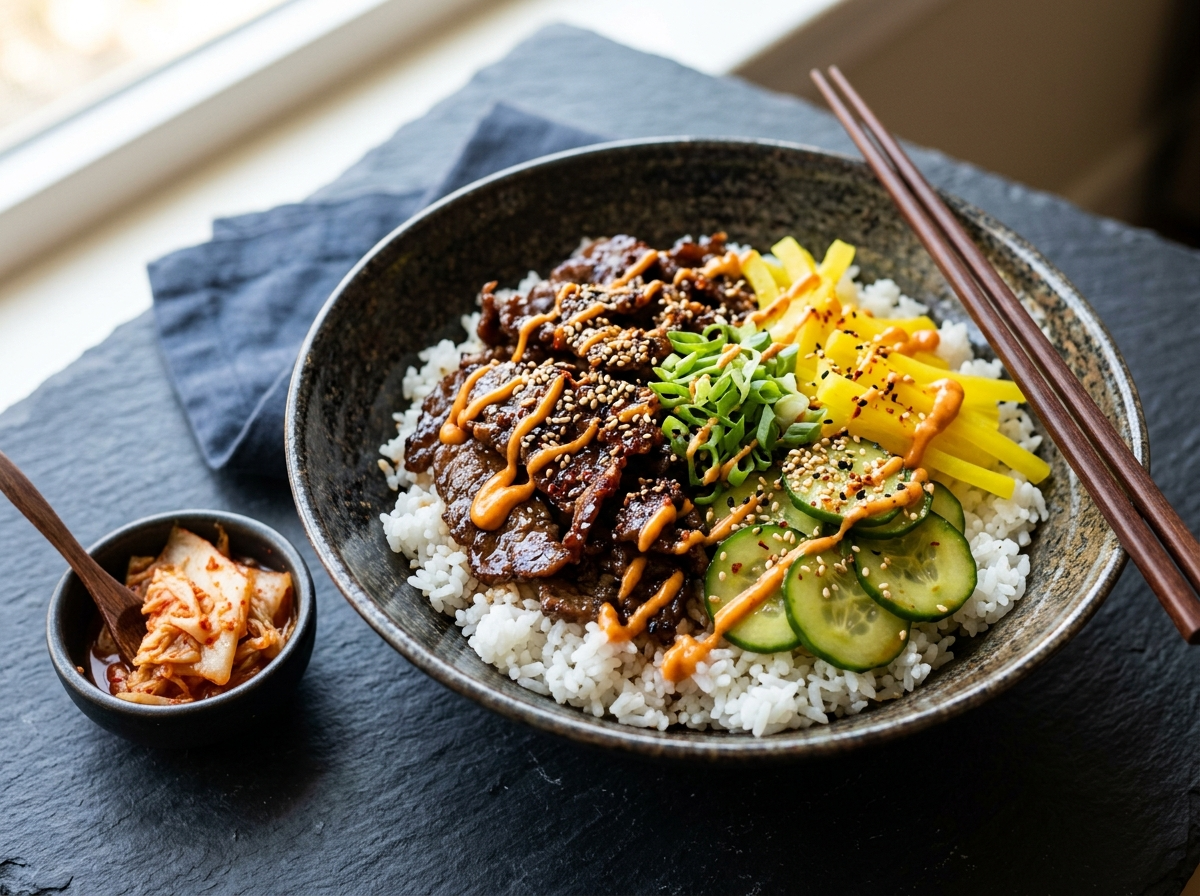
I build the bowl with steamed short-grain rice, a quick sesame-dressed cucumber, and a stripe of gochujang mayo. Those three elements cover crunch, creaminess, and heat without much extra work.
This comes together in about 30 minutes on a weeknight if the rice is already on.
Why You’ll Love This Recipe
- Marinade tenderizes the beef in just 30 minutes
- High-protein bowl eats like a full meal
- Toppings are prepped while the rice cooks
- Beef freezes well in the marinade for meal prep
Ingredient Notes
- ribeye steak: Thinly sliced ribeye (about 3 mm) gives the right fat-to-lean ratio for bulgogi. You can substitute sirloin, but freeze it for 20 minutes first so it slices cleanly.
- Asian pear: Grated Asian pear acts as a natural meat tenderizer due to its enzyme content. Swap with half a kiwi or 2 tbsp unsweetened applesauce if unavailable.
- soy sauce: Use regular soy sauce, not low-sodium – the dilution from the pear juice and sesame oil means the salt level stays balanced. For gluten-free, use tamari.
- gochujang: Gochujang adds fermented heat and a little sweetness. Sriracha mixed with a pinch of sugar works as a quick substitute, though the depth is different.
- short-grain white rice: Short-grain rice holds together better under the saucy beef. Medium-grain works fine; long-grain basmati will slide around more and feels less cohesive in the bowl.
- sesame oil: Add sesame oil at the end of the marinade, not the start – it’s a finishing flavor, not a cooking fat. Toasted sesame oil is stronger; use half the amount if that’s all you have.
Beef Bulgogi Rice Bowl
Ingredients
Method
- Combine soy sauce, grated pear, brown sugar, sesame oil, garlic, ginger, and black pepper in a mixing bowl. Stir until the sugar dissolves.
- Add the sliced ribeye to the marinade and toss until every piece is coated. Cover and refrigerate for at least 30 minutes, or up to 24 hours.
- Rinse the short-grain rice under cold water 2 to 3 times until the water runs mostly clear.
- Combine rinsed rice, 450 ml water, and salt in a medium saucepan. Bring to a boil over high heat, then reduce to the lowest setting, cover tightly, and cook for 15 minutes.
- Remove from heat and let the rice steam with the lid on for 5 more minutes. Fluff gently with a fork.
- Toss sliced cucumber with rice vinegar, sesame oil, salt, and sesame seeds in a small bowl. Set aside for up to 10 minutes - dress it close to serving so it stays crisp.
- Stir together mayonnaise, gochujang, and lime juice in a separate small bowl until smooth. Taste and add more gochujang if you want more heat.
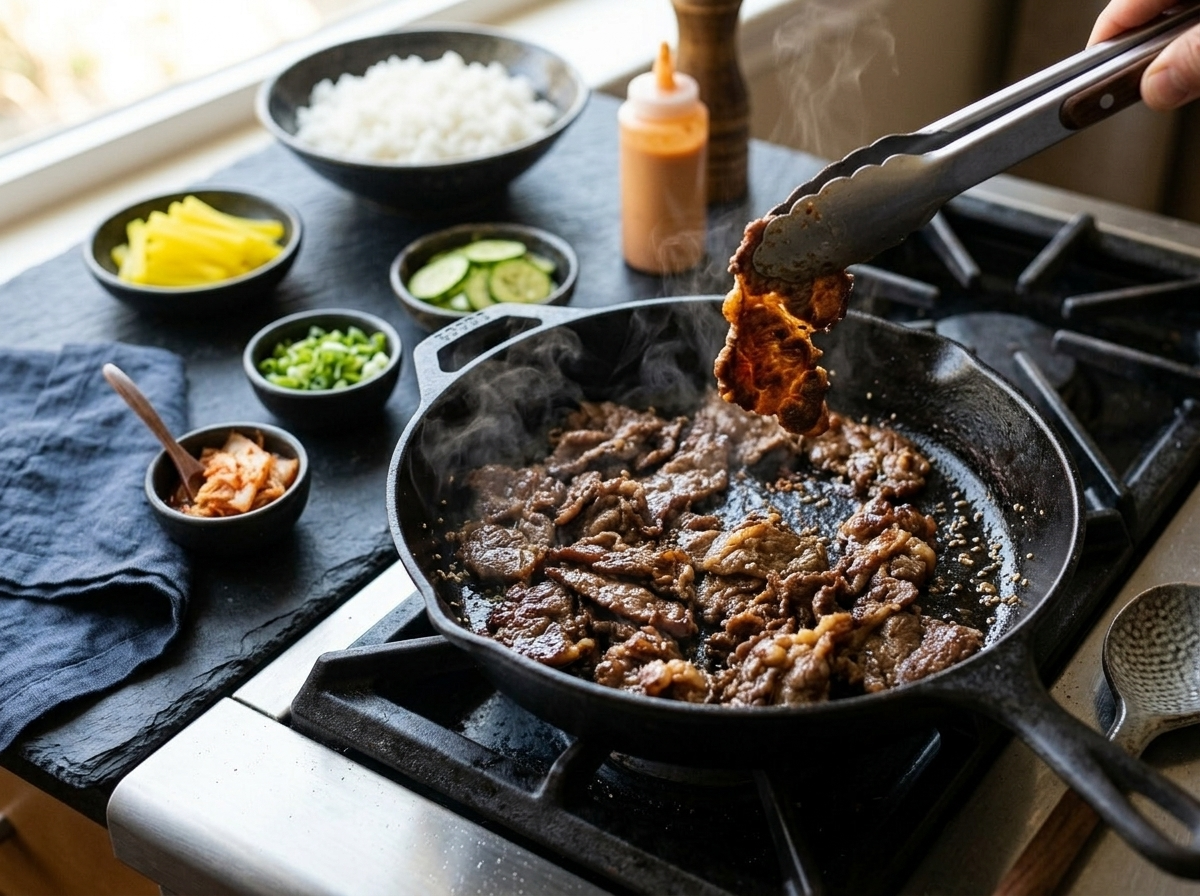
- Remove the beef from the marinade and pat dry with paper towels. This step is important - moisture on the surface will cause steaming instead of searing.
- Heat neutral oil in a 12-inch cast iron or stainless skillet over high heat until the oil just begins to smoke.
- Add half the beef in a single layer. Cook without moving for 1.5 to 2 minutes until the edges are deeply caramelized, then flip and cook 1 more minute. Transfer to a plate. Repeat with the remaining beef.
- Divide steamed rice among four bowls. Arrange the bulgogi beef over one side of the rice.
- Add sesame cucumber, pickled daikon, and sliced scallions alongside the beef.
- Drizzle gochujang mayo over the top, scatter sesame seeds, and serve immediately.
Notes
Tips for Success
- Freeze the ribeye for 20 minutes before slicing to get clean, thin cuts without a deli slicer.
- Pat the marinated beef dry before it hits the pan so it sears rather than steams.
- Cook the beef in two batches if your pan is smaller than 12 inches – crowding drops the temperature.
- Grate the pear directly into the marinade bowl to catch all the juice; don’t squeeze it out.
- Dress the cucumber with sesame oil and salt no more than 10 minutes before serving so it stays crisp.
Variations
- Chicken bulgogi bowl: use boneless thigh, same marinade, cook 3 minutes per side until golden.
- Tofu bulgogi bowl: press extra-firm tofu, slice thick, marinate 1 hour, pan-fry until caramelized.
- Low-carb version: swap steamed rice for cauliflower rice and reduce soy sauce by 1 tbsp.
Storage and Reheating
Store leftover bulgogi beef and rice separately in airtight containers. Both keep in the fridge for up to 3 days. The cucumber and gochujang mayo should be stored separately and added fresh.
To reheat the beef, use a skillet over medium heat for 2 to 3 minutes rather than a microwave – it keeps the edges from turning rubbery. A splash of water in the pan helps loosen any caramelized marinade sticking to the bottom.
The raw marinated beef (before cooking) freezes well for up to 2 months. Lay the bag flat so it thaws quickly – about 6 hours in the fridge or 45 minutes in cold water.
Serving Suggestions
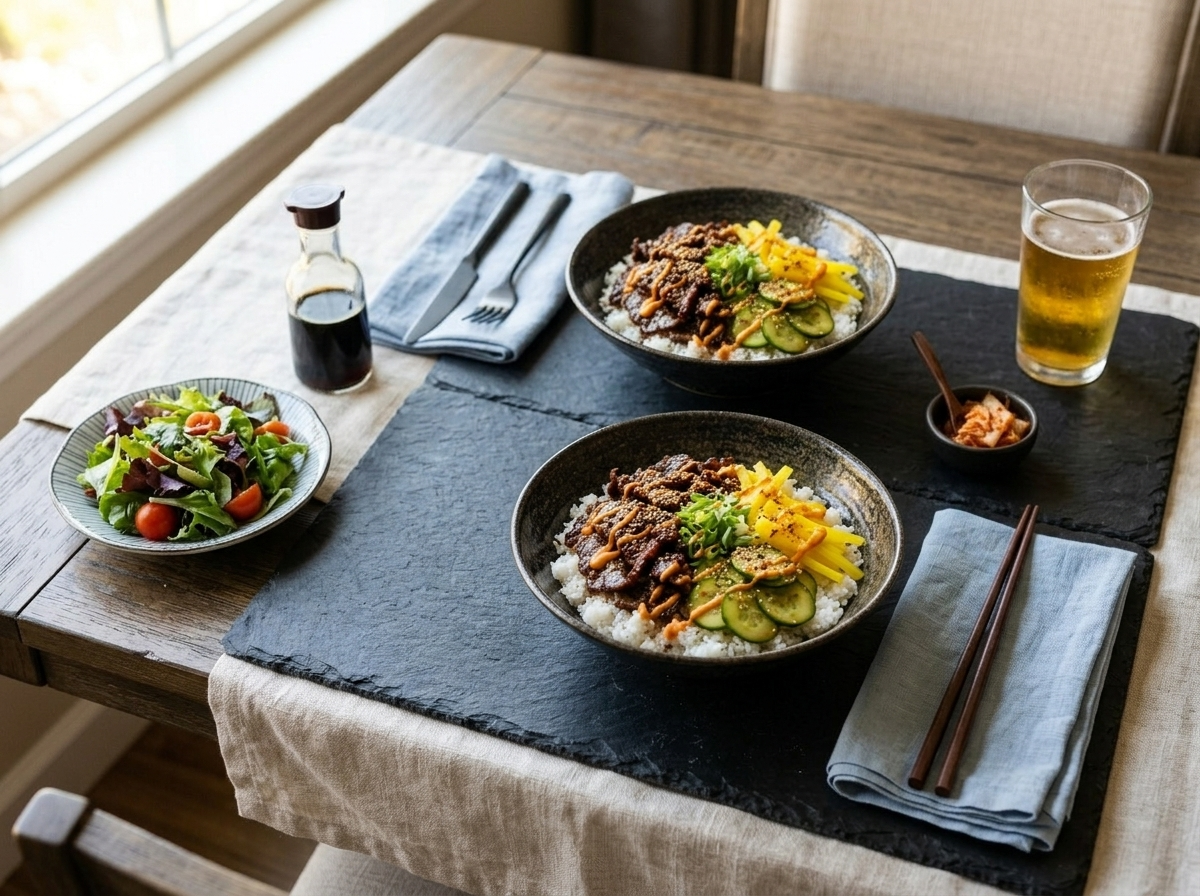
Serve the bowl with a cold can of sparkling water or a light lager. The salt and sweetness of the bulgogi pair well with something low-bitterness and cold.
For a fuller spread, add a small dish of kimchi on the side and a soft-boiled egg halved over the rice, similar to what tops a black garlic ramen with soft egg. Both are low-effort additions that add a lot of textural contrast to the bowl.
If you’re feeding a group, set out the components separately – rice, beef, cucumbers, pickled radish, gochujang mayo – and let people build their own. It’s a practical way to handle varying heat preferences.
FAQ
Why is my beef bulgogi tough instead of tender?
The two most common causes are slicing the beef too thick or not including enough pear in the marinade. Aim for slices around 3 mm and make sure you’re grating the pear rather than just adding chunks. The enzyme in the pear juice needs direct contact with the meat.
Can I use fish sauce instead of soy sauce in bulgogi marinade?
Fish sauce will make the flavor profile sharper and more pungent – it’s not a straight swap. If you want to use it, replace no more than 1 tbsp of the soy sauce with fish sauce and keep the rest as soy.
How far ahead can I marinate the beef for bulgogi?
Up to 24 hours in the fridge is the sweet spot. Beyond that, the pear enzymes continue breaking down the meat fibers and the texture can turn slightly mushy rather than tender.
What toppings go well with a beef bulgogi rice bowl?
Sesame cucumber, thinly sliced scallions, pickled daikon, and a soft-boiled egg are all strong choices. A drizzle of gochujang mayo or a spoonful of kimchi adds heat and fermented depth without extra cooking.
Is beef bulgogi rice bowl gluten-free?
Not with regular soy sauce – soy sauce contains wheat. Swap soy sauce for tamari or a certified gluten-free soy sauce and check that your gochujang brand doesn’t contain wheat starch, since some do.
What is the difference between bulgogi and galbi?
Both are Korean marinated beef dishes using a similar soy-pear-sesame base, but bulgogi uses thinly sliced boneless cuts cooked fast on high heat, while galbi uses bone-in short ribs cooked longer, much like the technique behind Korean braised beef short ribs. The flavor profiles are close; the texture and cut are the main difference.
About The Author

John
John Watson is the passionate food enthusiast behind MePlusFood.com. With a deep love for exploring culinary delights, he shares honest restaurant reviews, mouthwatering recipes, and culinary adventures. Join John on his flavorful journey to savor the world one bite at a time.