Maple Soy Glazed Salmon Bowl
Jump to Recipe
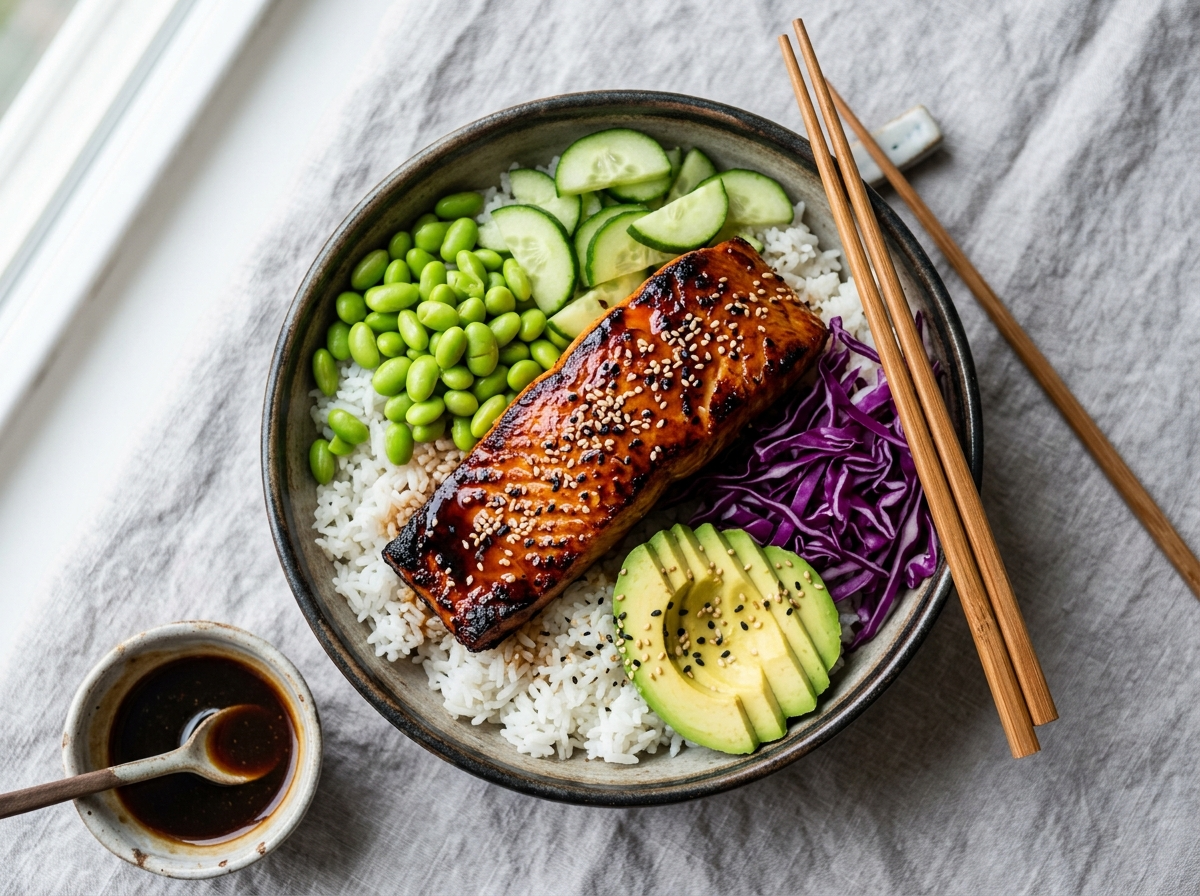
A maple soy glaze sounds fancy but it’s four pantry ingredients whisked together in under a minute. The salmon fillets go into a hot skillet, the glaze goes on at the end, and the whole thing is done before your rice finishes cooking.
The balance is sweet from the maple, salty from the soy, and sharp from the rice vinegar, a profile that also drives the tamarind glazed salmon with coconut rice. It coats the salmon without overpowering the fish, which matters when you’re using good fillets.
Bowls like this work because each component stays separate until you eat it. The cucumber stays cool, the edamame adds chew, the rice soaks up any extra glaze. It eats like a full meal without feeling heavy.
I keep the toppings simple here, but the base is flexible. Swap in quinoa, add sliced avocado, or spoon on a little sriracha mayo if you want heat like in these sticky honey sriracha glazed wings.
Why You’ll Love This Recipe
- Glaze caramelizes into a sticky, lacquered crust on the fish.
- Ready in 40 minutes including rice cook time.
- High-protein bowl that keeps you full for hours.
- Toppings are flexible – customize with what you have.
Ingredient Notes
- Salmon fillets: Skin-on fillets hold together better in the pan and give you crispy skin as a bonus. Atlantic or sockeye both work well here.
- Pure maple syrup: Use pure maple syrup, not pancake syrup, which is mostly corn syrup and will taste flat. Honey is a direct swap at the same ratio.
- Soy sauce: Low-sodium soy sauce keeps the glaze from getting too salty as it reduces. Tamari works as a gluten-free alternative.
- Rice vinegar: A small amount cuts through the sweetness and keeps the glaze from tasting one-dimensional. Apple cider vinegar works in a pinch.
- Sesame oil: Toasted sesame oil added off-heat gives the glaze a nutty finish. Regular sesame oil or a few drops of chili sesame oil both work.
- Edamame: Frozen shelled edamame thawed in warm water is the fastest option. You can sub in frozen corn or sliced sugar snap peas.
Maple Soy Glazed Salmon Bowl
Ingredients
Method
- Rinse the rice under cold water until the water runs mostly clear, then drain.
- Combine the rinsed rice, 450 ml water, and 0.5 tsp salt in a medium saucepan. Bring to a boil over high heat.
- Reduce heat to the lowest setting, cover with a tight lid, and cook for 15 minutes without lifting the lid.
- Remove from heat and let the rice steam, still covered, for 5 minutes. Fluff with a fork and set aside.
- Whisk together the maple syrup, soy sauce, rice vinegar, and minced garlic in a small bowl until fully combined. Set the sesame oil aside to add off-heat.
- Pat the salmon fillets completely dry with paper towels on both sides. Season lightly with salt and pepper.
- Heat 1 tbsp neutral oil in a 10-inch skillet over medium-high heat until shimmering but not smoking.
- Place the salmon fillets flesh-side down in the hot pan. Cook undisturbed for 3-4 minutes until the flesh is golden and cooked about two-thirds of the way up the sides.
- Flip the fillets to skin-side down and cook for 2 more minutes.
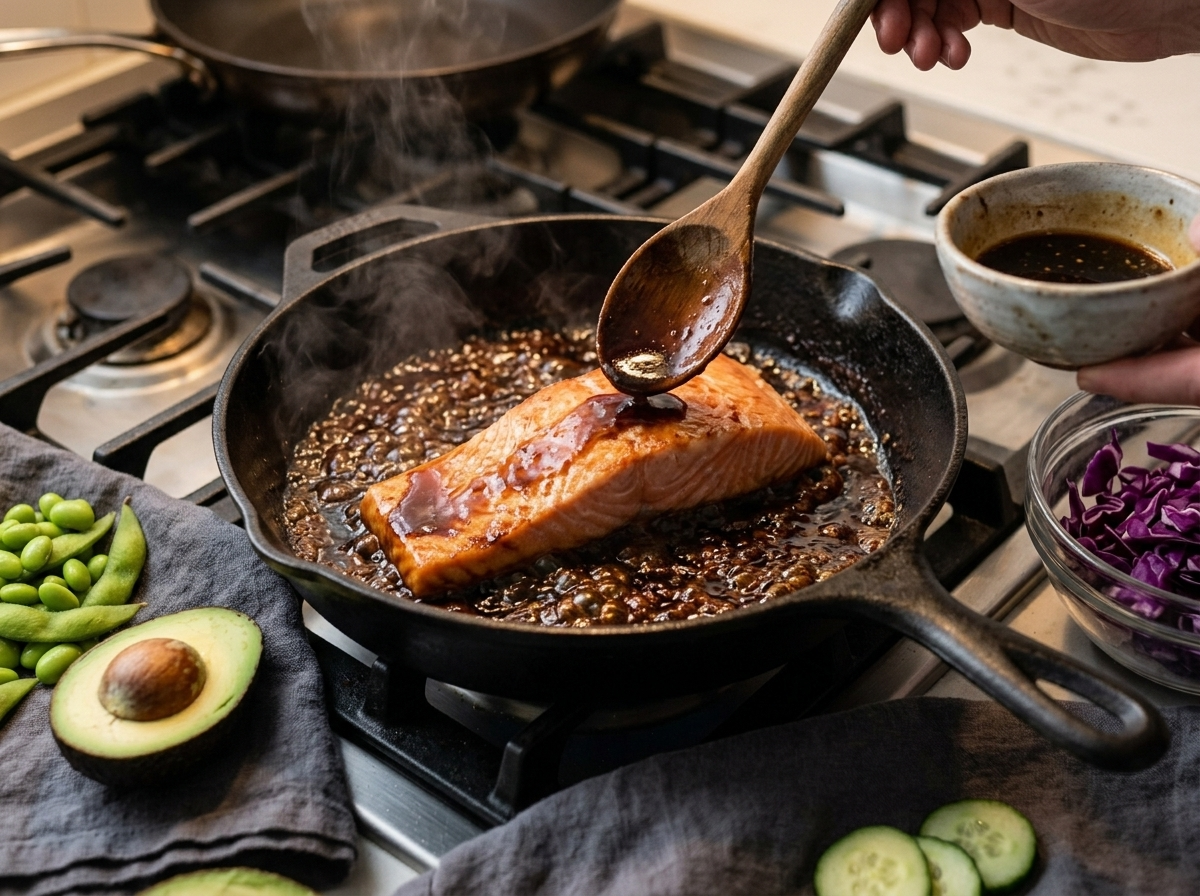
- Pour the glaze over the fillets and let it bubble and coat the fish for 1-2 minutes, spooning it over the top as it thickens. The glaze should look sticky and lacquered, not watery.
- Remove the pan from heat. Drizzle the sesame oil over the fillets and rest for 2 minutes before serving.
- Divide the cooked rice evenly among 4 bowls.
- Top each bowl with one salmon fillet.
- Arrange the cucumber, edamame, shredded cabbage, and avocado (if using) around the salmon.
- Scatter sliced green onions and toasted sesame seeds over the top.
- Spoon any remaining glaze from the pan over the rice and salmon. Serve immediately with sriracha or chili oil on the side.
Notes
Tips for Success
- Pat salmon fillets completely dry before they hit the pan or the glaze won’t stick properly.
- Add the glaze only in the last 2 minutes of cooking to prevent it from burning.
- Cook salmon flesh-side down first for 3-4 minutes, then flip for a cleaner sear.
- Rest cooked salmon for 2 minutes off the heat so the juices redistribute before flaking.
- Use a stainless steel or cast iron pan rather than nonstick for better caramelization on the glaze.
Variations
- Swap salmon for thick-cut tofu: press, cube, and sear for a plant-based version.
- Use soba noodles instead of rice for a chilled noodle bowl with the same glaze.
- Add 1 teaspoon of grated fresh ginger and 1 minced garlic clove to the glaze for extra depth.
Storage and Reheating
Store leftover salmon and rice separately in airtight containers in the fridge for up to 3 days. Keep fresh toppings like cucumber and avocado separate and add them just before serving.
To reheat the salmon, warm it gently in a covered skillet over low heat with a splash of water for 2-3 minutes. The microwave works too at 50% power for 90 seconds, though you’ll lose some of the crust texture.
The glaze can be made separately and kept in a small jar in the fridge for up to a week. It thickens as it chills, so whisk it briefly before using.
Serving Suggestions
Serve the bowl with rice as the base, the salmon placed on top, and toppings arranged around it rather than stirred in. A drizzle of extra glaze over everything ties the components together.
A side of miso glazed fish with bok choy or a simple shredded cabbage slaw with sesame dressing pairs well without adding much extra prep. Both complement the sweet-savory profile of the glaze without competing with it.
For a larger spread, this bowl sits naturally alongside cucumber sunomono or steamed bok choy with garlic. A cold lager or a dry sake works well alongside if you’re eating with company.
FAQ
Why is my maple soy glaze burning in the pan before the salmon is cooked through?
The maple syrup in the glaze has a low burn point, so it needs to go in only during the last 2 minutes of cooking. If your pan is too hot or the glaze goes in too early, it will scorch before the fish is done.
Can I use frozen salmon for this maple soy bowl?
Yes, but thaw it fully in the fridge overnight and pat it very dry before cooking. Excess moisture from improperly thawed fish steams rather than sears, and the glaze won’t caramelize the same way.
Is this maple soy salmon bowl gluten-free?
Not with standard soy sauce, which contains wheat. Swap regular soy sauce for tamari or certified gluten-free soy sauce and the rest of the recipe is naturally gluten-free.
Can I bake the salmon instead of pan-searing it for this bowl?
You can. Bake at 200 C / 390 F for 12-14 minutes, then spoon the glaze on in the last 3 minutes. You won’t get the same caramelized crust as pan-searing, but the flavor holds up well.
How do I know when the salmon in this bowl is done cooking?
The flesh should flake easily with a fork and the center should be just opaque, not glassy. An instant-read thermometer reading of 52-54 C / 125-130 F gives you a slightly pink, moist center.
What toppings work best with a maple soy salmon bowl besides edamame and cucumber?
Sliced avocado, pickled ginger, shredded carrots, or a jammy soft-boiled egg all work well. A spoonful of sriracha mayo adds heat without masking the glaze.
About The Author

John
John Watson is the passionate food enthusiast behind MePlusFood.com. With a deep love for exploring culinary delights, he shares honest restaurant reviews, mouthwatering recipes, and culinary adventures. Join John on his flavorful journey to savor the world one bite at a time.