Beef Wellington with Mushroom Duxelles
Jump to Recipe
Beef Wellington gets its reputation from the gap between how it looks and how technically demanding it actually is. The steps are straightforward once you understand why each one matters.
The mushroom duxelles is the foundation. It’s a paste of finely chopped cremini or mixed mushrooms, shallots, and thyme, cooked in butter until every drop of moisture has evaporated — a technique that shares the same precision required in a wild mushroom and truffle risotto. Skip this step, or rush it, and the pastry turns soft and pale instead of crisp and amber.
The beef itself needs two things before it goes anywhere near pastry: a hard sear to build a crust, and time in the fridge wrapped in plastic to hold its shape. Both matter for the final slice.
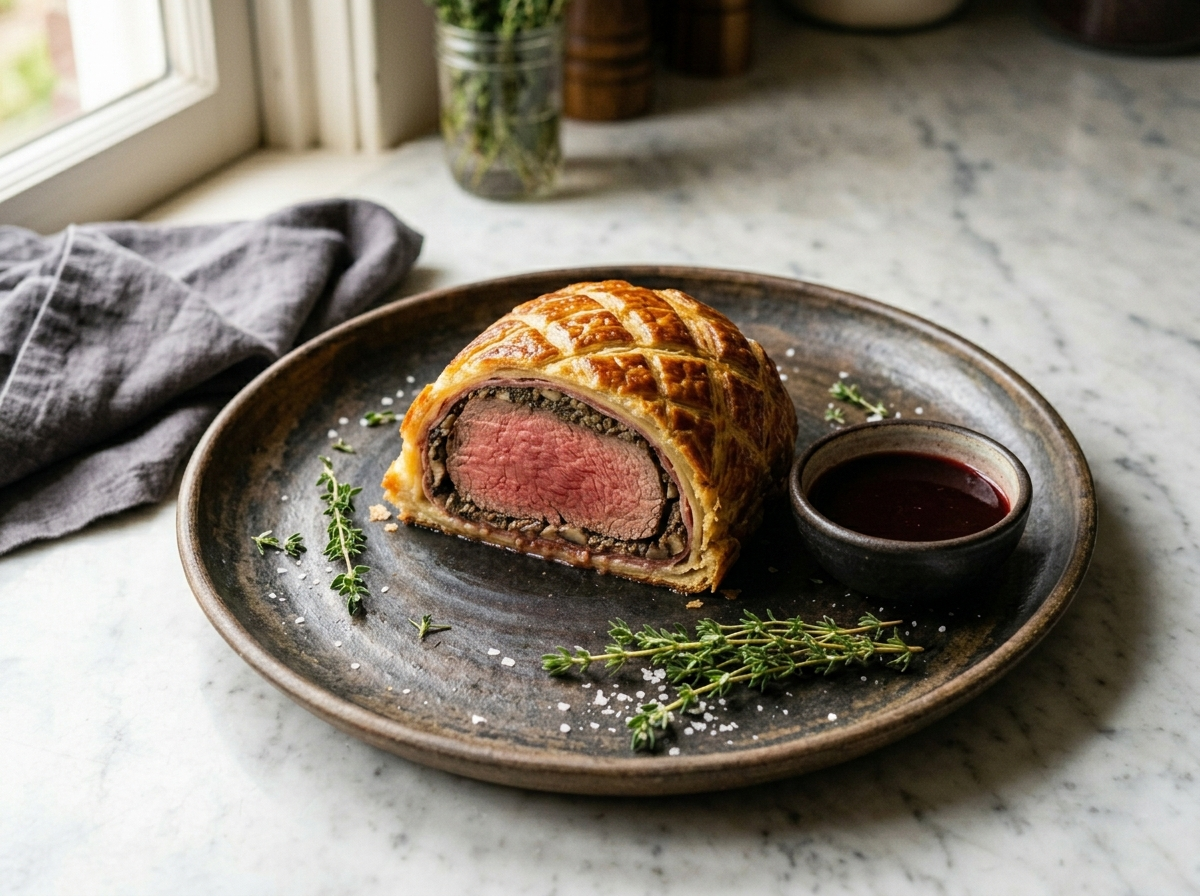
The result is a roast that cuts cleanly, reveals that pink center, and holds together on the plate. It’s the kind of dish that earns its occasion.
Why You’ll Love This Recipe
- The duxelles keeps the pastry crisp, not soggy
- A single roast feeds four with minimal cleanup
- Most steps can be done the night before
- Slices cleanly at the table with a rosy center
Ingredient Notes
- Beef tenderloin: A center-cut piece of even thickness ensures the beef cooks uniformly. Ask your butcher to trim the chain and any silverskin before you bring it home.
- Cremini mushrooms: Cremini give a meatier flavor than white button mushrooms. You can swap half for dried porcini (rehydrated and squeezed dry) for a deeper, more umami-forward duxelles.
- Puff pastry: All-butter puff pastry bakes more flavorfully and browns more evenly than vegetable-fat versions. Keep it cold right up until you wrap the beef.
- Prosciutto: The prosciutto layer sits between the duxelles and the pastry, acting as a moisture barrier and adding a cured, salty note. Parma ham or speck work equally well.
- Dijon mustard: A thin coat of Dijon applied to the seared beef adds a mild tang and helps the duxelles adhere to the surface.
- Egg yolk: Brush with egg yolk rather than whole egg for a deeper, lacquer-like glaze on the finished pastry.
Beef Wellington with Mushroom Duxelles
Ingredients
Method
- Pulse the cremini mushrooms in a food processor until very finely chopped, about the texture of coarse sand. Work in batches if needed.
- Melt butter in a large skillet over medium heat. Add shallots and cook for 3 minutes until soft and translucent.
- Add garlic and thyme, cook for 1 minute until fragrant.
- Add the chopped mushrooms and white wine. Cook, stirring often, for 15 to 18 minutes until the pan is dry and the mixture holds its shape when pressed. Season with salt and pepper.
- Transfer duxelles to a plate, spread thin, and cool completely. Refrigerate uncovered for at least 30 minutes.
- Pat the beef tenderloin completely dry with paper towels. Season all sides generously with salt and pepper.
- Heat a 12-inch skillet over high heat until smoking. Add the oil, then sear the tenderloin for 90 seconds per side, turning to brown all surfaces including the ends.
- Remove from pan and brush all surfaces with a thin, even coat of Dijon mustard while still warm.
- Place the beef on a wire rack and refrigerate uncovered for 20 minutes until the surface is cool and dry.
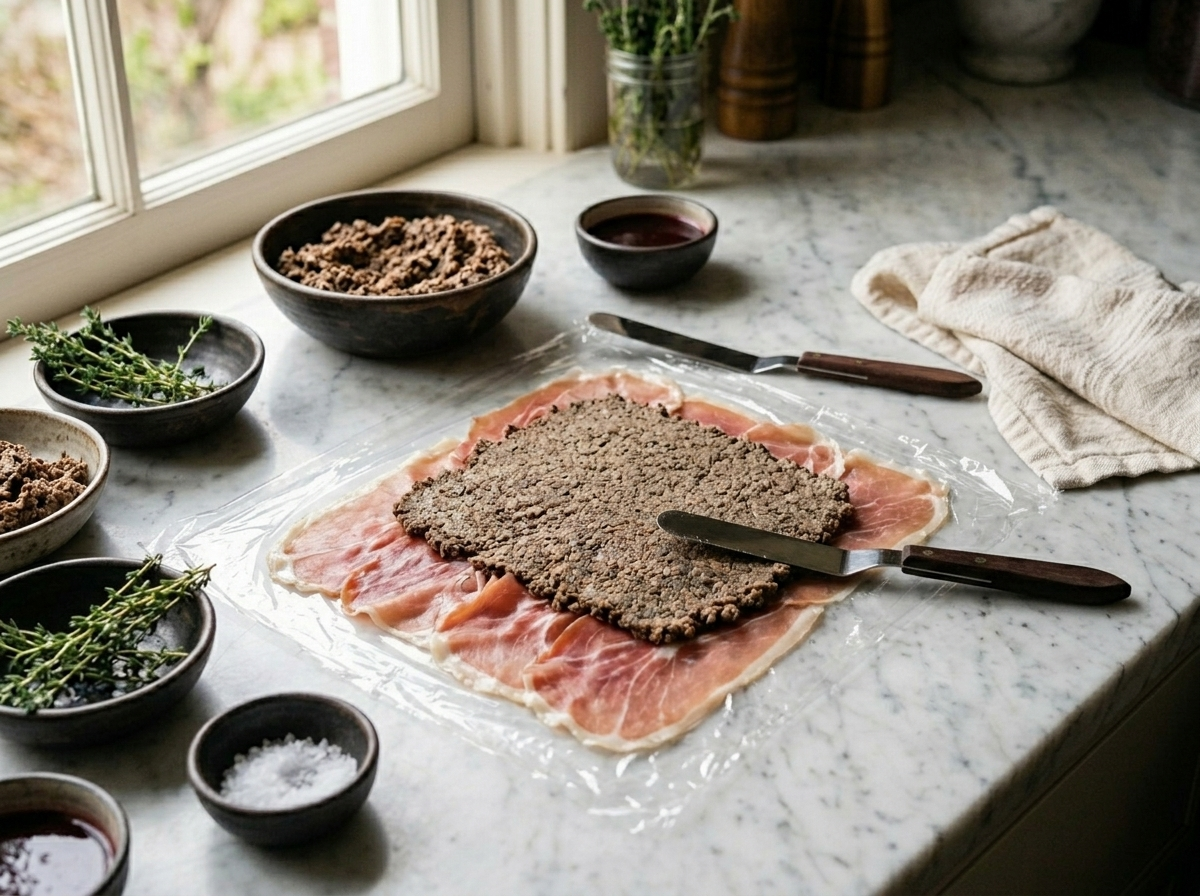
- Lay a large piece of plastic wrap on a clean surface. Arrange the prosciutto slices in overlapping rows to form a rectangle roughly 30 x 25 cm.
- Spread the cooled duxelles evenly over the prosciutto, leaving a 2 cm border on one long edge.
- Place the chilled beef at the near edge of the prosciutto. Use the plastic wrap to roll the prosciutto and duxelles tightly around the beef, twisting the ends to form a firm log.
- Refrigerate the wrapped log for at least 1 hour, or overnight.
- On a lightly floured surface, roll the puff pastry to a rectangle large enough to wrap the log with a 3 cm overlap. Brush the pastry with egg wash.
- Unwrap the beef log and place it at the near edge of the pastry. Roll the pastry around the beef, press the seam firmly, and fold and tuck the ends neatly.
- Place seam-side down on a parchment-lined baking sheet. Brush with egg wash, score the top lightly with the back of a knife in a crosshatch pattern, and refrigerate for 15 minutes.
- Heat the oven to 200 C / 390 F with a rack in the center position.
- Apply a second coat of egg wash to the chilled Wellington. Sprinkle lightly with flaky sea salt.
- Bake for 25 to 30 minutes until the pastry is deep amber and an instant-read thermometer inserted into the center of the beef reads 52 C / 125 F for medium-rare.
- Transfer to a cutting board and rest for 10 minutes before slicing. Use a sharp carving knife to cut slices 3 to 4 cm thick.
Notes
Tips for Success
- Cook the duxelles over medium heat for at least 15 minutes, stirring often, until the pan is dry and the mixture holds its shape.
- Sear the tenderloin in a very hot pan for 90 seconds per side, then chill it unwrapped for 20 minutes before assembling.
- Lay the prosciutto on plastic wrap in overlapping slices, spread duxelles on top, then roll the beef tightly and refrigerate for at least 1 hour.
- Score the pastry surface lightly with the back of a knife and brush with egg yolk twice: once before chilling and once right before baking.
- Use an instant-read thermometer and pull the Wellington from the oven at 52 C / 125 F for medium-rare – it will carry-cook to 55 C while resting.
Variations
- Individual Wellingtons: wrap 150 g beef medallions separately, reduce bake time to 18 minutes.
- Pork tenderloin Wellington: swap beef for pork, use sage and apple in the duxelles, cook to 63 C internal.
- Vegetarian Wellington: replace beef with a roasted butternut squash or portobello stack, keep the duxelles and pastry unchanged.
Storage and Reheating
Store leftover Wellington slices in an airtight container in the fridge for up to 2 days. The pastry softens overnight but can be crisped up in a 190 C / 375 F oven for 8 to 10 minutes.
Freezing a fully baked Wellington is not recommended because the pastry separates from the duxelles layer and turns chewy when thawed. You can freeze the assembled, uncooked Wellington before the egg wash step for up to 1 month. Bake straight from frozen at 200 C / 390 F, adding 15 to 20 minutes to the baking time and monitoring internal temperature.
For meal prep, the duxelles can be made up to 3 days ahead and stored covered in the fridge. The beef can be seared, mustard-coated, and chilled up to 24 hours before final assembly.
Serving Suggestions
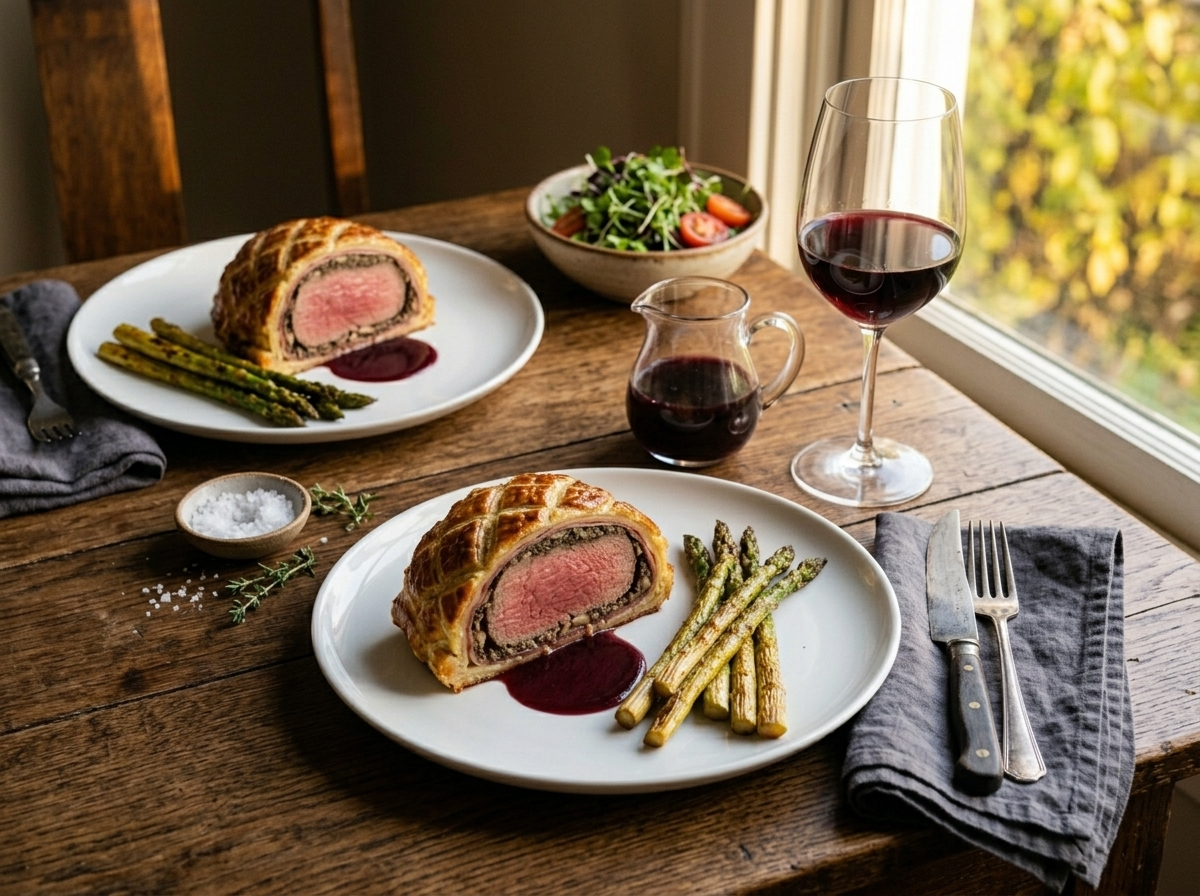
Beef Wellington works best with sides that don’t compete with the pastry. Roasted asparagus or tender-stem broccoli with a little lemon zest keep the plate light enough. Crisp-edged roast potatoes or a buttery potato gratin are the right call if you want the meal to feel substantial, much like the richness a garlic butter lobster risotto brings to a formal dinner.
A red wine jus made from the beef trimmings and a splash of Bordeaux is the natural sauce here, the same kind of reduction that anchors a duck breast with cherry reduction. A creamy horseradish sauce on the side gives guests a sharp, bright option that cuts through the richness of the duxelles and pastry.
For a dinner party, slice the Wellington at the table. A sharp carving knife and a steady hand keep the pastry intact. Aim for slices about 3 to 4 cm thick.
FAQ
Why does the pastry on my Beef Wellington turn soggy on the bottom?
The most common cause is duxelles that still contain moisture when you assemble the Wellington. Cook the mushroom mixture until the pan is completely dry and the paste holds a clean line when you drag a spoon through it. Chilling the assembled log before baking also helps the pastry set faster in the oven.
Can I use portobello mushrooms instead of cremini for the duxelles?
Yes, but portobello mushrooms release more water and will turn the duxelles very dark. Chop them finely and cook them longer, at least 20 minutes, until fully dry. The flavor is slightly earthier but works well with the beef.
How do I know when the Beef Wellington is done without cutting it open?
An instant-read thermometer is the only reliable method. Insert it through the side of the pastry into the center of the beef. Pull it at 52 C / 125 F for medium-rare, knowing the temperature will rise another 3 to 5 degrees while it rests for 10 minutes.
Can I assemble Beef Wellington the night before and bake it the next day?
Yes, and it actually improves the result. Assemble fully, egg wash once, cover loosely with plastic wrap, and refrigerate overnight. Apply a second egg wash just before it goes into the oven. Bake straight from the fridge, adding about 5 minutes to the baking time.
What wine pairs well with Beef Wellington and mushroom duxelles?
A Bordeaux or Napa Valley Cabernet Sauvignon is the classic match. The tannins stand up to the beef and the herbal notes complement the thyme in the duxelles. A Burgundy Pinot Noir is a lighter option that works if you prefer something less structured.
Is Beef Wellington gluten-free?
No, traditional Beef Wellington uses wheat-based puff pastry, which contains gluten. You can make a gluten-free version using a certified gluten-free puff pastry, though the texture and rise will be slightly different. All other components, beef, duxelles, prosciutto, and mustard, are naturally gluten-free.
About The Author

John
John Watson is the passionate food enthusiast behind MePlusFood.com. With a deep love for exploring culinary delights, he shares honest restaurant reviews, mouthwatering recipes, and culinary adventures. Join John on his flavorful journey to savor the world one bite at a time.