Gochujang Braised Short Rib Bao Buns
Jump to Recipe
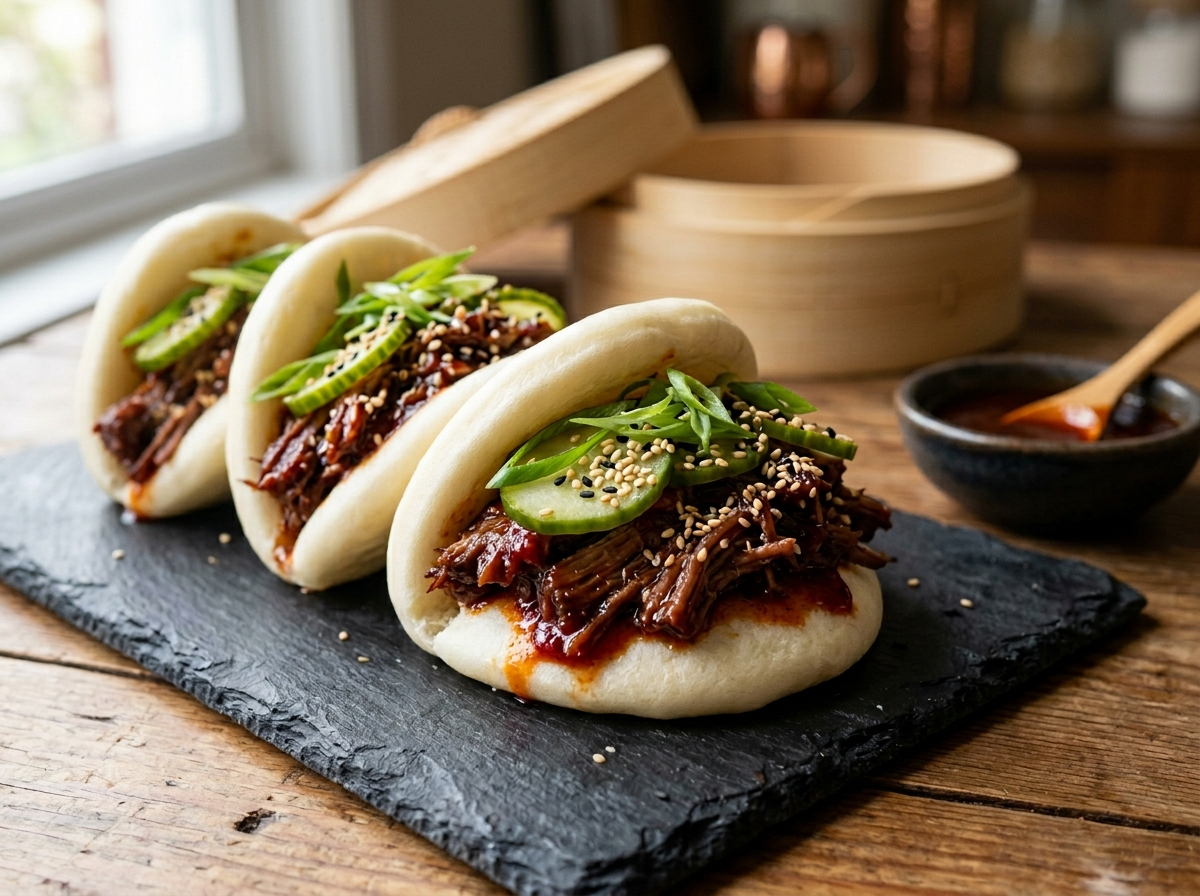
Gochujang does two things at once in this braise: it builds a fermented, chili-forward base and it caramelizes against the beef fat into something sticky and deeply savory.
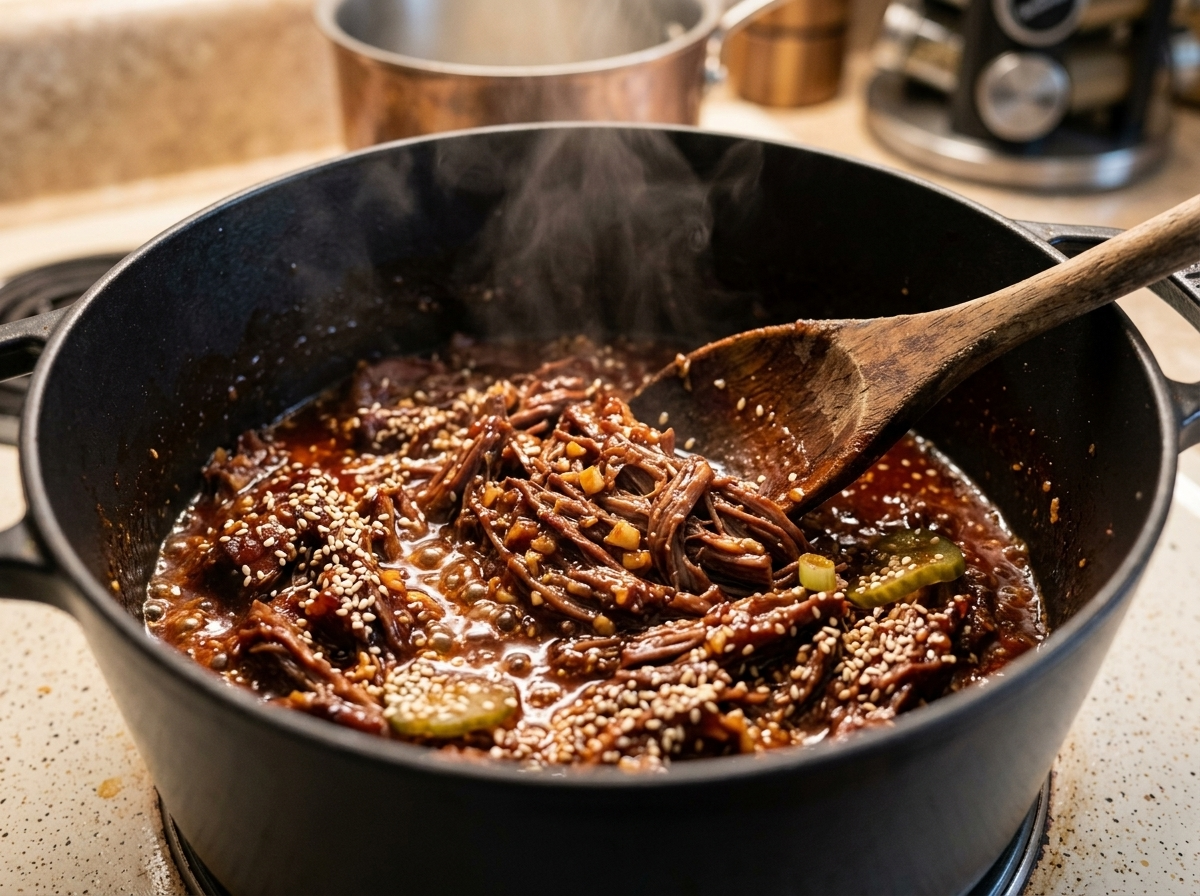
The short ribs go in bone-in and come out soft enough to shred with two forks. The braising liquid reduces into a lacquer you spoon directly over the meat before loading the bao.
Steamed bao buns have a slight sweetness and a soft, yielding texture that balances the heat from the gochujang. I keep the garnishes sharp and crunchy, quick-pickled cucumbers and thinly sliced scallion, to cut through the richness.
This is a weekend recipe. The braise takes about 3 hours, but most of that is unattended oven time. The short ribs can be braised up to two days ahead, which makes same-day assembly fast.
Why You’ll Love This Recipe
- Short ribs braise hands-off for melt-in-mouth texture
- Gochujang sauce reduces into a sticky, bold glaze
- Make-ahead beef keeps well for two days refrigerated
- Fluffy bao and crunchy pickles balance the rich filling
Ingredient Notes
- beef short ribs (bone-in, English cut): English-cut short ribs, about 5 to 7 cm thick, braise evenly and shred cleanly. Flanken cut works but reduces faster and needs less liquid.
- gochujang paste: I use a mid-range brand like Haechandle or Sempio. Heat level varies by brand, so taste before adding the full amount if you want less spice.
- gochugaru (Korean chili flakes): Gochugaru adds fruity chili heat without the fermented depth of gochujang. Substitute with mild Calabrian chili flakes at half the quantity if you can’t find it.
- doenjang or white miso: Doenjang adds an earthy, fermented backbone to the braise. White miso is a milder substitute that still adds umami without overpowering the gochujang.
- steamed bao buns (store-bought frozen): Frozen bao from an Asian grocery store steam in about 8 minutes from frozen and are consistent. Homemade bao dough takes about 2 extra hours but the texture is noticeably softer.
- rice vinegar: Used for the quick-pickled cucumbers. Apple cider vinegar at the same ratio works and gives a slightly fruitier brine.
Gochujang Braised Short Rib Bao Buns
Ingredients
Method
- Pat short ribs dry with paper towels and season all sides generously with salt. Let them sit at room temperature for 30 minutes before cooking.
- Heat oven to 160 C / 320 F.
- Heat oil in a 5-quart Dutch oven over high heat until shimmering. Sear short ribs in a single layer, fat-side down first, for 3 to 4 minutes per side until deeply browned on all four sides. Work in batches if needed. Transfer ribs to a plate.
- Pour off all but 1 tbsp of fat from the pot. Reduce heat to medium. Add minced garlic and grated ginger and cook for 90 seconds, stirring constantly, until fragrant but not burnt.
- In a bowl, whisk together gochujang, soy sauce, doenjang, brown sugar, gochugaru, sesame oil, beef stock, and rice wine until the pastes are fully dissolved.
- Pour the gochujang liquid into the pot, scraping the bottom with a wooden spoon to lift any browned bits.
- Return short ribs to the pot, bone-side up. Add bruised scallion halves and star anise. The liquid should come about halfway up the ribs. Add a splash more stock if needed.
- Bring to a bare simmer, then cover with the lid slightly ajar and transfer to the oven.
- Braise at 160 C / 320 F for 2 hours 15 minutes, then remove the lid fully for the final 45 minutes to allow the liquid to reduce and the meat to darken slightly.
- Check doneness by pressing the thickest rib with tongs. The meat should feel very soft and pull away from the bone with gentle pressure. An instant-read thermometer should read at least 93 C / 200 F for full collagen breakdown.
- Remove pot from oven. Transfer ribs to a cutting board and let cool for 10 minutes. Discard scallion halves and star anise.
- Pull meat from the bones using two forks and shred into rough pieces. Discard bones and any large pieces of hard fat.
- Strain the braising liquid through a fine-mesh sieve into a small saucepan, pressing on the solids. Skim visible fat from the surface.
- Simmer the strained liquid over medium heat for 8 to 10 minutes until it coats the back of a spoon and is slightly syrupy. Taste and adjust seasoning with a pinch of salt or a few drops of soy sauce if needed.
- Return shredded beef to the reduced sauce and toss to coat. Keep warm over low heat while you prepare the bao and pickles.
- Combine rice vinegar, caster sugar, and fine salt in a small bowl and stir until dissolved.
- Add sliced cucumbers and toss to coat. Let sit for at least 15 minutes at room temperature. They will soften slightly and turn bright and briny. Sprinkle with sesame seeds if using.
- Line a bamboo steamer basket with small squares of parchment paper. Place frozen bao buns in the basket, spaced 2 cm apart. Set over a wok or pot of rapidly simmering water.
- Steam with the lid on for 8 minutes until bao are puffed, soft, and no longer frozen at the center.
- Gently open each bao and fill with a generous spoonful of sauced shredded beef. Add 3 to 4 cucumber slices, a pinch of sliced scallion greens, a few sesame seeds, a drizzle of sesame oil, and cilantro leaves if using.
- Serve immediately while the bao are still warm and soft.
Notes
Tips for Success
- Pat short ribs completely dry before searing so you get a dark, caramelized crust, not a grey steam.
- Whisk gochujang into warm beef stock before adding to the pot to prevent paste clumping against hot fat.
- Braise with the lid slightly ajar for the final 45 minutes to let the liquid reduce and concentrate the sauce.
- Skim fat from the braising liquid after it cools overnight before reducing it into a glaze.
- Steam bao directly from frozen in a bamboo steamer lined with parchment, 8 minutes over medium-high heat, no thawing needed.
Variations
- Swap short ribs for bone-in pork shoulder for a slightly lighter, faster braise at 2.5 hours.
- Add 1 tbsp black bean paste alongside the gochujang for a deeper, more savory braising base.
- Use lettuce wraps instead of bao for a low-carb version that still carries the same braised filling.
Storage and Reheating
Braised short rib meat and reduced sauce keep separately in airtight containers in the fridge for up to 3 days. The fat cap that rises to the surface after chilling is easy to lift off before reheating.
To reheat, place shredded beef in a covered skillet over medium-low heat with 2 to 3 tbsp of the braising liquid and warm for 5 to 6 minutes, stirring once. Do not overheat or the meat will dry out.
Freezing works well for the beef. Portion shredded ribs with sauce in freezer bags, press flat, and freeze for up to 2 months. Thaw overnight in the fridge. Bao buns are best steamed fresh from frozen and don’t freeze well once filled.
Serving Suggestions
Load each bao with a generous pinch of shredded beef, a spoonful of reduced sauce, two or three slices of quick-pickled cucumber, and a scatter of scallion. A few sesame seeds and a drizzle of toasted sesame oil finish the bun cleanly.
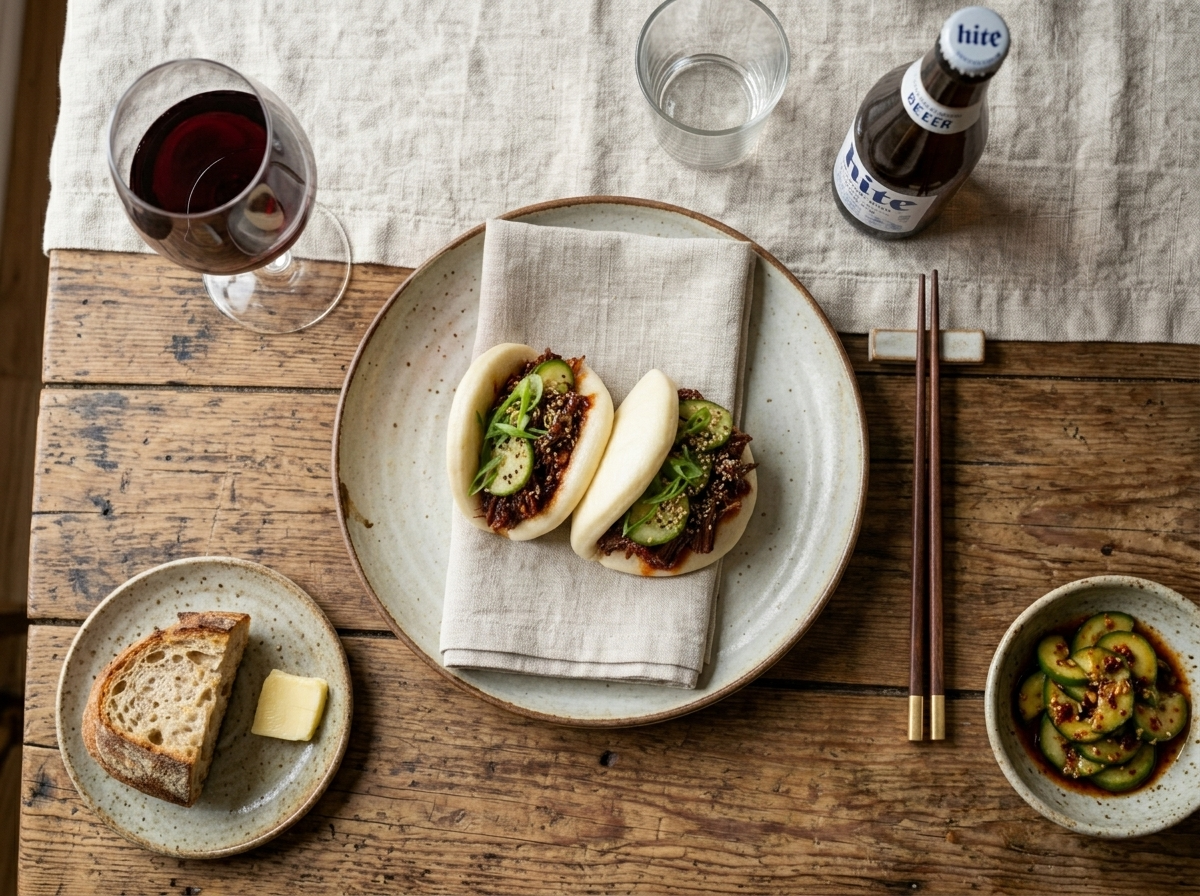
For a fuller spread, serve alongside a bowl of steamed jasmine rice to soak up extra braising sauce, and a simple cold dish like a sesame ginger noodle salad with sesame oil and garlic. A cold Korean lager or a ginger-forward highball cuts through the richness well.
If you’re serving a crowd, set out the shredded beef in a warm serving bowl with the sauce on the side, the pickles in a small dish, and a basket of steamed bao, and let people build their own. It holds well as a self-serve setup for 30 to 40 minutes.
FAQ
Why is my gochujang braising liquid too bitter after reducing?
Gochujang can turn bitter if it scorches on the bottom of the pot during the sear or early braise. Make sure you scrape the pot bottom clean after searing and before adding liquid. Adding a teaspoon of brown sugar to the finished reduction balances any bitterness.
Can I use gochujang paste instead of making a marinade from scratch?
Yes, but straight gochujang paste is too thick and salty to braise in alone. Thin it with beef stock, soy sauce, and a touch of sesame oil before using it as your braising liquid.
Can I braise the short ribs the day before and reheat them in the bao?
Yes, and it actually improves the result. The beef firms up overnight, which makes it easier to shred cleanly, and the flavors in the braising liquid deepen. Reheat gently in the sauce before filling the bao.
What pickled vegetables work in gochujang short rib bao besides cucumber?
Daikon radish pickled in rice vinegar and a pinch of sugar is a classic pairing and adds a firmer crunch, much like the thinly sliced roasted carrots you’d find in a tangy vinegar brine work well too. Quick-pickled red onion or thin-sliced carrots in the same brine work well too.
Are these bao buns gluten-free?
No. Standard steamed bao buns are made with wheat flour, and gochujang paste often contains wheat or barley. For a gluten-free version, use rice flour bao or lettuce wraps, and choose a certified gluten-free gochujang.
What is the difference between gochujang braised short ribs and Korean galbi jjim?
Galbi jjim is a traditional Korean braised short rib stew using soy, Asian pear, garlic, and sesame without gochujang, giving it a sweeter, less spicy profile. This recipe is a fusion preparation that uses gochujang as the base for a spicier, more intensely fermented braise.
About The Author

John
John Watson is the passionate food enthusiast behind MePlusFood.com. With a deep love for exploring culinary delights, he shares honest restaurant reviews, mouthwatering recipes, and culinary adventures. Join John on his flavorful journey to savor the world one bite at a time.