Greek Galaktoboureko: Custard Phyllo Pie with Lemon Syrup
Jump to Recipe
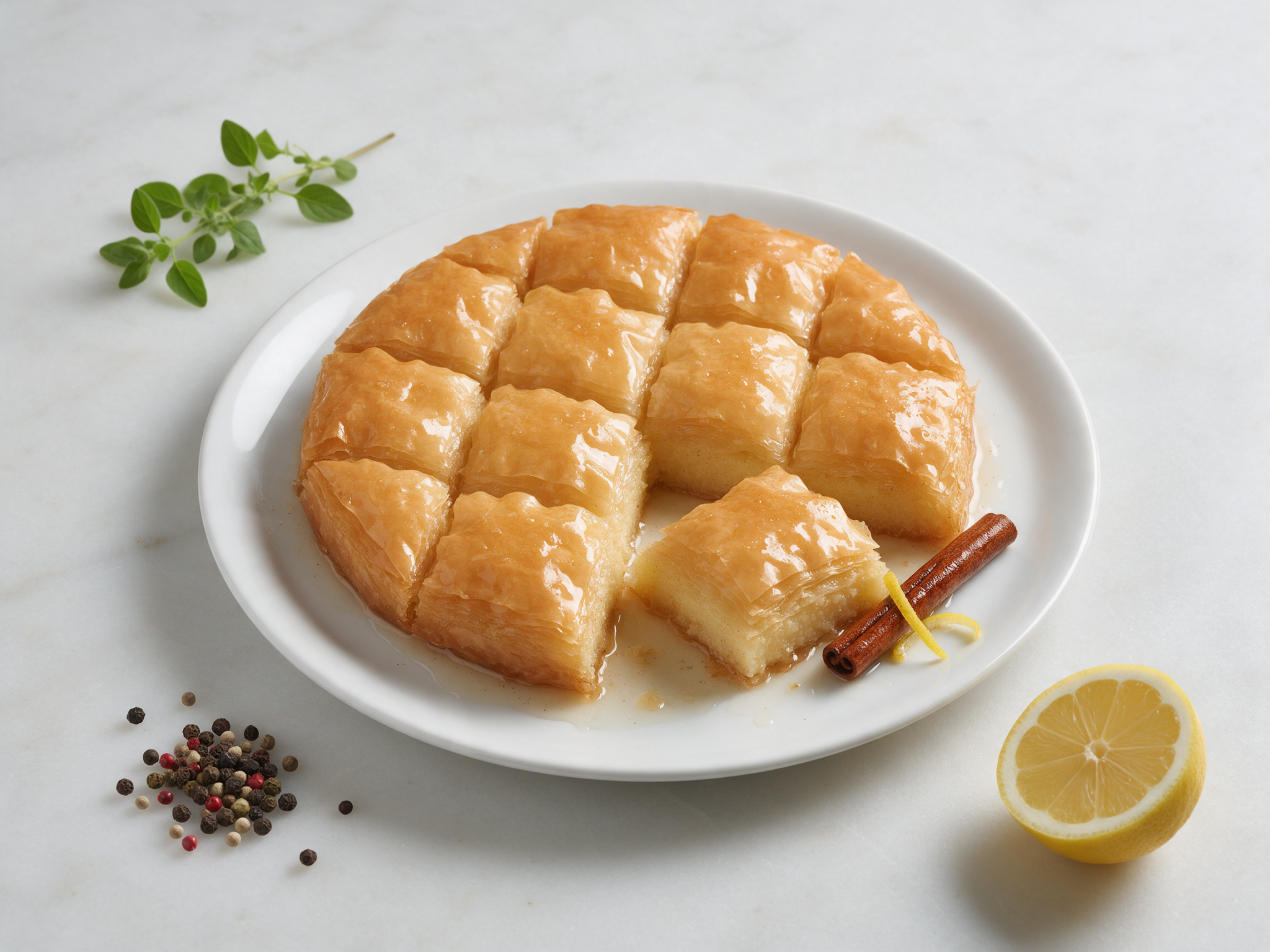
Greek galaktoboureko is a custard pie of semolina, milk, and eggs baked between buttered phyllo sheets, then finished with a cool lemon-cinnamon syrup. The custard sets sliceable, the top shatters at the edges, and the middle stays tender.
I use fine semolina and a 23 x 33 cm / 9 x 13 inch dish, which cuts into 12 squares. Hands-on work is about 35 minutes. The oven handles the rest.
Temperature is the part to respect. Syrup poured warm over the hot pie turns the phyllo gummy, so make the syrup first and let it cool while everything else happens.
Plan for 3 hours of cooling and chilling before you slice. Baked the day before, it cuts even more cleanly.
Why You’ll Love This Recipe
- Custard sets sliceable, with crisp phyllo on top and at the edges
- Hands-on work is about 35 minutes, then the oven takes over
- Bakes a day ahead and slices more cleanly after chilling
- One 9 x 13 inch dish makes 12 even squares
Ingredient Notes
- fine semolina: Fine semolina gives a smooth custard. Coarse semolina works if you cook it a few minutes longer, and about 60 g cornstarch can replace the 120 g if that’s what you have.
- phyllo sheets: Thaw the package overnight in the fridge, not on the counter, or the sheets stick together. Trim to fit the dish and use the offcuts to patch tears in the middle layers.
- whole milk: I use whole milk for a custard that holds a clean edge. 2% works but sets slightly softer, and oat milk is thinner still.
- unsalted butter: Butter gives the best flavor and browning on the phyllo. Olive oil is a fair swap for brushing, and the pie stays vegetarian either way because only eggs and semolina set the custard.
- lemon and cinnamon stick: Peel strips and a whole stick keep the syrup clear. Orange peel can replace the lemon peel for a softer citrus note.
Greek Galaktoboureko: Custard Phyllo Pie with Lemon Syrup
Ingredients
Method
- Combine 300 g sugar, 250 ml water, the cinnamon stick, and the lemon peel strips in a 2-quart / 1.9 L saucepan. Simmer over medium heat for 8 minutes until the syrup lightly coats a spoon, then stir in 1 tbsp lemon juice. Set aside to cool to room temperature while you work.
- Heat the oven to 180 C / 350 F and brush a 23 x 33 cm / 9 x 13 inch baking dish lightly with melted butter. Warm the milk in a 3-quart / 2.8 L heavy-bottomed saucepan over medium heat until steaming.
- Whisk the semolina and 150 g sugar together in a bowl, then pour into the milk in a steady stream, whisking constantly. Cook for 5 to 7 minutes until the custard is as thick as pudding and bubbles slowly.
- Take the pan off the heat and stir in 55 g butter and the vanilla. Cool for 5 minutes. Whisk a ladle of custard into the beaten eggs, then whisk that mixture back into the pan until smooth.
- Lay a phyllo sheet in the dish, trimming to fit, and brush it with melted butter. Repeat with 7 more sheets, keeping the rest under a damp towel.
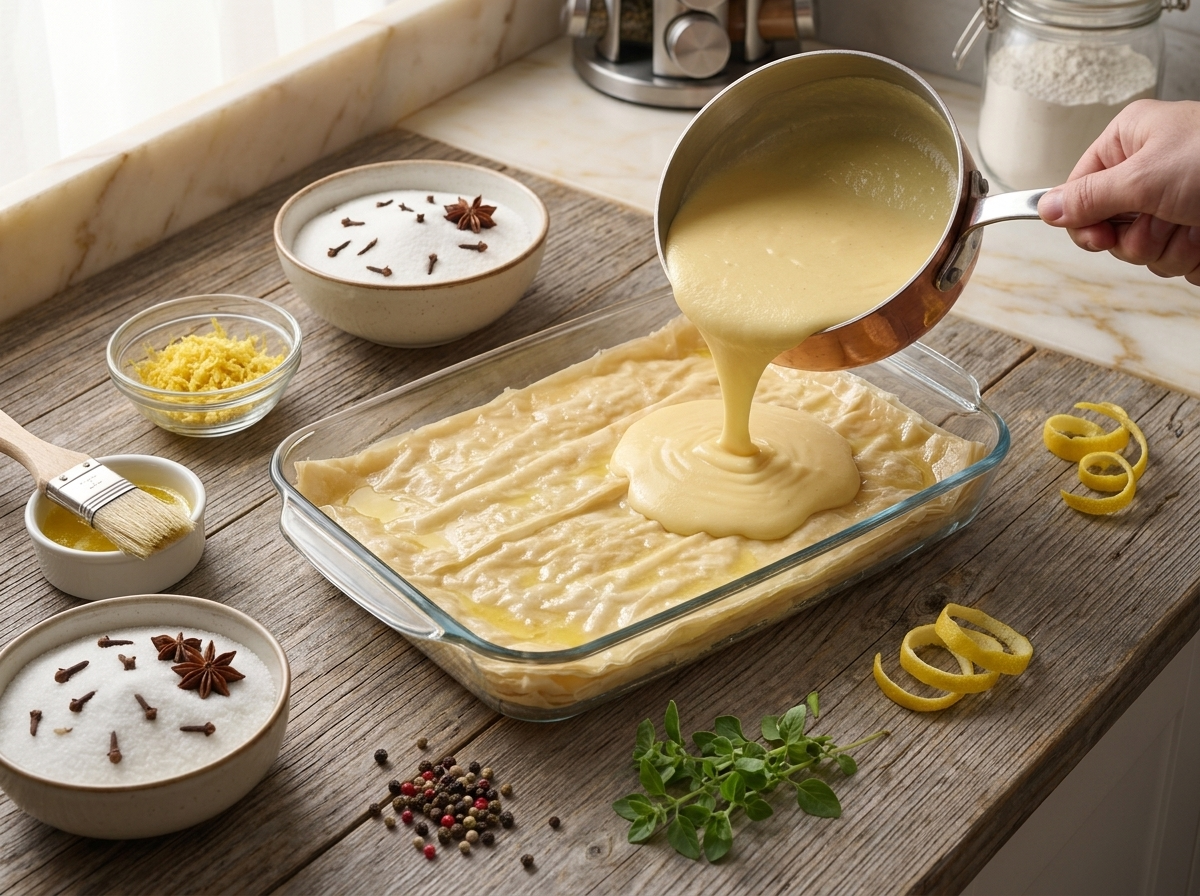
- Pour the custard over the phyllo and spread it level. Layer the remaining 8 sheets on top, brushing each with butter, tuck the edges down the sides, and brush the top generously. Score only the top layers into 12 squares (3 x 4).
- Bake on the middle rack for 45 minutes until the top is deep golden brown and the center barely jiggles when you nudge the dish.
- Remove the cinnamon stick and peel from the cooled syrup. Pour it slowly and evenly over the hot pie straight from the oven, listening for the sizzle.
- Cool the pie at room temperature for 1 hour, then refrigerate it uncovered for 2 hours. Cut through the scored lines with a serrated knife and serve cool.
Notes
- Make the syrup first so it's fully cool when the pie leaves the oven.
- Use fine semolina and whisk constantly until the custard is as thick as pudding.
- Brush every phyllo sheet edge to edge, especially the corners, to avoid dry spots.
- Chill 2 hours before cutting along the scored lines for clean squares.
Tips for Success
- Keep unused phyllo under a damp, well-wrung kitchen towel while you work so the sheets stay pliable and don’t crack at the edges.
- Whisk the semolina and sugar together first, then pour them into the hot milk in a steady stream so the custard stays lump-free.
- Cool the custard for 5 minutes before the eggs go in, and whisk a ladle of custard into the eggs first to temper them.
- Score the top phyllo layers into 12 squares before baking, cutting only down to the custard, so the pastry doesn’t shatter when you slice.
- Pour the room-temperature syrup slowly over the pie the moment it leaves the oven, so it sizzles and soaks in evenly.
Variations
- Swap the lemon peel in the syrup for orange peel and stir 1 tsp orange blossom water into the custard for a floral note.
- Spoon chilled custard onto buttered phyllo strips, fold into triangles, bake until golden, and brush with syrup for individual portions.
- Brush the phyllo with olive oil in place of butter for a lighter crunch. The custard still contains milk and eggs.
Storage and Reheating
Store galaktoboureko in the fridge, loosely covered with foil, for up to 3 days. The custard contains milk and eggs, so leave it out only for the first hour of cooling and while serving. The top is crispest within 24 hours of baking and softens gradually after that.
I don’t reheat it. Warming loosens the custard and turns the phyllo chewy, and the pie is meant to be eaten cool. Take squares out of the fridge 15 minutes before serving to lose the chill.
For make-ahead, bake and syrup the pie the day before, chill it uncovered for 2 hours, then cover once fully cold and cut just before serving. Skip the freezer, since the custard weeps water as it thaws.
Serving Suggestions
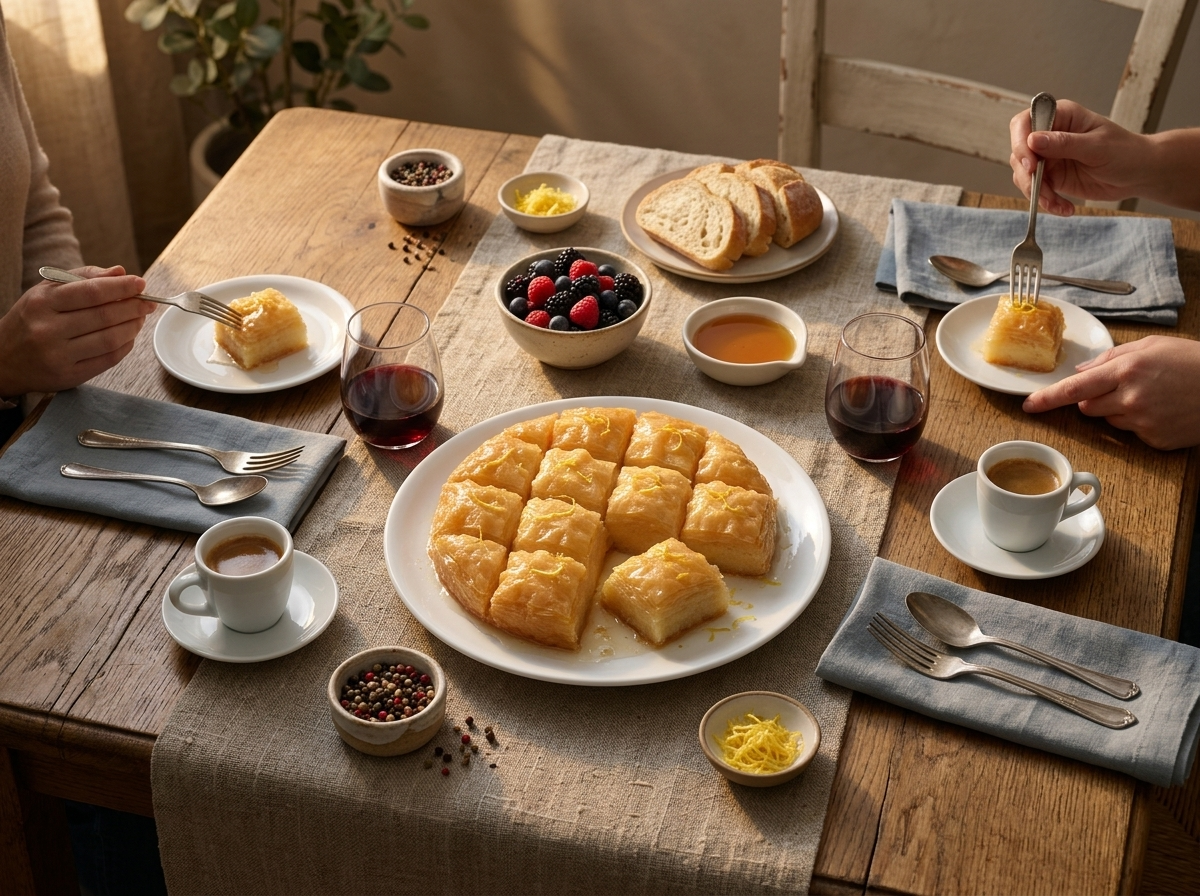
Cut galaktoboureko into 12 squares or diamonds along the scored lines using a serrated knife, wiping the blade between cuts. Serve cool, with a light dusting of ground cinnamon if you like.
Strong Greek coffee or espresso balances the sweetness well. A few fresh berries or orange slices on the plate add the acidity the custard doesn’t have.
It suits the end of a meze spread or a roast lamb dinner, and it travels well to a potluck in its baking dish.
FAQ
Why is my galaktoboureko custard runny after baking?
Runny galaktoboureko custard usually means the semolina didn’t cook long enough on the stove or the pie was cut while warm. Cook it 5 to 7 minutes until it’s as thick as pudding, bake until the center barely jiggles, then chill 2 hours before slicing. Warm custard always looks looser than the finished texture.
Can I use cornstarch instead of semolina in galaktoboureko?
Yes, use about 60 g cornstarch in place of the 120 g semolina and cook until the milk bubbles and thickens. The custard turns smoother and loses the faint grain semolina gives. Fine semolina is still my pick, and coarse semolina works only if you cook it a few minutes longer.
Can you freeze leftover galaktoboureko, or does the custard split?
I don’t recommend freezing it. The custard weeps water as it thaws, and the syrup-soaked phyllo turns limp. Refrigerate the baked pie, loosely covered, for up to 3 days instead, and bake it the day before serving if you need to work ahead.
What goes well with galaktoboureko at the end of a meal?
Strong Greek coffee or espresso balances the sweetness best. A few fresh berries or orange slices add acidity, and a spoonful of thick strained yogurt works if you want something tangy on the side. Skip ice cream, since the custard is already creamy.
What’s the difference between galaktoboureko and baklava?
Galaktoboureko is filled with semolina custard, while baklava is layered with chopped nuts. Both get a syrup, but galaktoboureko usually uses a lemon and cinnamon syrup and baklava a honey one. Because of the custard, galaktoboureko needs the fridge after its first hour of cooling.
Is galaktoboureko vegetarian, and can I make it dairy free?
It’s vegetarian, but it contains gluten, dairy, and eggs, so it isn’t vegan or gluten free. A dairy-free version works with unsweetened oat milk and olive oil for brushing the phyllo. Expect the custard to set a touch softer than the milk version.
Related recipes
About The Author

John
John Watson is the passionate food enthusiast behind MePlusFood.com. With a deep love for exploring culinary delights, he shares honest restaurant reviews, mouthwatering recipes, and culinary adventures. Join John on his flavorful journey to savor the world one bite at a time.