Fried Polish Faworki Angel Wings with Powdered Sugar
Jump to Recipe
Polish faworki angel wings are thin ribbons of egg yolk dough, twisted through a center slit and fried in 180 C / 350 F oil for about a minute until blistered and crisp. Dusted with powdered sugar, they’re the pastry Poland eats on Tłusty Czwartek, Fat Thursday.
The dough is stiff on purpose. Kneading it for 8 to 10 minutes and rolling it to 1.5 mm creates the air pockets that blister in the oil. A tablespoon of vodka evaporates fast and keeps the surface from soaking up grease.
Oil temperature is where this goes wrong. Below 170 C / 340 F the ribbons turn greasy and dense, so I clip a thermometer to the pot and let the oil recover between batches.
Plan on about 90 minutes in total, including a 30-minute dough rest and a short cool-down. The recipe makes about 36 faworki.
Why You’ll Love This Recipe
- Built on pantry staples, with no yeast or special molds
- Each batch fries in about a minute, so frying moves fast
- Dough can be wrapped and chilled a day ahead
- Stays crisp in an airtight tin for up to 4 days
Ingredient Notes
- sour cream: Use full-fat sour cream (18%). Full-fat Greek yogurt works in the same amount and tastes slightly tangier.
- vodka: The alcohol evaporates quickly in the oil, which limits grease absorption. Swap in 1 tbsp white spirit vinegar if you don’t keep vodka.
- egg yolks: Four yolks give the dough its color and snap. Freeze the 4 leftover whites for meringues.
- neutral oil: Sunflower or rapeseed oil keeps the recipe vegetarian. Lard is the traditional frying fat and gives a slightly richer flavor.
- powdered sugar: Sift it on just before serving. For vanilla sugar, blitz a split vanilla pod with 100 g of the sugar.
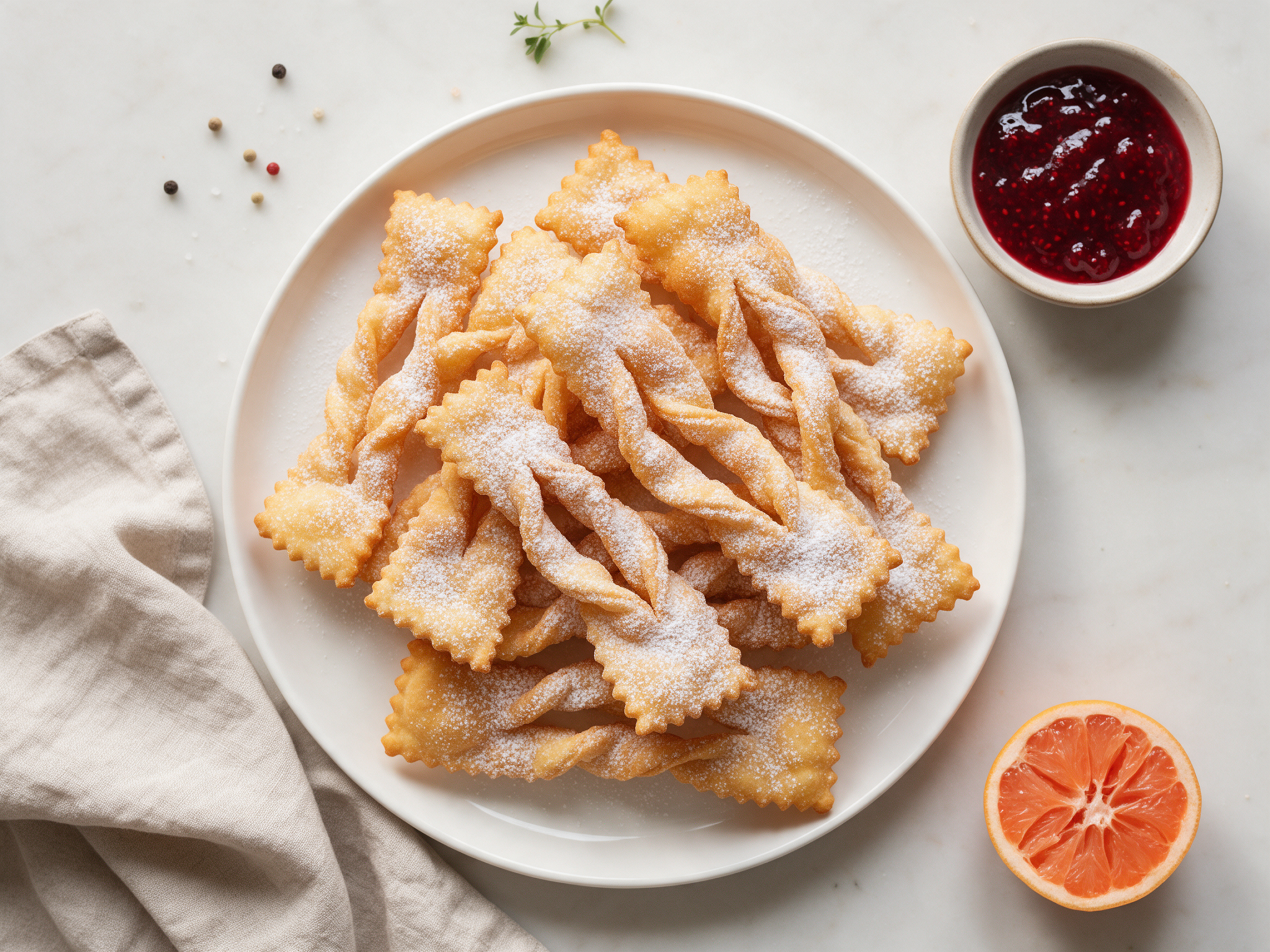
Fried Polish Faworki Angel Wings with Powdered Sugar
Ingredients
Method
- Whisk the flour, sugar and salt in a 28 cm / 11-inch mixing bowl and make a well in the center. Beat the yolks, whole egg, sour cream and vodka together in a small bowl, pour into the well, and stir with a fork and then your hands until a shaggy dough forms.
- Knead on a lightly floured counter for 8 to 10 minutes until the dough is smooth, stiff and pale yellow. When you cut it, you should see tiny air blisters in the cross-section.
- Shape the dough into a ball, cover it with the upturned bowl, and rest for 30 minutes at room temperature so it rolls out thin without snapping back.
- Divide the dough into 4 pieces and keep 3 covered. Roll one piece on a floured surface to 1.5 mm, thin enough that you can see the shadow of your hand through it. Cut into 5 x 12 cm rectangles with a fluted wheel and make a 3 cm slit down the center of each. Re-roll the scraps once.
- Pull one short end of each rectangle through its slit and draw it gently to form a twisted bow. Lay the shaped faworki in a single layer on a floured tray and repeat with the remaining dough. You should have about 36.
- Pour the oil into a 22 cm / 9-inch heavy-bottomed 4-quart pot and heat to 180 C / 350 F. Drop in a dough scrap to test: it should sizzle and rise to the surface within 2 to 3 seconds.
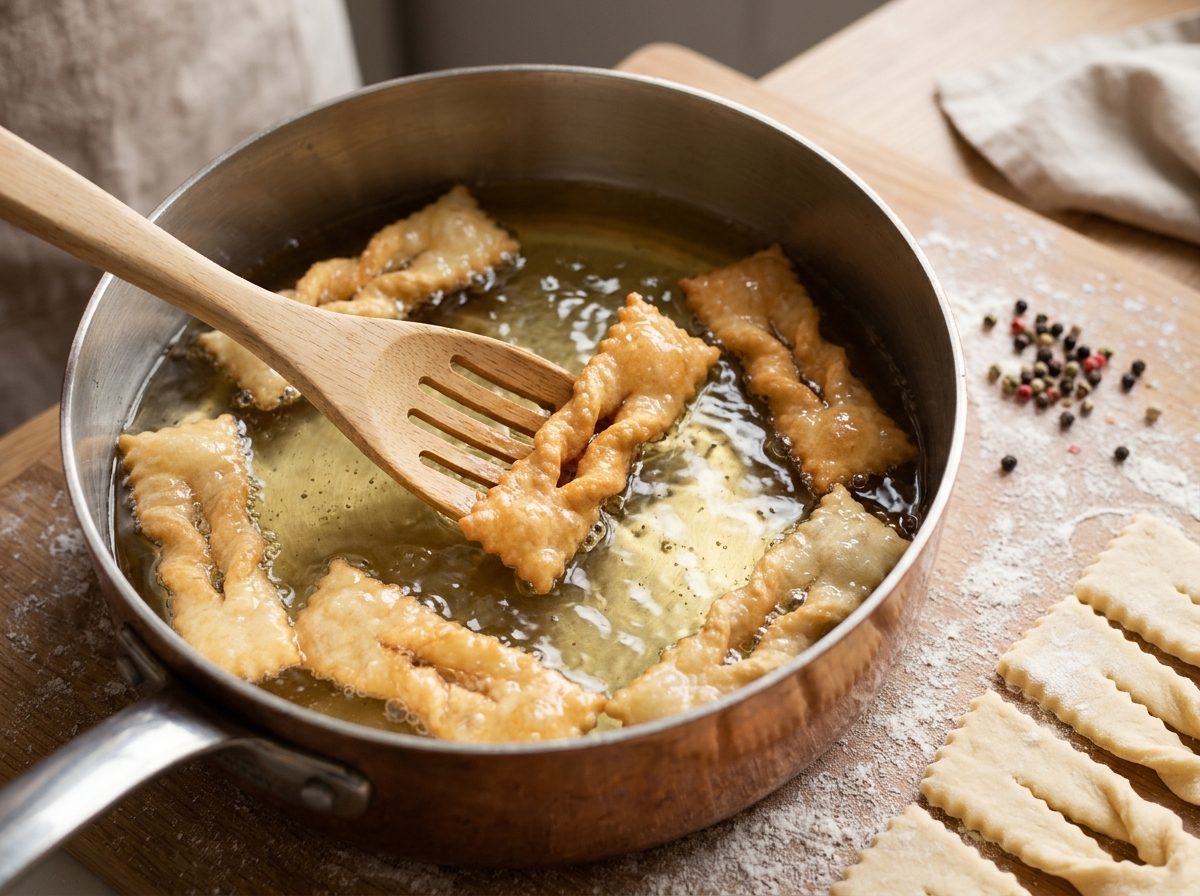
- Fry 2 to 3 faworki at a time for 20 to 30 seconds per side, flipping once with a spider skimmer or chopsticks, until light gold and blistered. Lift onto a wire rack set over a 33 x 46 cm / 13 x 18 inch sheet pan lined with paper towels. Let the oil return to 180 C / 350 F between batches, about 12 batches in all.
- Cool the faworki on the rack for 5 minutes, then sift the powdered sugar over them through a fine-mesh sieve and serve.
Notes
- Knead the dough 8 to 10 minutes until smooth, with tiny air blisters visible when cut.
- Rest the dough 30 minutes, covered, so it rolls thin without snapping back.
- Keep the oil at 180 C / 350 F and fry 2 to 3 pieces per batch.
- Freeze the 4 leftover egg whites for meringues or macarons.
Tips for Success
- Clip a thermometer to the pot and hold the oil at 180 C / 350 F, letting it recover for 30 seconds between batches.
- Roll one quarter of the dough at a time, keeping the rest covered, until it’s 1.5 mm and you can see your hand’s shadow.
- Fry only 2 to 3 faworki at a time so they can puff and flip without touching each other.
- Drain the faworki on a wire rack set over paper towels so steam escapes and the undersides stay crisp.
- Dust with powdered sugar only when serving, because sugar draws moisture and turns the surface tacky if it sits.
Variations
- Add 1 tsp finely grated lemon zest and 1/2 tsp vanilla extract to the yolks for a more fragrant dough.
- Sift vanilla sugar over the cooled faworki instead of plain powdered sugar, made by blitzing a split vanilla pod with 100 g sugar.
- Drizzle half the batch with 100 g melted dark chocolate and let it set on parchment for 15 minutes.
Storage and Reheating
Fried faworki keep for 4 days in an airtight tin at room temperature, layered between sheets of parchment. Store them undusted and sift on powdered sugar just before serving, since sugar draws moisture from the surface.
If they soften after day 2, spread them on a sheet pan and re-crisp in a 150 C / 300 F oven for 4 to 5 minutes. Cool them for 5 minutes before dusting.
The raw dough can be wrapped and refrigerated for up to 24 hours. Let it sit at room temperature for 15 minutes before rolling. I don’t freeze fried faworki, since the thin ribbons tend to crack and lose their snap.
Serving Suggestions
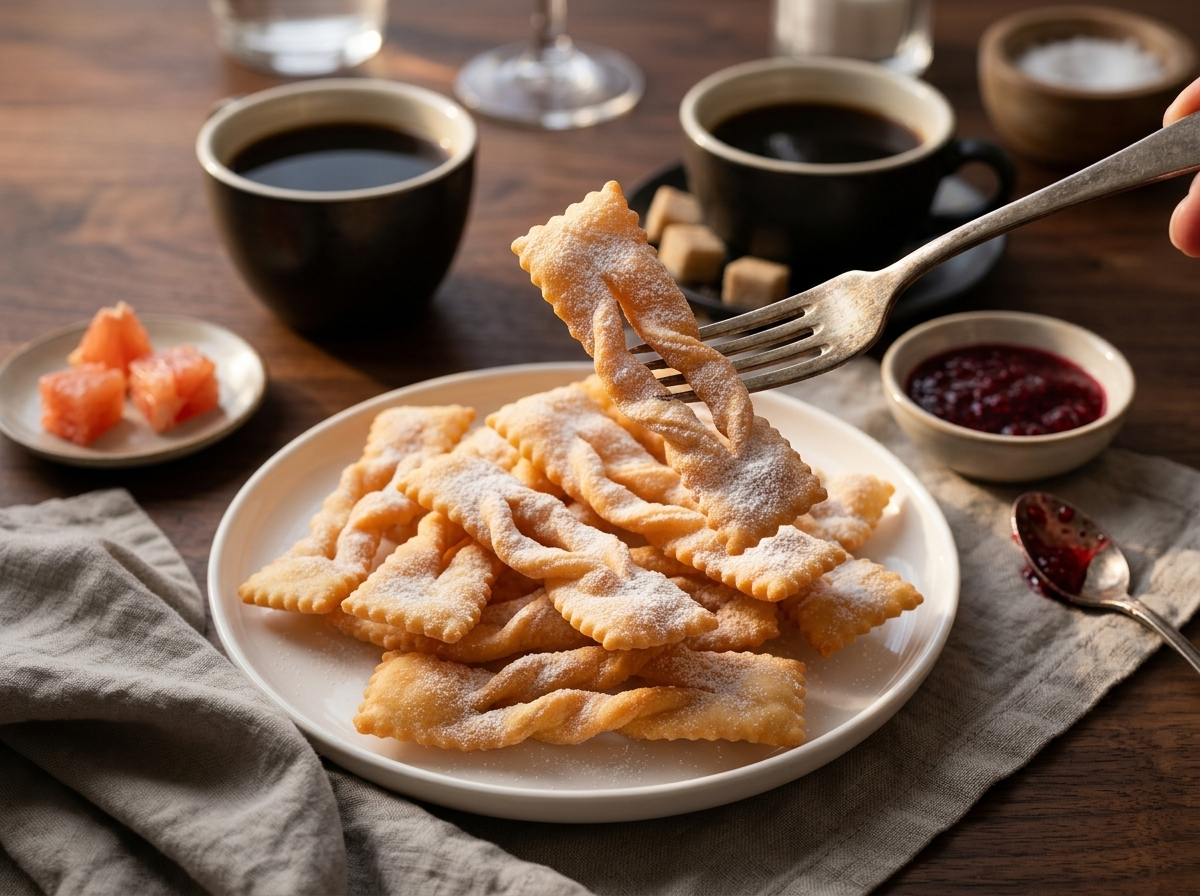
Faworki are served piled high on a platter, with powdered sugar sifted over them at the last minute. Strong black coffee or tea suits their sweetness best.
On Fat Thursday they sit next to pączki on the same table. A small bowl of raspberry jam on the side is good for dipping, though the faworki are also fine plain.
FAQ
Why are my faworki greasy and flat instead of blistered?
Greasy faworki almost always mean the oil was below 170 C / 340 F or the dough was rolled too thick. Cool oil seeps in before the surface sets, so the ribbons stay pale and dense. Hold the oil at 180 C / 350 F, roll to 1.5 mm, and fry only 2 to 3 pieces at a time.
How do I know when faworki are done frying?
Faworki are done when both sides are light gold with blistered bubbles, which takes about 20 to 30 seconds per side at 180 C / 350 F. They puff within seconds of hitting the oil. Lift them out as soon as the color is light gold, since they keep darkening on the rack.
Can I use vinegar instead of vodka in faworki dough?
Yes, use 1 tbsp white spirit vinegar or apple cider vinegar in place of the vodka. Both loosen the gluten and help blisters form. Cooks traditionally prefer vodka because the alcohol evaporates fast and limits oil absorption, but the vinegar flavor disappears completely during frying.
Can I make faworki dough the night before and fry the next day?
Yes, wrap the kneaded dough tightly and refrigerate it for up to 24 hours. Let it sit at room temperature for 15 minutes before rolling, because cold dough fights the rolling pin and tears. Cut and twist the faworki just before frying, since shaped pieces left out dry at the edges.
What do you serve with faworki on Fat Thursday?
Serve faworki with strong black coffee or tea, and on Fat Thursday alongside pączki. Pile them on a platter and sift powdered sugar over the top right before serving. A small bowl of raspberry jam on the side works for dipping, though they’re also good plain.
What is the difference between faworki and chruściki?
Faworki and chruściki are the same fried pastry, and the name depends on the region of Poland. Both use a thin, stiff egg yolk dough fried until blistered. Angel wings is the common English name, and Italian chiacchiere and Danish klejner are close relatives with different flavorings.
Related recipes
About The Author

John
John Watson is the passionate food enthusiast behind MePlusFood.com. With a deep love for exploring culinary delights, he shares honest restaurant reviews, mouthwatering recipes, and culinary adventures. Join John on his flavorful journey to savor the world one bite at a time.