Parsnip Pear Velouté with Brown Butter and Thyme
Jump to Recipe
Parsnip and pear sounds like an odd pairing until you taste it. The natural sweetness of ripe pear rounds out the earthy, slightly spicy character of parsnip, and the result is a soup that tastes far more complex than it is to make.
A velouté gets its name from the French word for velvet, and the texture here earns it — a quality shared with a well-made sunchoke and garlic soup. Blending the cooked vegetables with good stock and a touch of cream, then finishing with brown butter, gives the soup a smooth, almost glossy consistency that clings to the spoon.
This comes together in about 40 minutes and holds well in the fridge for days. I make it on Sundays and reheat bowls through the week. It also freezes cleanly before the cream goes in.
Why You’ll Love This Recipe
- Silky blended texture with almost no hands-on effort
- Pear adds natural sweetness without any added sugar
- Brown butter finish adds depth in under two minutes
- Freezes well and reheats without splitting
Ingredient Notes
- parsnips: Choose medium parsnips with firm, pale skin. Very large parsnips can have a woody core – cut it out before cooking.
- ripe pear: A Bartlett or Bosc pear works best here. The pear should give slightly when pressed. An underripe pear won’t add enough sweetness or moisture.
- vegetable stock: Use a low-sodium stock so you can control seasoning at the end. Chicken stock also works and adds a bit more body.
- double cream: Heavy cream or double cream both work. For a lighter finish, swap in full-fat crème fraîche or skip it entirely and add an extra splash of stock.
- unsalted butter: Used at the end for brown butter. Unsalted gives you better control. Brown it until it smells nutty and the milk solids turn amber.
- fresh thyme: Strip the leaves from the stems before adding. Dried thyme works in a pinch – use half the quantity.
Parsnip Pear Velouté with Brown Butter and Thyme
Ingredients
Method
- Melt 30 g butter in a large saucepan over medium heat. Add the onion and cook for 5 minutes, stirring occasionally, until softened and translucent.
- Add the garlic and thyme leaves. Cook for 1 minute until fragrant.
- Add the parsnip chunks and stir to coat. Pour in the vegetable stock. Bring to a boil, then reduce heat to medium-low. Cover and simmer for 15 minutes until the parsnips are completely tender when pierced with a knife.
- Add the chopped pear and simmer uncovered for 5 more minutes until the pear is soft.
- Remove the pan from the heat. Let the mixture cool for 5 minutes, then blend in batches in a stand blender until completely smooth, about 90 seconds per batch. Return the blended soup to a clean saucepan over low heat.
- Stir in the cream. Taste and season with salt and white pepper. Keep warm on low heat while you make the brown butter.
- In a small light-colored skillet, melt 40 g butter over medium heat. Swirl the pan regularly. Continue cooking for 3-4 minutes until the butter turns golden and smells nutty, and the milk solids at the bottom look amber. Remove from heat immediately.
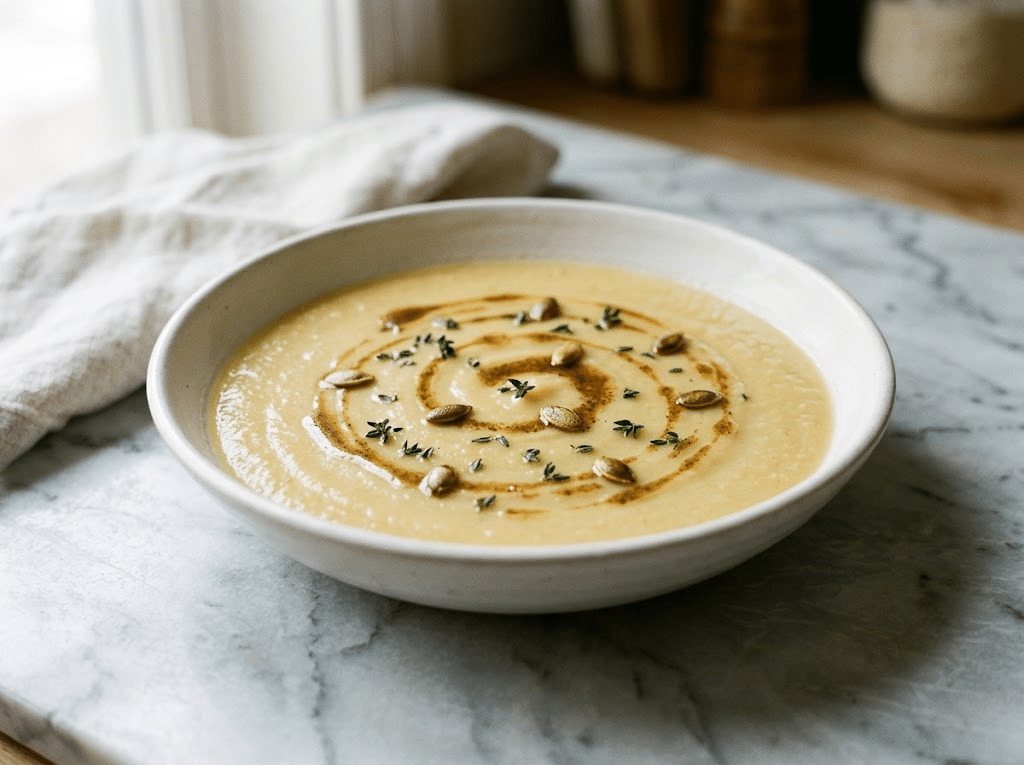
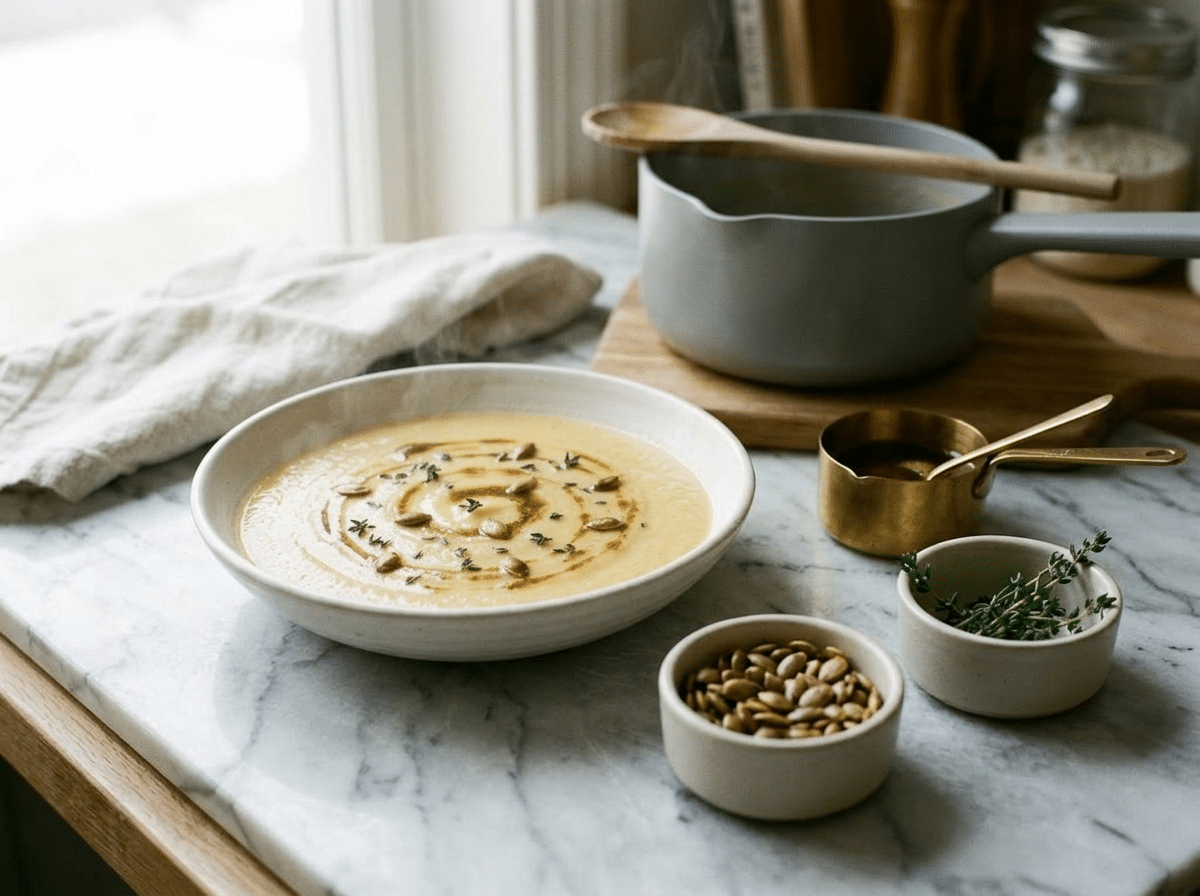
- Ladle the soup into warmed bowls. Drizzle with brown butter, scatter over fresh thyme leaves, and add toasted pumpkin seeds if using. Serve straight away.
Notes
Tips for Success
- Cut parsnips into even 2 cm chunks so they cook at the same rate and blend smoothly.
- Add the pear after the parsnips have softened – it only needs 5 minutes or it loses its delicate flavor.
- Blend in batches and leave the lid slightly ajar to let steam escape, preventing pressure buildup.
- Brown the butter in a light-colored pan so you can watch the milk solids turn amber without burning, the same technique that lifts buckwheat crepes with browned butter.
- Season only after blending – salt draws moisture from vegetables during cooking and the final flavor will shift once everything is combined.
Variations
- Swap pear for apple and add a pinch of nutmeg for a sharper, more autumnal flavor profile.
- Stir in 1 tsp white miso with the cream for an umami-forward, dairy-light version.
- Top with crispy pancetta and a drizzle of truffle oil for a richer, more substantial starter.
Storage and Reheating
Store the velouté in an airtight container in the fridge for up to 4 days. Keep the brown butter drizzle separate and add it fresh when serving.
To freeze, cool the soup completely and portion into freezer bags or containers without the cream. It keeps for up to 3 months. Defrost overnight in the fridge.
Reheat gently in a saucepan over medium-low heat, stirring regularly. Add a splash of stock or water if it thickens too much. Stir in the cream once hot, just before serving.
Serving Suggestions
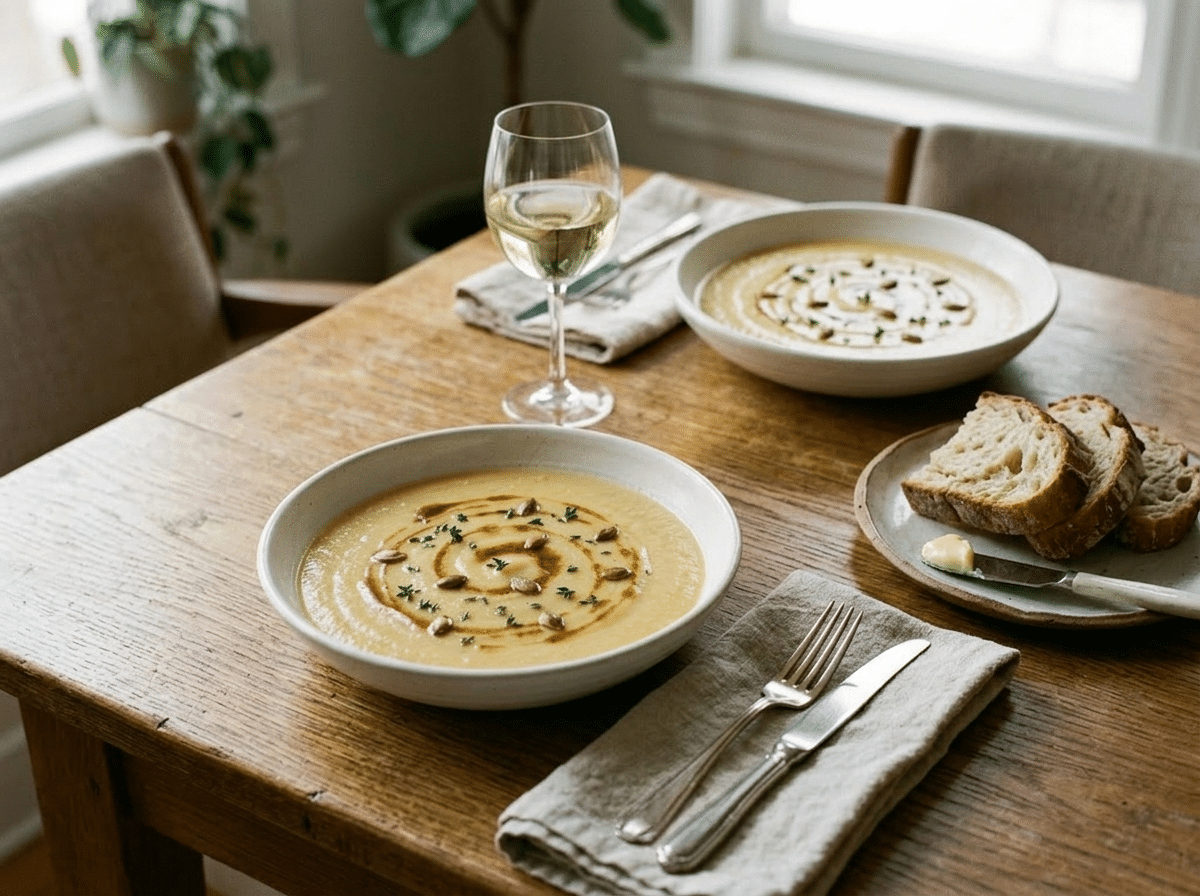
Serve in warmed bowls with a drizzle of brown butter, a few fresh thyme leaves, and a crack of black pepper. A thin slice of toasted sourdough on the side handles the dipping and rounds out the meal, much like the bread alongside a cozy fennel leek soup.
For a dinner party, add a small quenelle of crème fraîche in the center and scatter over toasted pumpkin seeds or hazelnuts for texture contrast. The pale gold color of the soup makes it an attractive first course.
This also pairs well with a light arugula salad dressed in lemon and olive oil, which cuts through the richness of the cream and brown butter.
FAQ
Can I make parsnip pear velouté ahead of time?
Yes. Make the soup up to 4 days in advance and store it in the fridge. Add the cream and brown butter when reheating just before serving.
Do I need to peel parsnips for velouté?
Yes, peel them. Parsnip skin can be tough and slightly bitter, and it won’t blend as smoothly as the flesh. A standard vegetable peeler is all you need.
What type of pear is best for this soup?
Bartlett or Bosc pears work well because they’re soft when ripe and have a clean, sweet flavor. Avoid very tart or firm pears – they won’t contribute enough sweetness.
Can I make this soup vegan?
Swap the butter for a good quality vegan butter or extra-virgin olive oil. Replace the cream with full-fat coconut cream or a cashew cream for a similar richness.
Why is my velouté not smooth enough?
Blend for at least 90 seconds per batch and pass the soup through a fine-mesh sieve after blending. This removes any remaining fibrous bits for a genuinely silky result.
Can I use a hand blender instead of a stand blender?
Yes, a stick blender works fine for a rustic result. For the smoothest texture, a high-powered stand blender does a more thorough job.
About The Author

John
John Watson is the passionate food enthusiast behind MePlusFood.com. With a deep love for exploring culinary delights, he shares honest restaurant reviews, mouthwatering recipes, and culinary adventures. Join John on his flavorful journey to savor the world one bite at a time.