Polish Szarlotka Apple Cake with Grated Dough Topping
Jump to Recipe
Polish szarlotka apple cake is a shortcrust cake with a thick, cooked-down apple filling between a pressed base and a top of grated frozen dough. It comes together in about 30 minutes of hands-on work, then bakes for 50 minutes at 175 C / 350 F.
I cook the grated apples for 10 minutes before they go in the pan. Raw apples release water in the oven and turn the bottom crust gummy, which is the most common way this cake fails.
Tart apples like Granny Smith or Bramley keep the filling sharp against the butter-rich dough. Cut into 12 squares, it eats like a full dessert with a cup of coffee.
Key takeaways: cook the apples first, freeze one third of the dough, and cool the cake for 30 minutes before cutting.
Why You’ll Love This Recipe
- Cooked apple filling keeps the bottom crust firm and crisp-edged
- Frozen dough grated on top means no rolling or lattice
- Dough and filling can both be made a day ahead
- One pan, one skillet, and 30 minutes of hands-on work
Ingredient Notes
- tart apples: Granny Smith or Bramley hold their structure and keep the filling sharp. Swap in Antonovka or Braeburn if you can find them, but skip soft varieties like Red Delicious, which turn to paste.
- unsalted butter: Keep it cold so the dough stays short and crumbly. If you only have salted butter, cut the added salt to a tiny pinch.
- sour cream: Full-fat sour cream adds tang and tenderness. Plain full-fat Greek yogurt works in the same 3 tbsp (45 g) amount.
- potato starch: It thickens the last bit of juice so the filling slices cleanly. Cornstarch works at the same 1 tbsp measure.
- egg yolks: The yolks make the dough rich and easy to press. Save the whites for meringues or an omelet.
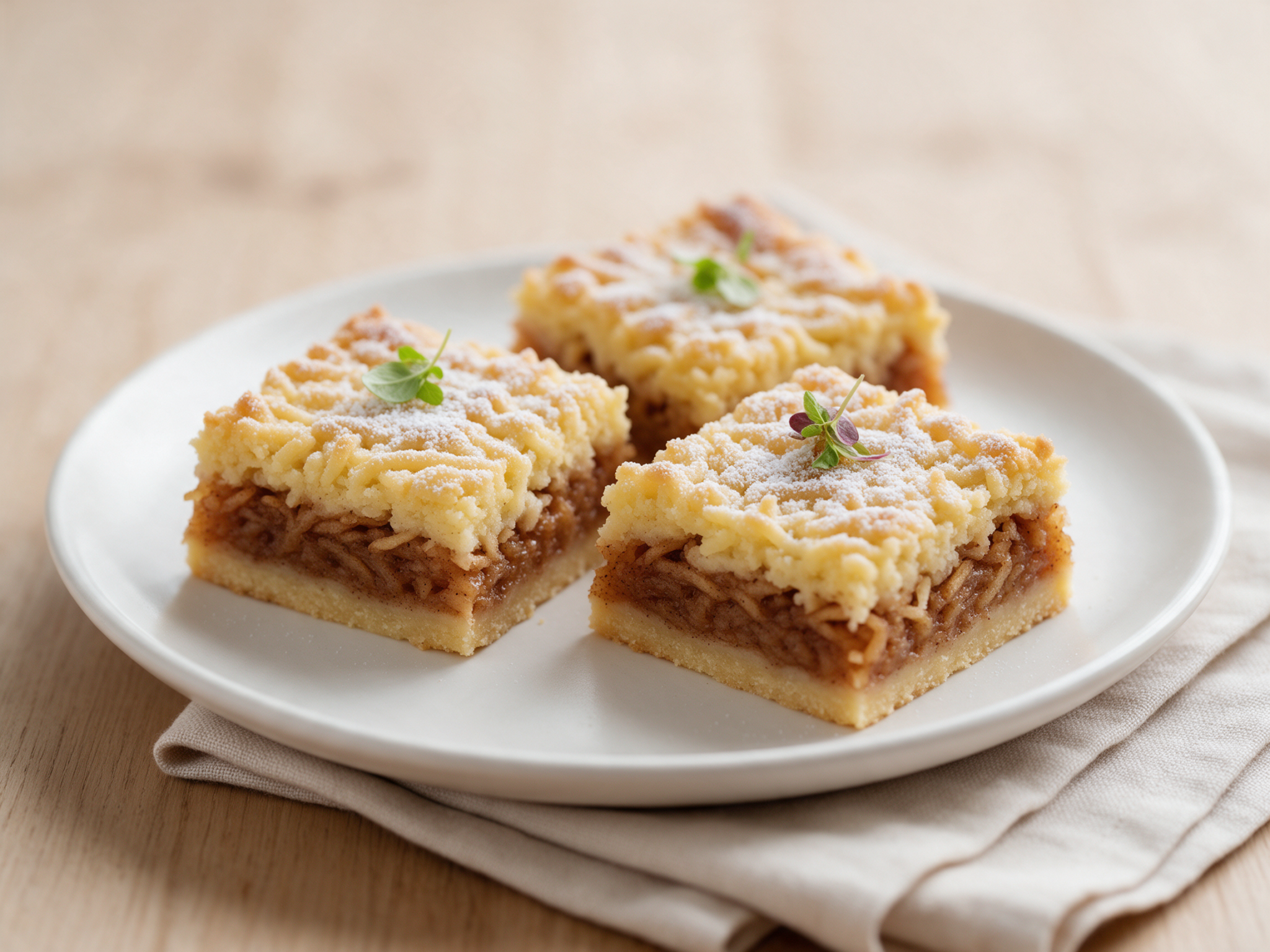
Polish Szarlotka Apple Cake with Grated Dough Topping
Ingredients
Method
- Whisk the flour, baking powder, sugar, and salt in a mixing bowl. Rub in the cold butter with your fingertips for about 3 minutes until the mixture looks like coarse crumbs, then stir in the egg yolks and sour cream and press everything into a smooth dough.
- Divide the dough into two-thirds and one-third. Flatten the larger piece into a disk, wrap it, and refrigerate. Shape the smaller piece into a block, wrap it, and put it in the freezer. Chill both for 45 minutes while you make the filling.
- Peel, core, and coarsely grate the apples. Cook them in a 26 cm / 10-inch deep skillet over medium heat with the sugar, cinnamon, and lemon juice, stirring often, for about 10 minutes until most of the liquid has evaporated and a spoon dragged across the pan leaves a trail. Sprinkle the potato starch over the apples for the last 2 minutes and stir until the juices turn glossy.
- Spread the filling in a shallow bowl and cool for 25 minutes. Warm filling will melt the butter in the dough and make the base greasy.
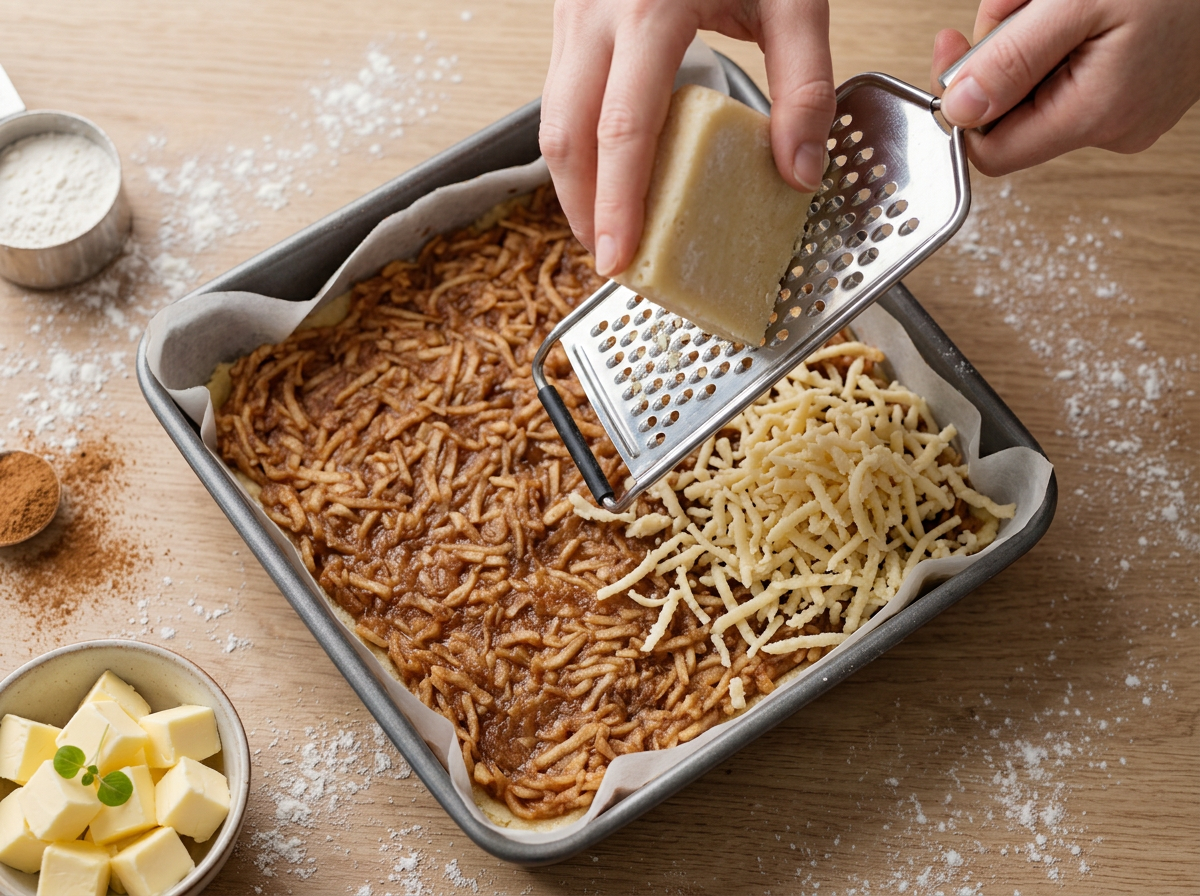
- Heat the oven to 175 C / 350 F with a rack in the middle, and line a 23 cm / 9-inch square baking pan with parchment. Press the chilled dough into the pan in an even layer about 5 mm thick, pushing it into the corners, and prick it all over with a fork. Spread the cooled filling on top. Grate the frozen dough on the coarse holes of a box grater over the apples, covering them with loose shreds and without pressing down.
- Bake for 50 minutes until the top is deep golden and the filling bubbles at the edges. If the top browns before 40 minutes, cover it loosely with foil.
- Cool the cake in the pan on a wire rack for 30 minutes. Lift it out using the parchment, dust with powdered sugar, and cut into 12 squares.
Notes
- Chill the base dough and freeze the topping dough for 45 minutes before assembling.
- Cool the filling for at least 25 minutes so it doesn't melt the base.
- Use unsalted butter so the 1/4 tsp of salt is the only salt in the dough.
- Cool the baked cake for 30 minutes before lifting it out and cutting.
Tips for Success
- Cook the grated apples until a spoon dragged across the pan leaves a trail that fills in slowly, about 10 minutes.
- Cool the filling for at least 25 minutes before spreading, because warm apples melt the butter in the base and turn it greasy.
- Press the base dough into the corners with floured fingertips, aiming for an even layer about 5 mm thick.
- Grate the frozen dough on the coarse holes straight over the apples and leave the shreds loose, not packed down.
- Wait 30 minutes after baking before cutting, since the filling sets as it cools and hot squares smear.
Variations
- Stir 60 g of raisins soaked in 2 tbsp warm rum or apple juice into the cooled filling for a more traditional version.
- Replace 200 g of the apples with grated firm pear and add a pinch of ground cloves for a softer, more fragrant filling.
- Add 40 g of finely chopped walnuts to the grated dough topping for a nuttier, crunchier lid.
Storage and Reheating
Szarlotka keeps for 4 days in the fridge in an airtight container, and day-two squares slice more cleanly than fresh ones. At room temperature it holds for 1 day under a clean cloth or loose foil.
To reheat, set squares on a baking sheet and warm them at 160 C / 320 F for 8 to 10 minutes. This brings back the crisp edge on the crust. Skip the microwave, which softens the shortcrust.
For freezing, wrap cooled squares individually and freeze for up to 2 months, then thaw overnight in the fridge and reheat as above. To make ahead, keep the cooked filling in the fridge for up to 2 days and the wrapped base dough for up to 2 days. The frozen third of dough can stay in the freezer for a month.
Serving Suggestions
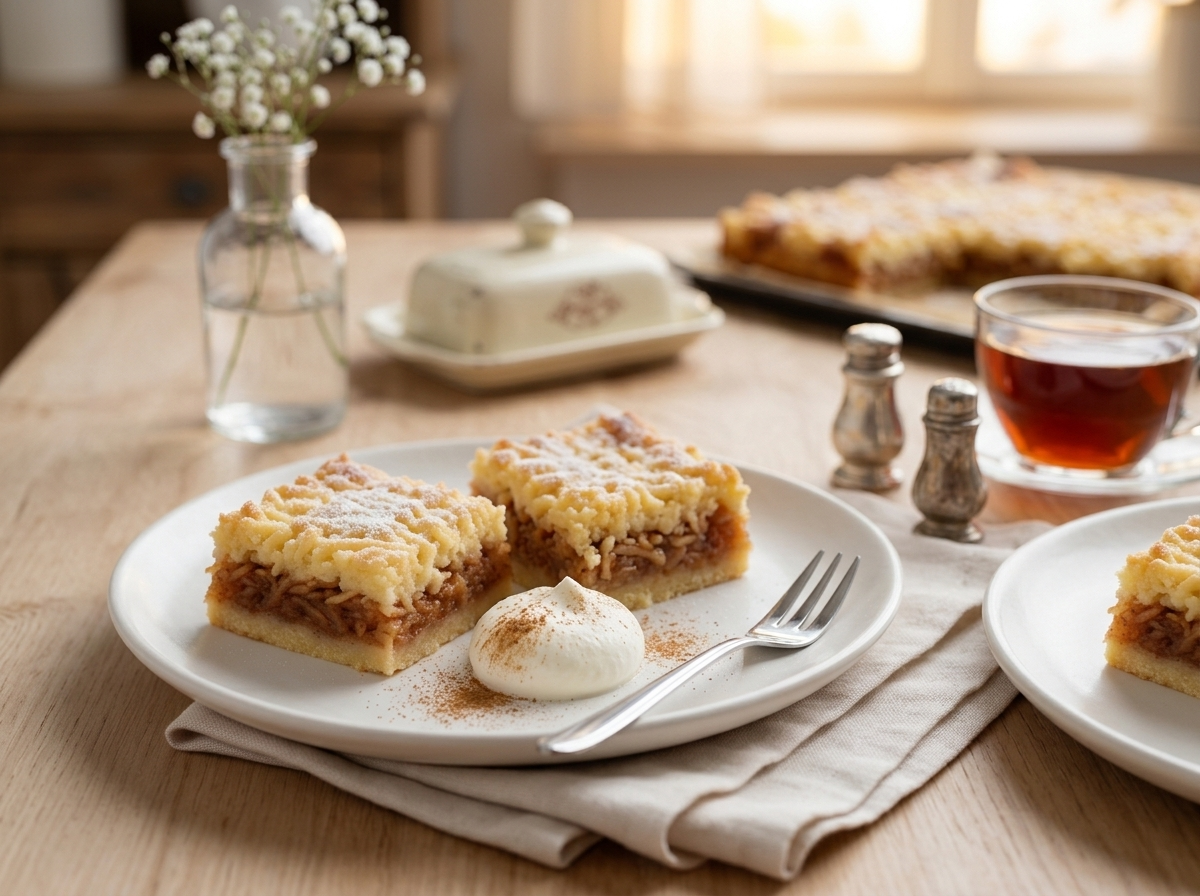
Serve szarlotka just warm or at room temperature, dusted with powdered sugar right before cutting. Warm squares have a softer filling, while room-temperature squares hold their shape better.
In Poland it’s usually paired with black tea (herbata) or coffee, often with a spoonful of whipped cream or vanilla ice cream. A small pinch of cinnamon on the cream echoes the filling.
For a weekday dessert, bake it the evening before and cut squares as needed. A square with plain yogurt also works as a quick breakfast.
FAQ
Why is my szarlotka soggy on the bottom?
A soggy base almost always comes from raw or warm apple filling. Cook the grated apples for 10 minutes until thick, then cool them for 25 minutes before spreading so the butter in the dough doesn’t melt. Also use tart apples like Granny Smith, which hold their structure better than soft eating varieties.
Can I use Greek yogurt instead of sour cream in szarlotka dough?
Yes, use full-fat Greek yogurt or plain yogurt in the same 3 tablespoon (45 g) amount. The dough bakes up slightly less tender, but the tang is similar. Low-fat yogurt adds more water, so you may need an extra spoonful of flour if the dough feels sticky after mixing.
Can I freeze szarlotka apple cake, and how do I thaw it?
Yes, szarlotka freezes well for up to 2 months. Cool it fully, cut into squares, wrap each in parchment, and freeze in a container. Thaw overnight in the fridge, then warm the squares at 160 C / 320 F for 8 to 10 minutes to bring back the crisp edges.
What goes well with szarlotka?
Black tea or coffee is the standard pairing, and in Poland szarlotka is often served with whipped cream or a scoop of vanilla ice cream. Serve the cake just warm or at room temperature. A pinch of cinnamon over the cream echoes the apple filling.
What’s the difference between szarlotka and American apple pie?
Szarlotka uses a butter shortcrust for both base and top, so it’s closer to a cake or bar and is cut into squares. American apple pie uses flaky pastry in a round dish with sliced apples. Szarlotka apples are grated and cooked down, giving a denser, jammier filling.
How do I know when szarlotka is done baking?
Szarlotka is done when the grated top is deep golden and the filling bubbles at the edges, usually after 50 minutes at 175 C / 350 F. If the top browns before 40 minutes, cover it loosely with foil. A pale top means the butter hasn’t fully crisped yet.
Related recipes
About The Author

John
John Watson is the passionate food enthusiast behind MePlusFood.com. With a deep love for exploring culinary delights, he shares honest restaurant reviews, mouthwatering recipes, and culinary adventures. Join John on his flavorful journey to savor the world one bite at a time.