Roasted Grape Savory Skillet with Sausage, White Beans, and Fresh Thyme
Jump to Recipe
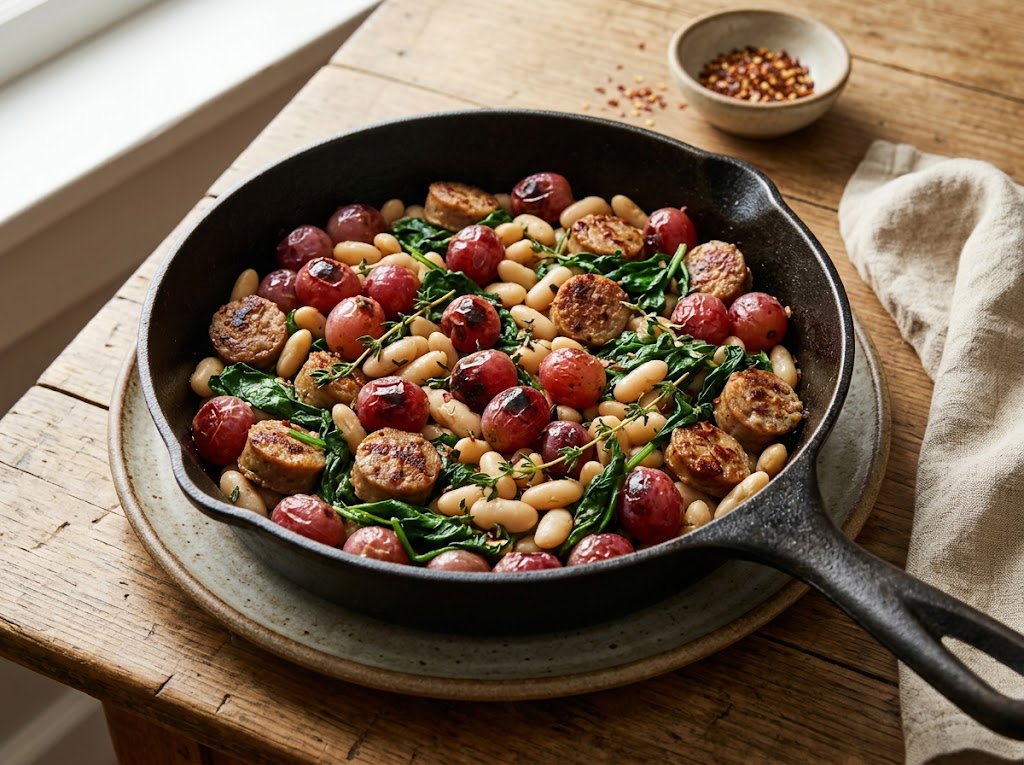
Roasting grapes changes them completely. The skins blister and the juice concentrates into something almost jammy, with a brightness that cuts through rich sausage fat.
This skillet pulls that contrast into a single pan: browned sausage, creamy white beans, and a full cluster of red grapes that collapse into a loose pan sauce. Wilted greens go in at the end so nothing gets soggy.
It comes together in about 40 minutes and eats like a full meal. One skillet, minimal cleanup, and a flavor profile that reads as much more involved than the technique demands.
I reach for this most in early fall when grapes are at peak sweetness and the nights get cold enough to want something from a cast iron pan.
Why You’ll Love This Recipe
- One skillet, no separate roasting pan needed
- Blistered grapes make their own glossy pan sauce
- White beans add protein without a second pot
- Scales easily for two or six people
Ingredient Notes
- Red seedless grapes: Firm, ripe red grapes hold their shape better under heat than softer varieties. Black grapes work too and go a shade more jammy.
- Italian sausage links: I use mild Italian pork sausage sliced into coins, but sweet chicken sausage keeps it lighter. Remove casings and crumble if you want finer texture throughout.
- Canned white beans: Cannellini beans are the standard here. Great Northern beans are a fine swap. Rinse well so the liquid doesn’t cloud the pan sauce.
- Fresh thyme: Strip the leaves from four or five sprigs. Dried thyme works in a pinch – use half the amount and add it with the garlic, not at the end.
- Baby spinach or arugula: Either wilts in under two minutes and adds color. Arugula gives a peppery edge that pairs well with sweet grapes. Kale works but needs an extra three minutes.
- Balsamic vinegar: Just one tablespoon loosens the fond and sharpens the grape juices into a sauce. Sherry vinegar is a good substitute with a slightly drier finish.
Roasted Grape Savory Skillet with Sausage, White Beans, and Fresh Thyme
Ingredients
Method
- Heat a 12-inch cast iron or stainless skillet over medium-high heat. Add 1 tablespoon of olive oil and let it shimmer.
- Add the sausage slices in a single layer. Sear without moving them for 3 minutes until deeply browned on the cut side, then flip and cook 2 minutes more. Transfer to a plate and set aside.
- Reduce heat to medium. Add the remaining 1 tablespoon of olive oil, then add the shallot. Cook, stirring occasionally, for 3 minutes until softened and lightly golden.
- Add the sliced garlic and cook 1 minute until fragrant but not browned.
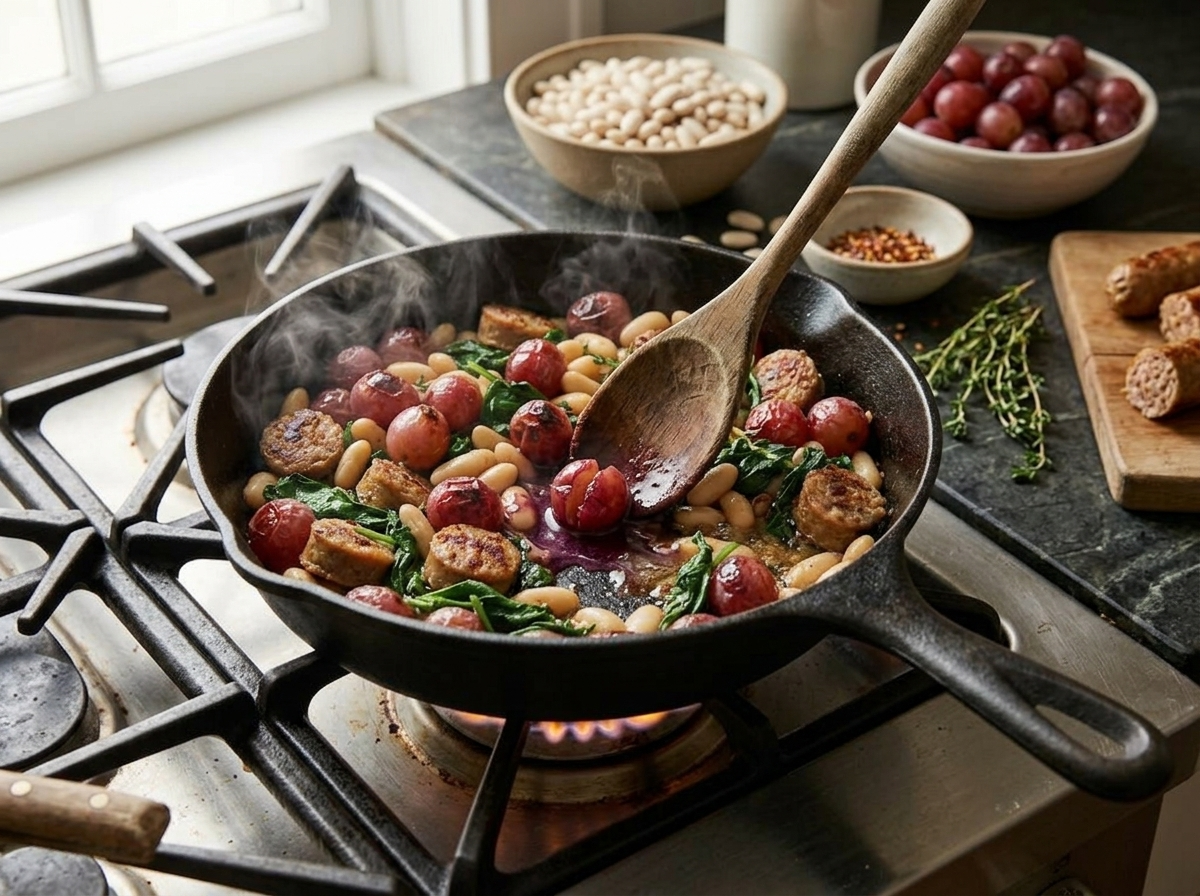
- Raise the heat back to medium-high. Add the grapes in a single layer. Cook undisturbed for 4 to 5 minutes until the skins blister and begin to split. Press a few gently with a spoon to release their juice.
- Pour in the balsamic vinegar and broth (or wine). Stir to scrape up any browned bits from the pan bottom. The liquid will bubble and reduce quickly, about 1 minute.
- Return the sausage to the skillet. Add the cannellini beans, thyme leaves, salt, black pepper, and red pepper flakes if using. Stir gently to combine and heat through, about 3 minutes.
- Add the spinach in two handfuls, folding it in as it wilts. This takes about 90 seconds total. Taste and adjust seasoning.
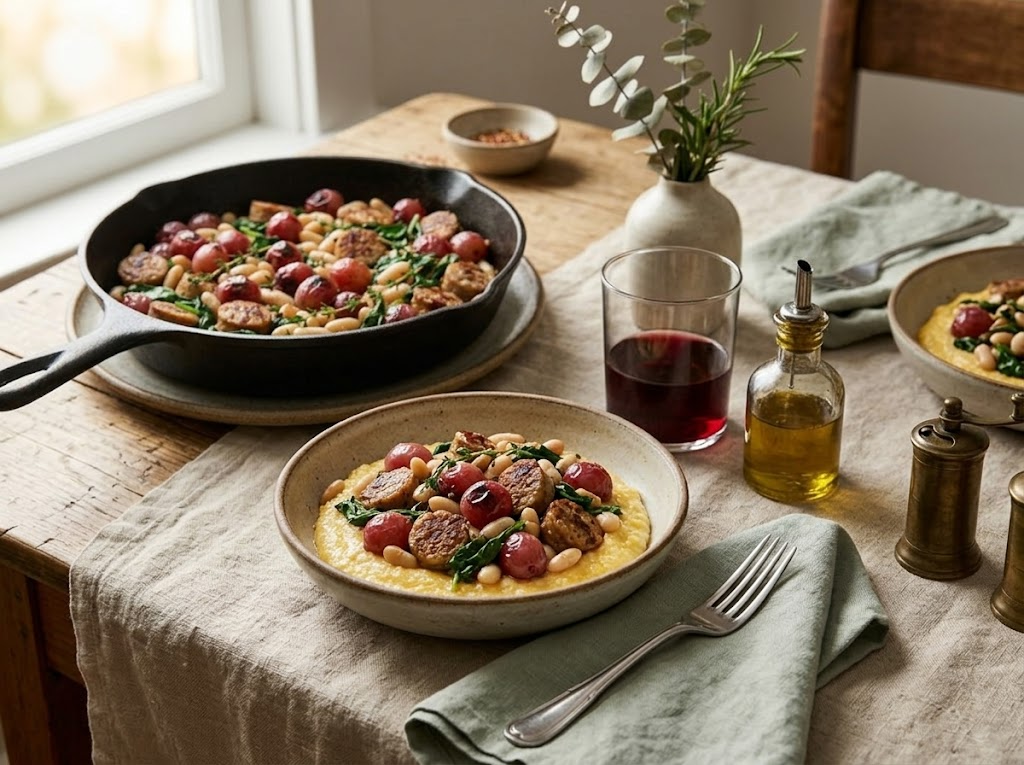
- Serve immediately from the skillet, with crusty bread or over soft polenta.
Notes
Tips for Success
- Pat sausage slices dry before adding to the skillet so they sear rather than steam.
- Don’t crowd the grapes – leave space so they blister instead of stewing in their own juice.
- Deglaze with balsamic immediately after the grapes burst to lift all the browned bits from the pan bottom.
- Add beans last enough that they only warm through – overcooked cannellini go grainy.
- Use a 12-inch cast iron or stainless skillet for even heat distribution across the grape layer, the same approach that keeps the apple thyme breakfast skillet from scorching.
Variations
- Swap sausage for sliced halloumi to keep it vegetarian – sear until golden on both sides.
- Add crumbled gorgonzola or goat cheese over the top just before serving for a tangy, creamy finish.
- Use chickpeas instead of white beans and stir in a pinch of smoked paprika for a Spanish-leaning version.
Storage and Reheating
Store leftovers in an airtight container in the refrigerator for up to 3 days. The grapes continue to release juice overnight, which keeps the beans from drying out.
Reheat gently in a skillet over medium-low heat with a splash of water or broth to loosen the sauce. Avoid the microwave if you can – it makes the sausage rubbery and flattens the grape texture.
This dish does not freeze well. The grapes turn watery and the beans go soft once thawed.
Serving Suggestions
Serve straight from the skillet over thick slices of toasted sourdough or a wedge of crusty bread — similar to what works under jammy roasted tomatoes on toast — to catch the pan juices. A drizzle of good olive oil over the top is enough.
For a fuller plate, spoon the skillet over soft polenta or alongside roasted sweet potatoes. The sweet-savory balance also pairs well with a simple bitter green salad dressed with lemon.
For drinks, a light red like Pinot Noir or Gamay works with the grape and sausage combination. If you prefer white, a dry Riesling or Vermentino holds up without overpowering the thyme.
FAQ
Why are my roasted grapes releasing too much liquid and making the skillet watery?
This usually happens when the grapes are overcrowded or the heat is too low. Give each grape cluster a little room and keep the heat at medium-high so the juice evaporates as it releases rather than pooling. If the pan looks watery, just raise the heat for a minute or two to reduce it.
Can I use green grapes instead of red grapes in this savory skillet?
You can, but green grapes are more tart and less jammy when roasted. They work best if you want a sharper contrast against the sausage. Red or black grapes give a richer, sweeter pan sauce.
Can I prep the sausage and beans ahead and finish the grapes right before serving?
Yes. Brown the sausage and warm the beans up to a day ahead, then refrigerate them together. When ready to eat, reheat the mixture in the skillet, add fresh grapes, and blister them over high heat for 6 to 8 minutes before deglazing.
What pairs well with this roasted grape and sausage skillet besides bread?
Soft polenta is the best base if you want something more substantial, and a creamy white bean garlic soup makes a natural starter before this skillet. A bitter radicchio or endive salad alongside cuts the sweetness of the grapes cleanly. Roasted fennel wedges also complement the thyme and sausage well.
Is this roasted grape skillet gluten free?
The skillet itself contains no gluten – grapes, sausage, beans, and greens are all naturally gluten free. Check your sausage label since some brands use breadcrumb fillers. Serve over polenta or rice instead of bread to keep the whole meal gluten free.
How do I know when the grapes are done in the skillet?
Look for skins that have split or wrinkled and a few that have fully collapsed into the pan. The color deepens from bright red to a dark burgundy, and you’ll see juice pooling around the fruit. That’s the moment to add the balsamic.
About The Author

John
John Watson is the passionate food enthusiast behind MePlusFood.com. With a deep love for exploring culinary delights, he shares honest restaurant reviews, mouthwatering recipes, and culinary adventures. Join John on his flavorful journey to savor the world one bite at a time.