Crisp-Edged Roasted Beetroot Falafel with Tahini Sauce
Jump to Recipe
Roasted beetroot falafel swaps the deep fryer for a hot oven, using pureed roasted beets folded into a lemony chickpea mixture that bakes at 220C/425F until the edges crisp and the color turns a deep magenta-brown.
I started making these on weeknights when I wanted the flavor of falafel without a pot of hot oil to manage. The roasted beets add a natural sweetness that plays well against the cumin and garlic, and baking means the patties hold their shape better than fried ones sometimes do.
One thing I learned the hard way: if you skip the chilling step, the mixture spreads instead of holding a patty shape in the oven. Fifteen minutes in the fridge fixes that completely.
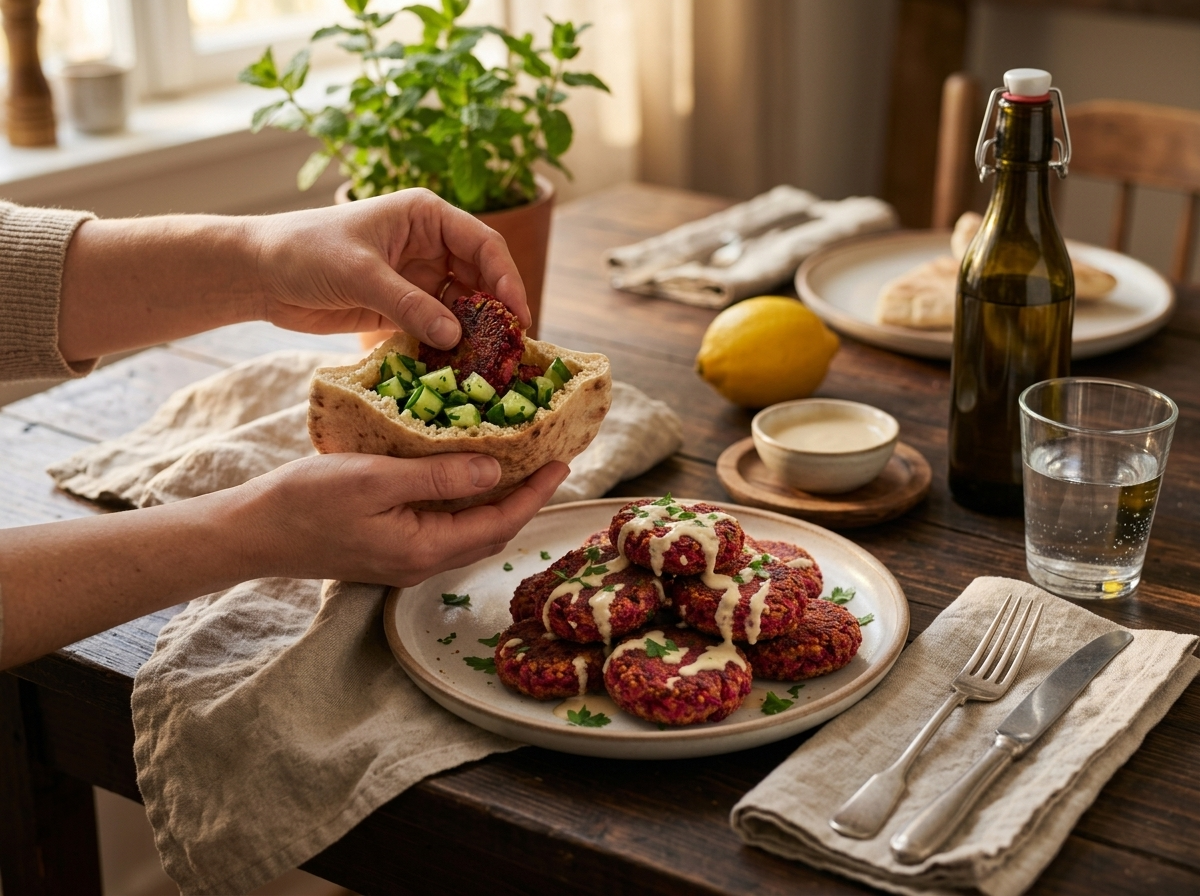
Serve them warm with the tahini sauce spooned over the top, tucked into pita, or piled onto a grain bowl with cucumber and herbs.
Why You’ll Love This Recipe
- Bakes in the oven, no deep frying needed
- Beets add natural sweetness and a bold color
- Freezes well for fast weeknight lunches
- Comes together with pantry staples and one sheet pan
Ingredient Notes
- beets: Look for beets about the size of a fist, they roast faster and taste sweeter than larger ones.
- canned chickpeas: Pat them very dry with a towel; excess moisture keeps the patties from firming up in the oven.
- chickpea flour: Adds gluten-free binding; swap in all-purpose flour if that’s not a concern for you.
- tahini: Use a well-stirred, runny tahini; a stiff, separated jar makes a gritty sauce.
- fresh parsley: Gives the classic bright falafel color and grassy flavor; don’t sub dried parsley here.
- ground cumin and coriander: This warm spice base is what makes the beets taste savory instead of sweet.
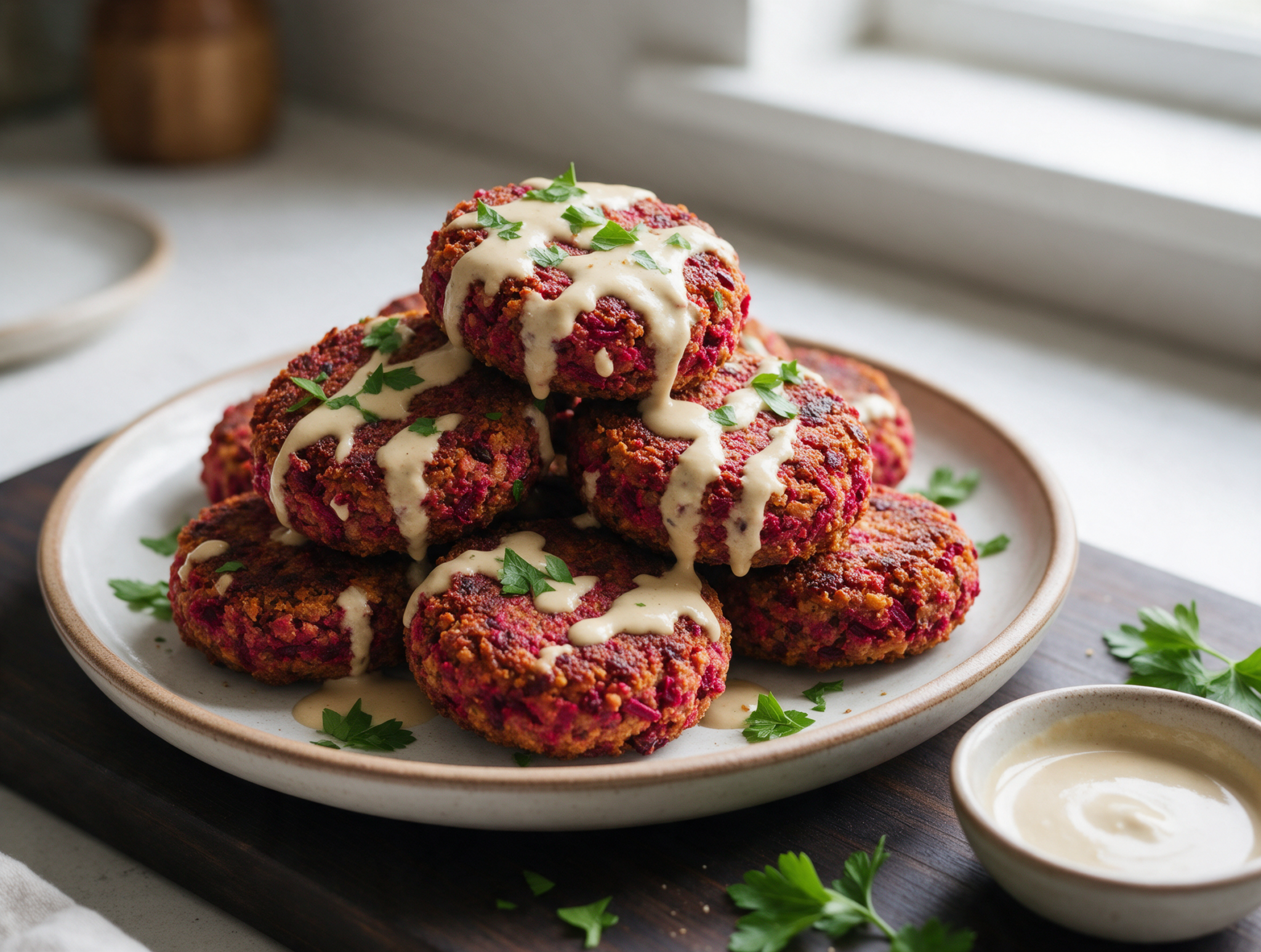
Crisp-Edged Roasted Beetroot Falafel with Tahini Sauce
Ingredients
Method
- Heat the oven to 220C/425F. Line a 33 x 46 cm / 13 x 18 inch sheet pan with parchment. Peel the beets, cut into 2 cm / 3/4-inch chunks, and toss with 1 tbsp olive oil. Spread on the sheet pan.
- Roast the beets for 25 minutes, stirring once, until a fork slides in easily and the edges start to caramelize.
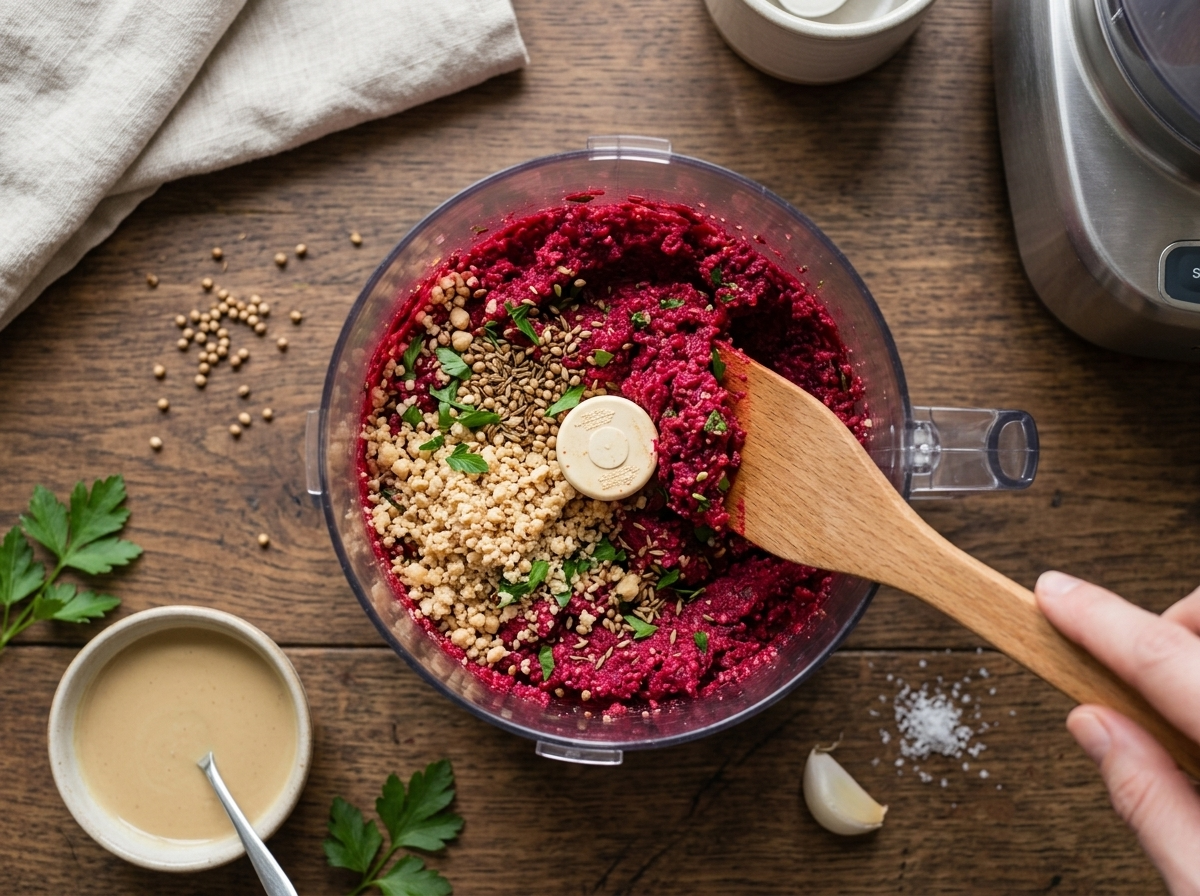
- Let the beets cool for 5 minutes, then transfer to a food processor with the chickpeas, garlic, shallot, parsley, cilantro, cumin, coriander, salt, and pepper. Pulse 10 to 12 times until finely chopped but not pureed to a paste.
- Add the chickpea flour and remaining 1 tbsp olive oil. Pulse 3 to 4 times more, just until combined. The mixture should hold together when you squeeze a spoonful in your hand.
- Cover the bowl and chill the mixture for 15 minutes. This firms it up so the patties hold their shape in the oven.
- Line the same sheet pan with fresh parchment and brush lightly with olive oil. Scoop the mixture into 12 portions, about 40 g each, and shape into patties roughly 2 cm / 3/4-inch thick.
- Brush the tops of the patties with olive oil. Bake at 220C/425F for 20 minutes, flipping halfway through, until both sides are golden brown and firm to the touch.
- While the falafel bakes, whisk the tahini, lemon juice, minced garlic, and a pinch of salt in a small bowl. Add water a tablespoon at a time until smooth and it ribbons off a spoon.
- Serve the falafel warm with the tahini sauce spooned over the top or on the side for dipping.
Notes
- Pat chickpeas and beets dry before mixing to avoid a wet, spreading patty.
- Chill shaped patties 15 minutes before baking for a firmer hold.
- Use well-stirred tahini for a smooth sauce, not a separated jar.
- Don't skip flipping the falafel halfway through baking.
Tips for Success
- Pat the beets and chickpeas completely dry before mixing so the patties hold together in the oven.
- Chill the shaped patties for 15 minutes before baking to keep them from spreading on the sheet pan.
- Pulse the mixture in a food processor, not a blender, so it keeps some texture instead of turning into paste.
- Flip the falafel halfway through baking so both sides crisp evenly.
- Thin the tahini sauce with cold water a tablespoon at a time until it ribbons off a spoon.
Variations
- Swap the beets for roasted carrots for a milder, sweeter falafel with the same crisp-edged texture.
- Stir a spoonful of harissa into the tahini sauce for a smoky, spicy kick instead of the plain version.
- Shape the mixture into small balls instead of patties and serve them on a mezze platter as an appetizer.
Storage and Reheating
Roasted beetroot falafel keeps well in an airtight container in the fridge for 3 to 4 days. Store the tahini sauce separately in a sealed jar so the patties don’t turn soggy.
Reheat patties in a 200C/400F oven for 8 to 10 minutes, flipping once, until warmed through and the edges crisp back up. Skip the microwave, it softens the outside instead of crisping it.
Freeze baked, cooled patties in a single layer on a sheet pan (33 x 46 cm / 13 x 18 inch), then transfer to a freezer bag for up to 2 months. Reheat straight from frozen in a 200C/400F oven for 15 minutes.
Serving Suggestions
Roasted beetroot falafel eats well tucked into warm pita with shredded cabbage and a spoonful of tahini sauce. Pile extras onto a grain bowl with cooked farro, cucumber, and a handful of parsley.
For a mezze spread, set the falafel next to hummus, olives, and warm flatbread and let people build their own plates. A simple cucumber-tomato salad with lemon juice cuts through the richness of the tahini.
FAQ
Why did my beetroot falafel turn out mushy instead of crisp-edged?
Mushy falafel usually means too much moisture went into the mix. Pat the canned chickpeas and roasted beets completely dry before pulsing, and don’t skip the 15-minute chill, which firms the mixture so it holds a patty shape in the 220C/425F oven instead of spreading into a puddle.
Can I use canned beets instead of roasting fresh beets for this falafel?
Yes, canned beets work as a shortcut, though the flavor is milder and slightly more vinegary than fresh roasted beets. Drain them well and pat dry before pulsing, since canned beets hold more liquid than roasted ones and can make the mixture too wet to hold a patty shape.
Can I freeze the falafel mixture before baking it?
Yes, shape the patties raw, freeze them in a single layer on a sheet pan, then transfer to a freezer bag for up to 2 months. Bake straight from frozen at 220C/425F for about 28 to 30 minutes, flipping halfway, instead of the usual 20-minute bake time for fresh patties.
What goes well with roasted beetroot falafel besides pita?
Grain bowls with farro or quinoa, cucumber-tomato salad, and roasted vegetables all work well alongside this falafel. For a mezze spread, add hummus and warm flatbread. The tahini sauce ties everything together, so make extra if you’re serving it with more than one side.
Is roasted beetroot falafel gluten-free?
Yes, this falafel is gluten-free as long as you use chickpea flour instead of all-purpose flour to bind the mixture. Double check that your pita or flatbread is gluten-free too if you’re serving it that way, since the falafel itself contains no wheat.
What’s the difference between this baked beetroot falafel and traditional fried falafel?
Traditional falafel uses raw, soaked chickpeas ground fine and deep-fried, which gives a shatter-crisp shell. This version uses cooked canned chickpeas plus roasted beets, baked at 220C/425F on a sheet pan, so the texture is more tender throughout with crisp edges rather than an all-over fried crust.
If you enjoyed this, try
About The Author

John
John Watson is the passionate food enthusiast behind MePlusFood.com. With a deep love for exploring culinary delights, he shares honest restaurant reviews, mouthwatering recipes, and culinary adventures. Join John on his flavorful journey to savor the world one bite at a time.