Cuttlefish Ink Risotto with Deep Ocean Richness
I discovered cuttlefish ink risotto like finding a culinary secret beneath the waves. This Italian cuttlefish ink dish turns ordinary risotto into a mesmerizing black canvas. It tells stories of coastal traditions and oceanic flavors.
Each spoonful offers more than just a meal. You experience a piece of Mediterranean culinary heritage with every bite.
Picture a dish so visually striking it commands attention immediately. The jet-black risotto is infused with rich cuttlefish ink essence. It’s a sensory journey connecting you to Italy’s coastal kitchens.
Key Takeaways
- Cuttlefish ink risotto offers a unique visual and flavor experience
- The dish originates from traditional Italian coastal cuisine
- Black color comes from authentic cuttlefish or squid ink
- Delivers a complex umami flavor profile
- Represents a gourmet approach to classic risotto preparation
What Makes Cuttlefish Ink Risotto a Captivating Italian Classic
Authentic Venetian black risotto is a true culinary treasure. This dish goes beyond being just a recipe. It shows Italian coastal creativity and smart cooking.
Nero di seppia risotto comes from Italy’s maritime traditions. Venetian fishermen created this black risotto recipe using every part of their catch. They turned what could be waste into a gastronomic masterpiece.
The Coastal Origins and Maritime Heritage
Coastal communities along the Adriatic Sea perfected this dish over many generations. The black risotto spread beyond Venice to neighboring regions.
- Croatia adopted a similar version called Crni Rižot
- Sicily added its own delicate spice variations
- Mediterranean fishing communities embraced the technique
Understanding the Unique Flavor Profile
Nero di seppia risotto offers an unmatched sensory experience. Its distinctive characteristics make it special.
- Rich umami flavor from squid ink
- Subtle oceanic saltiness
- Gentle maritime aroma
- Complex depth beyond traditional risotto
How Squid Ink Transforms Traditional Risotto
Squid ink does more than create a dramatic black color. It adds complexity that elevates authentic Venetian black risotto. The dish transforms from simple rice to sophisticated cuisine.
The ink adds glutamic acid, creating intense umami flavor. This captures the essence of the Mediterranean sea. What fishermen created has become a celebrated delicacy embodying Italian cooking philosophy.
Essential Ingredients and Quality Selection for Cuttlefish Ink Risotto
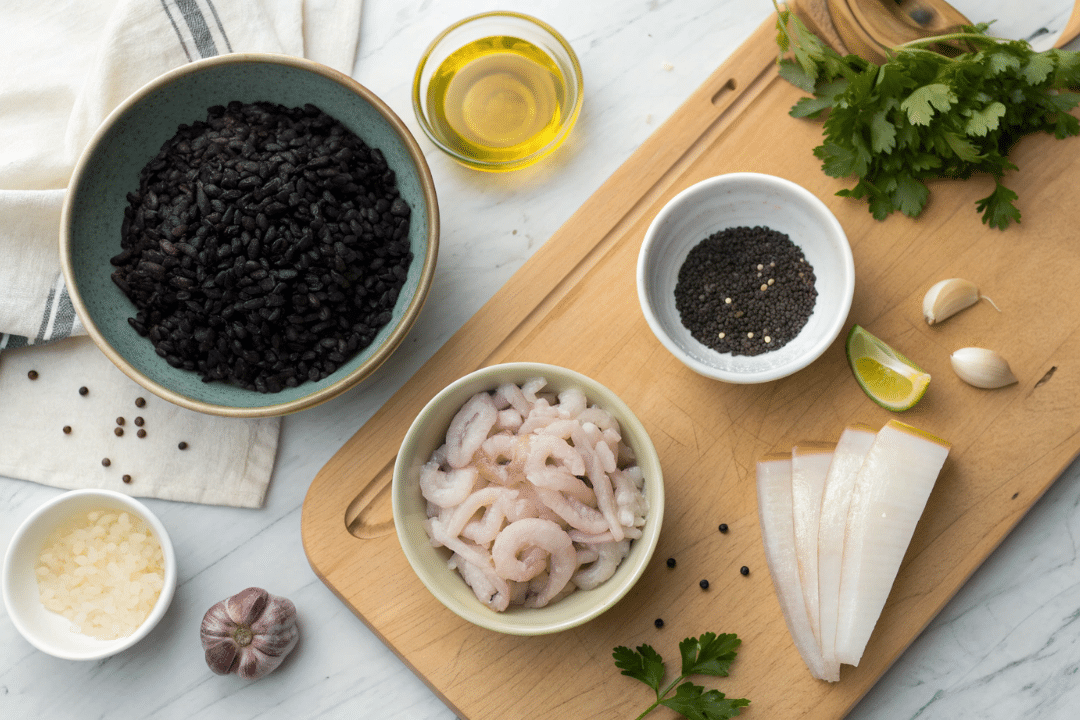
Premium ingredients make all the difference in seafood risotto with squid ink. The right components elevate an ordinary dish into something truly special. Quality selection is key for gourmet results.
Rice selection is crucial for achieving the perfect texture. I recommend three exceptional varieties:
- Arborio: Plump grains with high starch content
- Carnaroli: Known as the “king of risotto rice.”
- Vialone Nano: Ideal for creamy, rich preparations
Look for fresh, high-quality squid ink for the best flavor. You can select between two primary forms:
- Liquid squid ink (10g/2 sachets)
- Squid ink powder (12.5g/3 teaspoons)
Seafood quality defines the risotto’s ultimate flavor. Select squid or cuttlefish that meet these criteria:
- Fresh, mild ocean scent
- Firm texture
- Clean, bright appearance
Additional key ingredients include extra virgin olive oil and fresh garlic. White wine and high-quality fish or vegetable stock are essential. Finish with unsalted butter, freshly grated Parmesan, and chopped parsley.
Always taste and adjust seasonings throughout cooking. This ensures a perfectly balanced dish. The unique depth of squid ink will shine through.
Mastering the Step-by-Step Cooking Technique for Perfect Results
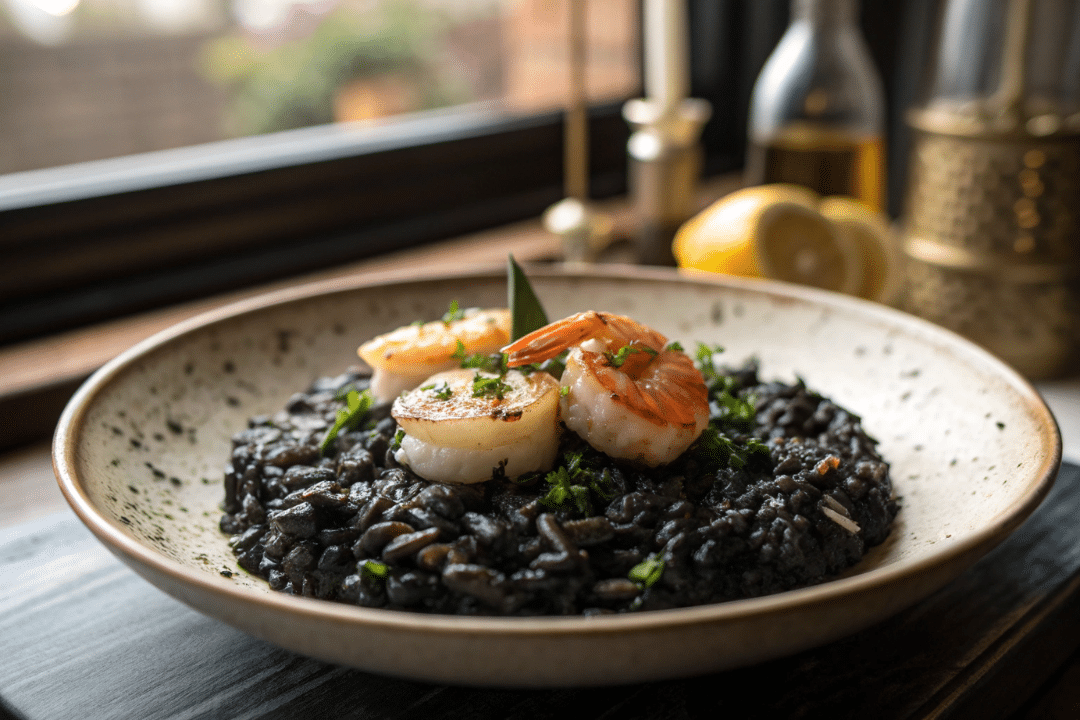
Creating a creamy squid ink risotto requires precision and passion. I’ll guide you through transforming simple ingredients into Mediterranean ink risotto. This dish will transport your taste buds to Italy’s coastal regions.
Building the Aromatic Foundation
The secret to exceptional cuttlefish ink rice starts with a carefully crafted base. Begin by heating olive oil in a heavy-bottomed pan. The right temperature is crucial for success.
Add finely chopped onions with a pinch of salt. Sauté until they become translucent but not browned.
- Use medium heat to control the onion’s caramelization
- Add minced garlic for 30 seconds to release its fragrant oils
- Look for a soft, glossy appearance in the onions
The Gradual Art of Stock Integration
Risotto demands patience and attention. Add Arborio rice, stirring to coat each grain with oil. Toast the rice for 2-3 minutes until edges turn slightly translucent.
This step is critical for texture and flavor development.
- Pour in white wine and stir until almost completely reduced
- Keep hot broth simmering gently in a separate pot
- Add one ladle of broth at a time, stirring consistently
- Wait for each addition to be absorbed before adding more
Incorporating Ink and Seafood for Depth
The dramatic moment arrives when you introduce the cuttlefish ink. Loosen the ink with a small amount of hot broth. This prevents clumping in your creamy squid ink risotto.
Stir into the rice when grains are just shy of tender. This creates a stunning black canvas that speaks of ocean depths.
Add sliced cuttlefish or squid, cooking until they become opaque and tender. Avoid overcooking to prevent a rubbery texture. Finish by stirring in butter and olive oil for a glossy finish.
Bringing the Ocean to Your Table with Confidence
Creating cuttlefish ink risotto connects you with Italian coastal tradition. Each stir brings generations of resourceful cooks to your kitchen. They transformed simple ingredients into something extraordinary.
Pair this dish with crisp Pinot Grigio from the Veneto region. The wine’s bright acidity cuts through the risotto’s rich, oceanic depth. A light Bardolino red offers an intriguing alternative that complements the seafood notes.
Don’t let the dramatic black color intimidate you. If you can make traditional risotto, you can master this version. The magic happens when you embrace the process and let creativity shine.
Experiment with variations like adding fresh mussels or sprinkling chives. Brighten the dish with a touch of lemon zest. Your kitchen becomes a portal to the Italian coastline with this recipe.
Cuttlefish ink risotto promises an unforgettable journey of flavor and technique. Dive in, explore, and savor every moment of creating this spectacular dish.
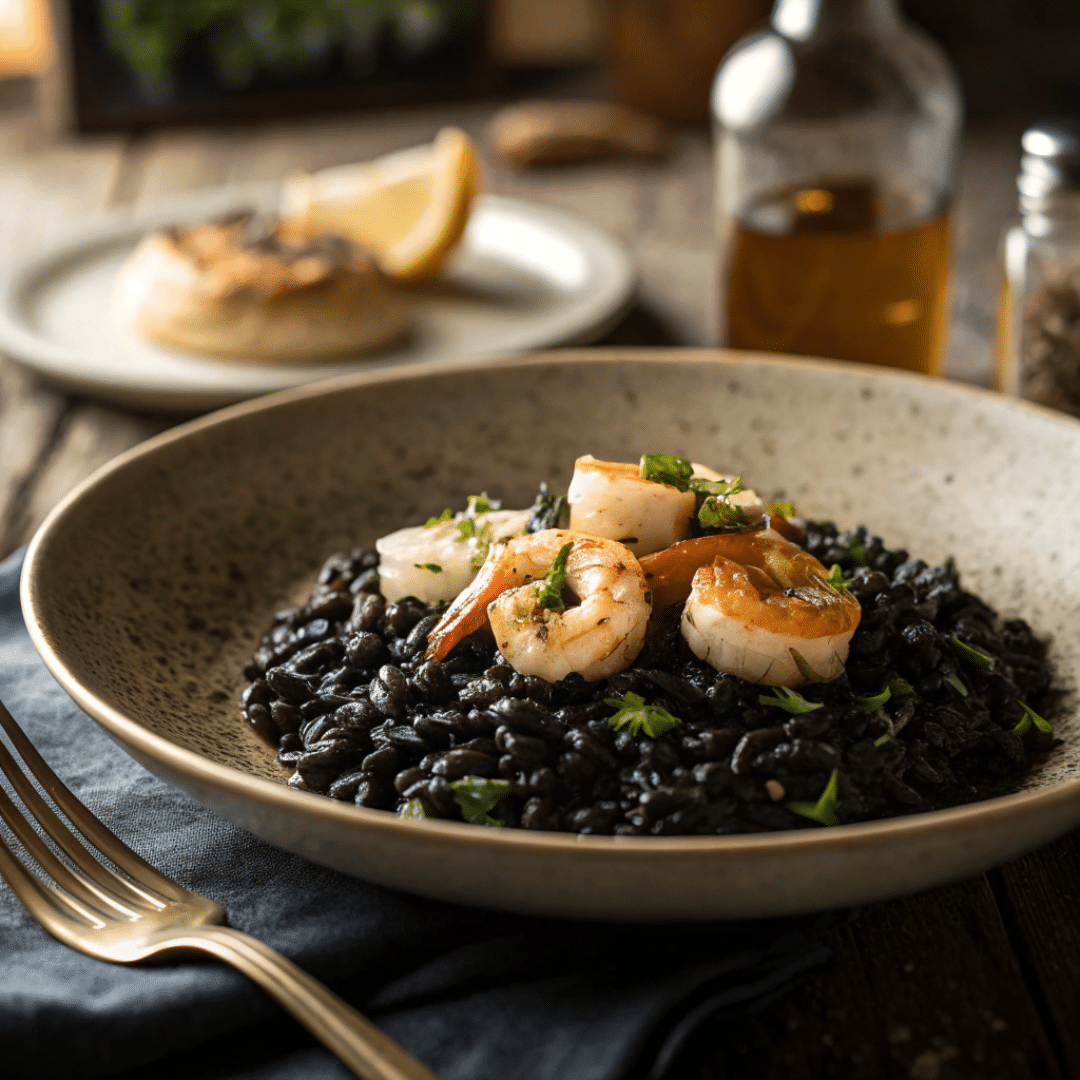
Cuttlefish Ink Risotto
Ingredients
Method
- Heat olive oil in a heavy pot over medium heat. Add onions with a pinch of salt and sauté until soft and translucent. Stir in garlic for 30 seconds.
- Add the rice and stir to coat each grain with oil. Toast for 2–3 minutes until edges look slightly translucent.
- Pour in the white wine and stir until mostly evaporated.
- Add hot broth one ladle at a time, stirring slowly. Allow each addition to absorb before adding the next. Continue for about 15–18 minutes.
- Loosen the squid ink with a spoonful of warm broth. Stir into the risotto when the rice is nearly tender. Add cuttlefish or squid and cook 3–4 minutes until just opaque and tender.
- Turn off heat and stir in butter, Parmesan, and a drizzle of olive oil. Adjust seasoning. Cover and rest 2 minutes.
- Plate hot and garnish with chopped parsley or a touch of lemon zest if desired.
Notes
FAQ
What exactly is cuttlefish ink, and is it safe to eat?
Can I substitute squid ink for cuttlefish ink in this risotto recipe?
How do I prevent the risotto from becoming too salty when using ink?
What type of rice works best for cuttlefish ink risotto?
How do I know when the seafood is perfectly cooked in the risotto?
Can I make this risotto in advance?
What wine pairs best with cuttlefish ink risotto?
Is this dish gluten-free?
About The Author

John
John Watson is the passionate food enthusiast behind MePlusFood.com. With a deep love for exploring culinary delights, he shares honest restaurant reviews, mouthwatering recipes, and culinary adventures. Join John on his flavorful journey to savor the world one bite at a time.