Slow-Braised Beef Brisket Ramen with Silky Soft Egg
Jump to Recipe
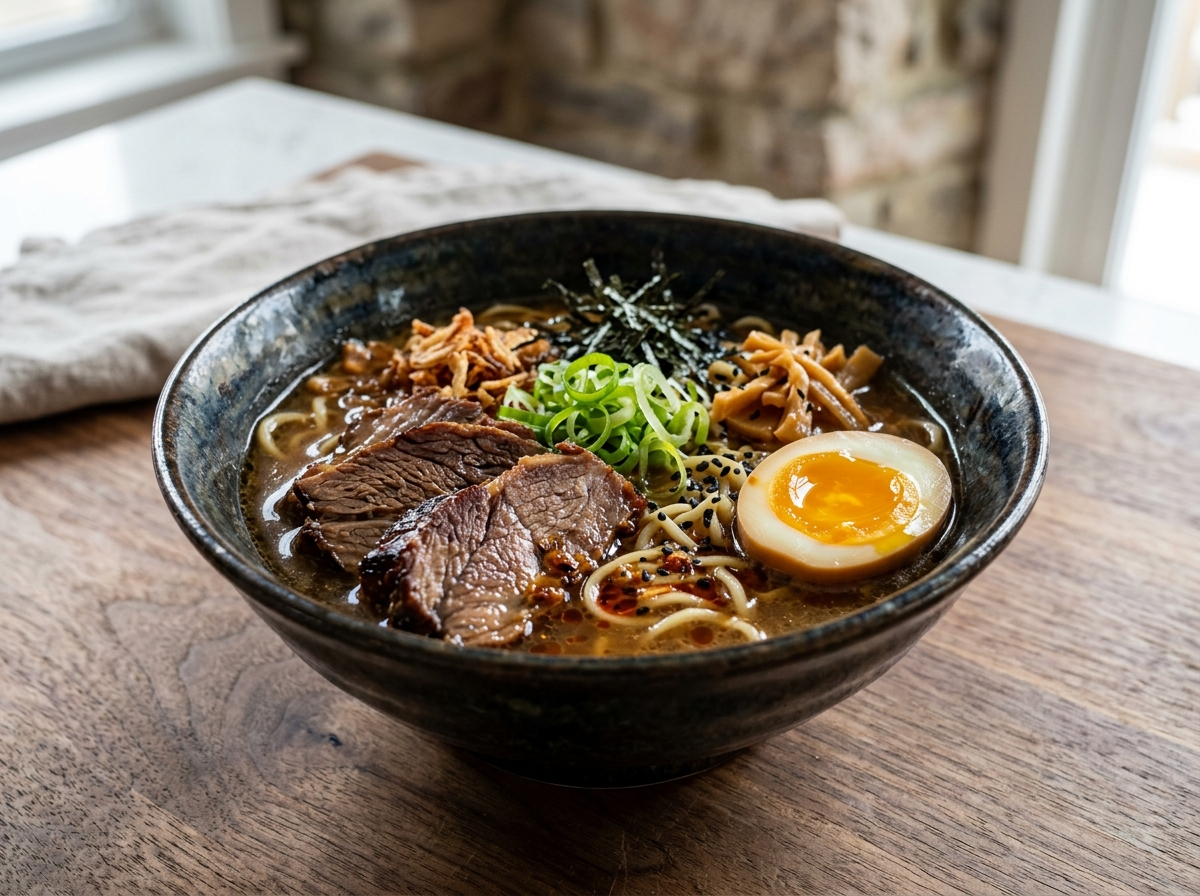
Beef brisket ramen with soft egg is a homemade riff on the deep, soy-based ramen bowls you get at izakaya counters, built by braising brisket in a soy-mirin liquid that doubles as the broth base once it’s strained.
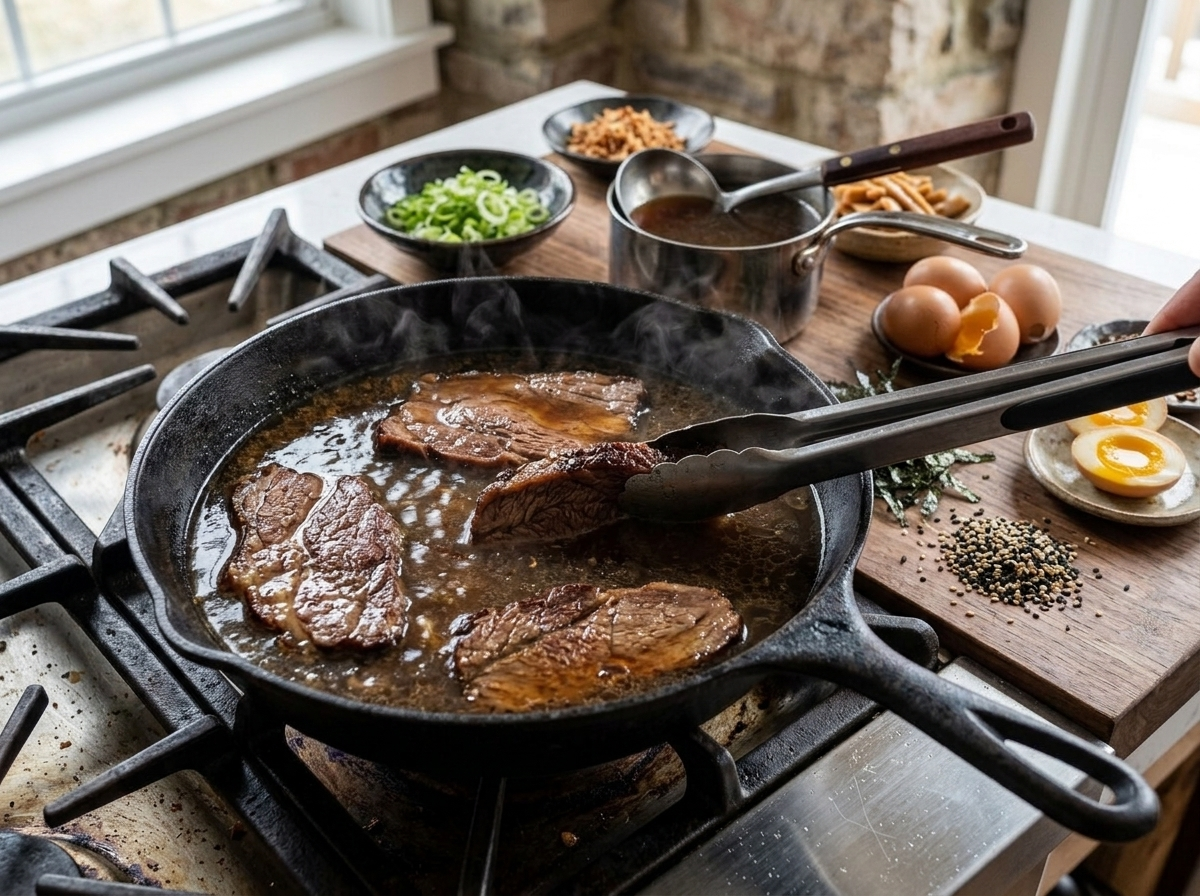
The brisket goes into the oven at 325 F / 163 C for about 3 hours, until it hits 203 F / 95 C and pulls apart with barely any resistance. That braising liquid, skimmed and strained, becomes the backbone of the broth, so nothing here goes to waste.
The egg is the other half of the bowl. Six and a half minutes in boiling water gives a jammy yolk that’s set at the edges and loose in the middle, then an ice bath stops the cooking cold.
Rush the oven time and the brisket won’t shred, it’ll fight you with every bite. Give it the full 3 hours and it falls apart at the touch of a fork.
Why You’ll Love This Recipe
- Braising liquid turns into the broth, so nothing gets wasted
- Brisket shreds apart at 203 F / 95 C, no chewy bites
- Jammy 6.5-minute egg adds richness to every spoonful
- Make the brisket and broth a day ahead for faster bowls
Ingredient Notes
- Beef brisket: Look for a piece with even marbling, not just a thick fat cap. Short ribs work as a substitute with the same braising time.
- Soy sauce: Use regular soy sauce for depth. Swap in tamari or gluten-free soy sauce to keep the broth gluten free.
- Mirin: This sweet rice wine balances the salty soy. If you’re out, use 1 tbsp sugar mixed into the wine instead.
- Shaoxing wine or sake: Either adds a light fermented note to the braise. Dry sherry is a decent stand-in if you can’t find either.
- Star anise and cinnamon stick: These give the broth its background warmth without tasting like a spice cabinet. Don’t skip them, they’re doing quiet work.
- Ramen noodles: Fresh, curly ramen noodles hold their bite better than dried. Rice-based ramen noodles keep the bowl gluten free.
- Eggs: Use the freshest eggs you have for peeling ease after the ice bath. Older eggs sometimes stick to the shell.
- Chili oil (rayu): A drizzle at the end adds heat without changing the broth’s balance. Toasted sesame oil alone works if you skip the heat.
Slow-Braised Beef Brisket Ramen with Silky Soft Egg
Ingredients
Notes
- Use fresh, wide-cut ramen noodles if you can find them, they hold up better in hot broth than dried.
- Fresh eggs peel cleaner after the ice bath, older eggs sometimes stick to the shell.
- Don't skip the sear on the brisket, it builds the color that carries into the broth.
- Keep braised brisket covered while it rests so it doesn't dry out before slicing.
Tips for Success
- Sear the brisket in batches if your pot is small, since crowding it steams the meat instead of browning it.
- Skim the foam off the braising liquid during the first 10 minutes of simmering so the broth stays clear.
- Boil eggs exactly 6.5 minutes for a jammy yolk, then shock them in ice water right away to stop the cooking.
- Slice the brisket against the grain, not with it, so every piece stays tender instead of chewy.
- Strain the braising liquid through a fine-mesh sieve before serving to catch loose spices and onion skins.
Variations
- Swap brisket for short ribs and braise the same way for a fattier, richer broth base.
- Stir a spoonful of white miso into the finished broth for extra depth and a rounder flavor.
- Marinate the peeled soft eggs in leftover soy-mirin liquid overnight for ajitsuke-style tamago eggs.
Storage and Reheating
Brisket and braising liquid keep well refrigerated in an airtight container for up to 4 days, and the flavor deepens overnight as the fat rises and the aromatics settle deeper into the meat.
Reheat the broth and brisket together in a covered pot over low heat until steaming, about 8 to 10 minutes. Cook noodles and eggs fresh each time, since noodles turn mushy and eggs overcook if stored sitting in the broth.
Freeze brisket and strained braising liquid separately in airtight containers for up to 3 months. Thaw overnight in the fridge before reheating on the stovetop.
Serving Suggestions
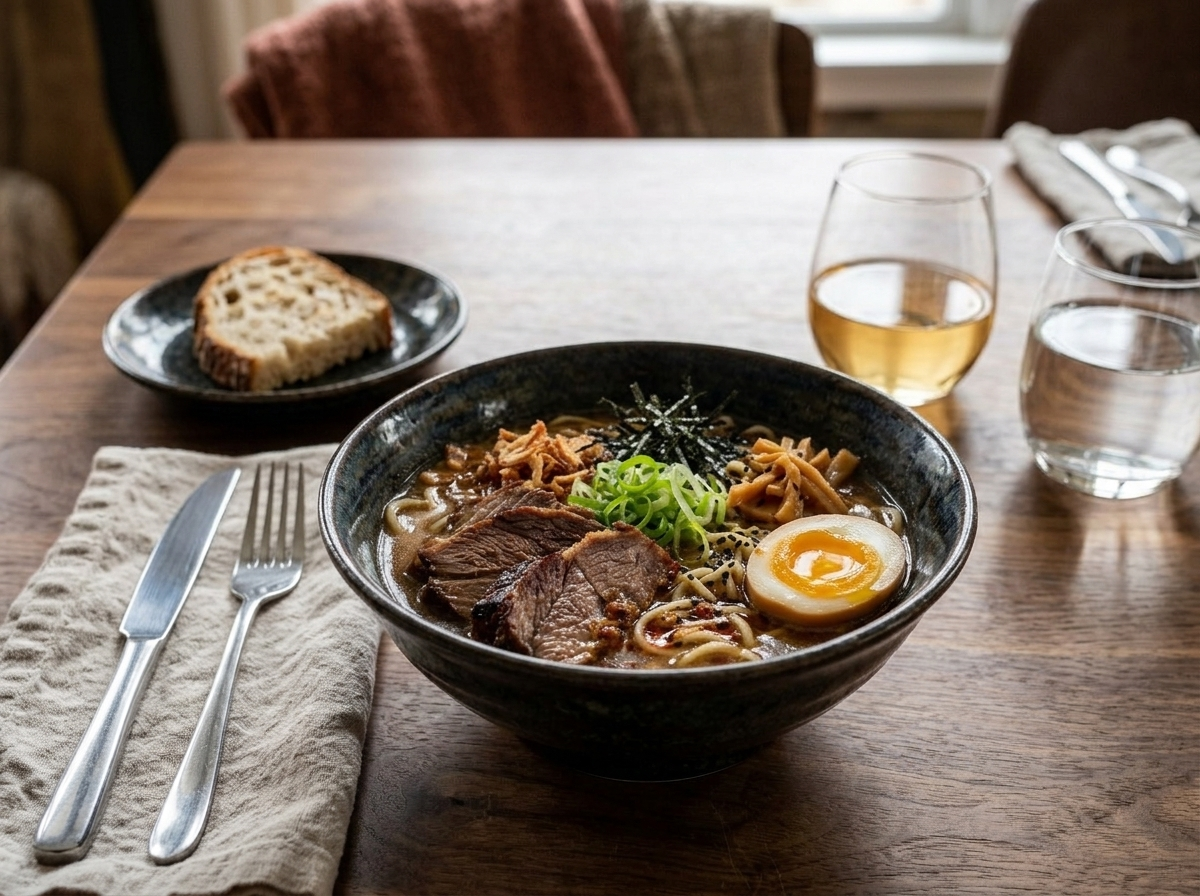
Beef brisket ramen with soft egg eats like a full meal on its own, but a side of quick-pickled cucumbers or Japanese pickled ginger cuts through the richness of the broth.
Pan-fried gyoza or a small plate of edamame with sea salt round out the table if you’re feeding a crowd. A cold Japanese lager or hot green tea both work alongside the broth’s saltiness.
FAQ
Why is my brisket ramen broth cloudy instead of clear?
Cloudy broth usually comes from skipping the foam skim or letting the liquid boil hard instead of simmer gently. Skim the scum off during the first 10 minutes before it goes into the oven, and keep the braise at a low simmer. Straining through a fine-mesh sieve at the end also helps clear it up.
Can I use short ribs instead of brisket in this ramen?
Yes, short ribs work in place of brisket using the same braising method and the same 203 F / 95 C fork-tender target. The broth will run richer since short ribs carry more fat, so skim extra grease off the top if it feels too heavy for your taste.
Can I make the brisket and broth ahead for beef brisket ramen?
Yes, both keep well and taste better after a day in the fridge since the fat rises and the flavor settles overnight. Store the brisket and braising liquid together, covered, for up to 4 days, then reheat gently on the stovetop before assembling with fresh noodles and eggs.
What goes well with beef brisket ramen with soft egg?
Quick-pickled cucumbers or Japanese pickled ginger cut through the richness of the broth and add a sharp contrast. Pan-fried gyoza or edamame with sea salt round out the meal if you’re serving more than two people, and a cold lager pairs well with the salty broth.
How do I know when the soft egg is ready for this ramen?
Boil the eggs for exactly 6.5 minutes at a steady rolling boil for a jammy yolk that’s set at the edges and loose in the middle. Pull them out right at that mark and shock them in ice water immediately, since even 30 extra seconds pushes the yolk toward fully set.
Is beef brisket ramen with soft egg gluten free?
Not as written, since soy sauce and most fresh ramen noodles contain wheat. Swap in tamari or gluten-free soy sauce and rice-based ramen noodles to make the whole bowl gluten free without changing the braising method or the timing.
Related recipes
About The Author

John
John Watson is the passionate food enthusiast behind MePlusFood.com. With a deep love for exploring culinary delights, he shares honest restaurant reviews, mouthwatering recipes, and culinary adventures. Join John on his flavorful journey to savor the world one bite at a time.