Chili Crab Linguine with Sambal Tomato Sauce
Jump to Recipe
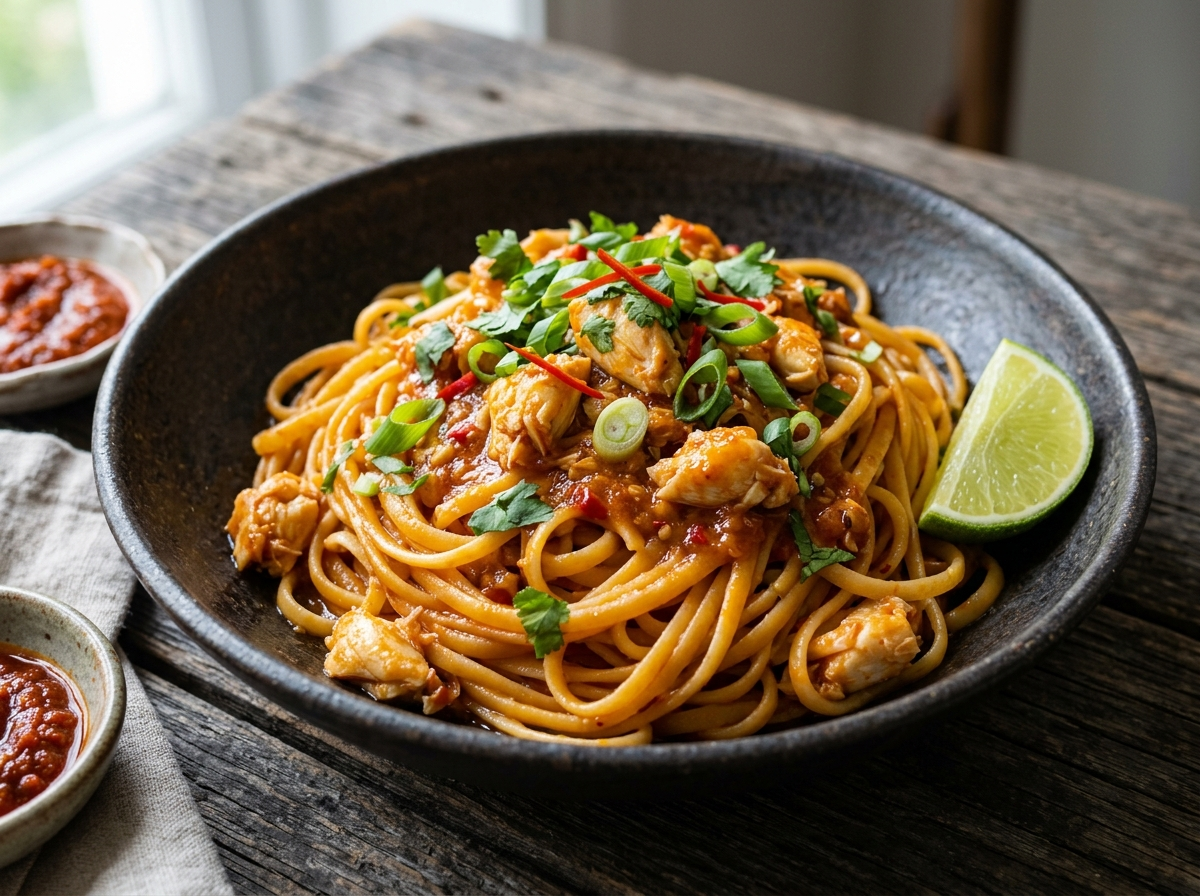
Singapore chili crab is one of those dishes people talk about long after the meal is over. The sauce is spicy, a little sweet, and thickened with egg so it coats everything in a rich, glossy layer. Turning it into a pasta dish keeps all that flavor but makes it weeknight-friendly.
Linguine holds the sauce well without competing with the crab. Flat noodles, thick sauce, chunky crab – the proportions feel right.
I use fresh or pasteurized lump crab meat here instead of whole chili crab for the same practical reasons you’d reach for tender lobster over browned garlic butter rather than a whole live lobster. The sauce does the heavy lifting, so quality crab meat – not the imitation kind – is worth it.
The whole thing comes together in about 40 minutes, and you’ll only dirty one pan besides the pasta pot.
Why You’ll Love This Recipe
- Silky sambal tomato sauce coats every strand of linguine
- Uses lump crab meat – no shell-cracking required
- One pan sauce means minimal cleanup on a weeknight
- Egg-thickened sauce mirrors authentic Singapore chili crab texture
Ingredient Notes
- Lump crab meat: Fresh or pasteurized lump crab meat gives the cleanest flavor. Canned crab works in a pinch but drain it well and expect a slightly fishier result.
- Sambal oelek: I use Huy Fong sambal oelek for heat without extra garlic or sweetness. You can substitute gochujang for a slightly sweeter, fermented heat, but start with half the amount.
- Linguine: Linguine’s flat surface picks up thick sauces better than spaghetti. Thick spaghetti or bucatini are reasonable swaps; angel hair is too delicate and will clump.
- Canned crushed tomatoes: Crushed tomatoes give body to the sauce without needing a long simmer. San Marzano style has lower acidity, which balances the sambal well.
- Eggs: Two beaten eggs are stirred in off-heat at the end to thicken the sauce and give it that characteristic glossy, slightly custardy texture. Don’t skip this step – it defines the dish.
- Fish sauce: A small amount of fish sauce deepens the savory base without tasting overtly fishy. Soy sauce is a workable substitute but will shift the flavor profile slightly.
Chili Crab Linguine with Sambal Tomato Sauce
Ingredients
Method
- Bring a large pot of water to a rolling boil. Add the kosher salt, then cook the linguine according to package directions until just al dente, about 1 minute less than the recommended time.
- Before draining, scoop out 1 cup of pasta water and set aside. Drain the linguine in a colander and set aside.
- Heat the oil in a large skillet over medium heat. Add the minced garlic and grated ginger and cook, stirring, for 1 to 2 minutes until golden and fragrant but not browned.
- Add the sambal oelek and stir for 30 seconds until it darkens slightly and smells toasty.
- Pour in the crushed tomatoes, ketchup, fish sauce, brown sugar, and white pepper. Stir to combine. Simmer over medium heat for 8 to 10 minutes, stirring occasionally, until the sauce thickens enough to coat the back of a spoon.
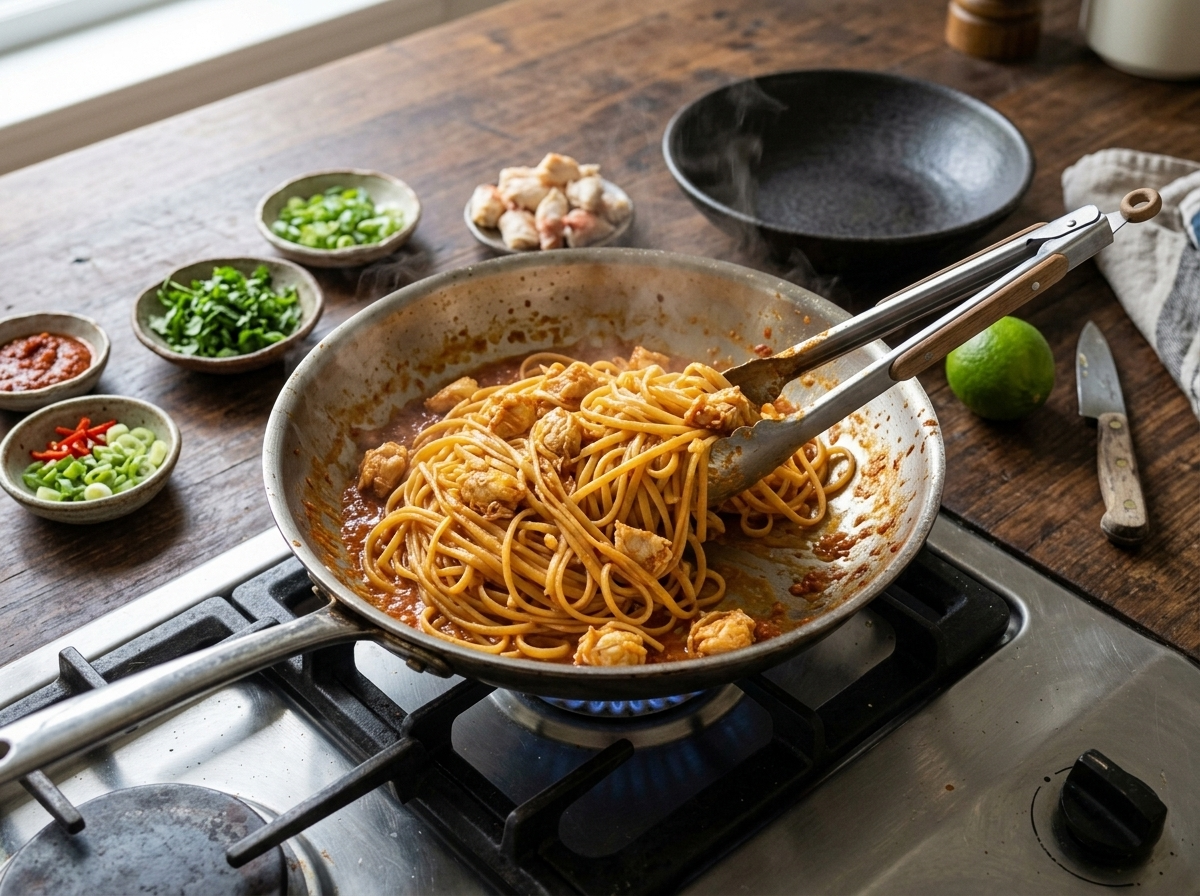
- Add the drained linguine to the skillet and toss to coat, adding pasta water a splash at a time until the sauce clings to every strand without pooling at the bottom of the pan.
- Add the crab meat and toss gently for 1 to 2 minutes over low heat until warmed through. Do not overwork the crab or it will break apart too finely.
- Remove the skillet from the heat. Pour the beaten eggs over the pasta in a thin stream while tossing constantly with tongs or a spatula for about 30 seconds until the sauce looks glossy and slightly thickened. The residual heat will set the eggs without scrambling them.
- Taste and adjust with a little more fish sauce for salt or sambal for heat.
- Divide the linguine among four warmed bowls. Scatter spring onions and cilantro leaves over the top. Serve immediately with lime wedges on the side.
Notes
Tips for Success
- Reserve 1 cup of pasta water before draining – the starchy liquid loosens the sauce without thinning the flavor.
- Add the beaten eggs off the heat and stir constantly for 30 seconds to avoid scrambling them into curds.
- Toast the garlic and ginger in the oil until just golden before adding sambal to avoid a raw, harsh heat.
- Add the crab meat last and toss gently for no more than 2 minutes so it warms through without turning rubbery.
- Taste the sauce before adding crab and adjust fish sauce or sambal – crab meat varies in saltiness, so season in stages.
Variations
- Use shrimp instead of crab for a lower-cost version with a firmer, bouncier texture.
- Add 1 tbsp kecap manis for a sweeter, darker sauce closer to Malaysian-style chili seafood.
- Make it dairy-free and richer by stirring in 2 tbsp coconut cream with the eggs for a subtle tropical undertone.
Storage and Reheating
Store leftovers in an airtight container in the fridge for up to 2 days. The egg-thickened sauce will firm up when cold, which is normal.
Reheat gently in a skillet over low heat with a splash of water, stirring until the sauce loosens and the pasta is heated through, about 3 to 4 minutes. Avoid the microwave if you can – it tends to tighten the sauce and toughen the crab.
This dish doesn’t freeze well. The crab turns mealy and the egg sauce breaks when thawed. Make only what you’ll eat within two days.
Serving Suggestions
Serve straight from the pan with crusty sourdough or a soft baguette on the side to mop up the sauce – that’s how chili crab is traditionally eaten, with bread to soak up every last bit.
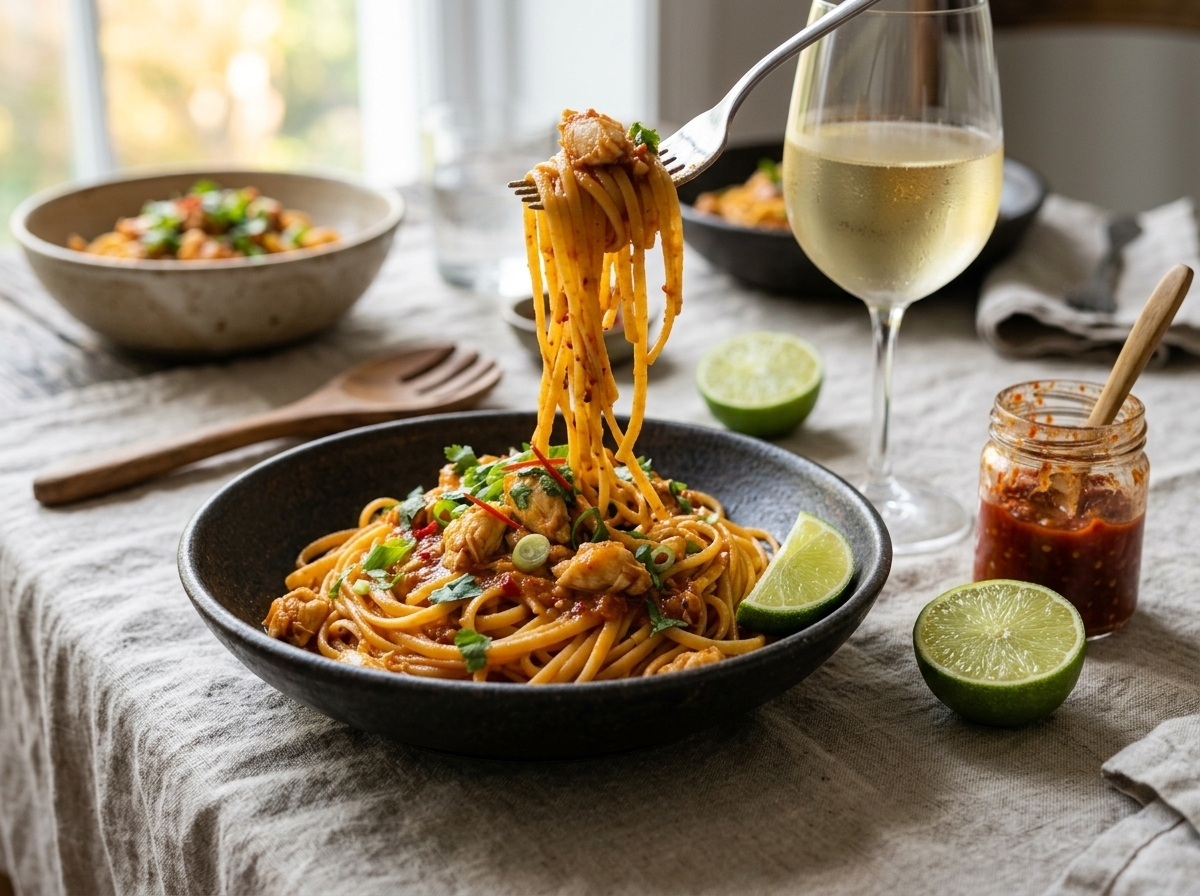
A simple cucumber salad dressed with rice vinegar and sesame oil cuts through the richness well. Chilled lager or a dry Riesling both pair cleanly with the chili heat and sweet crab, the same way cold beer cuts through the richness in a saffron mussel and fennel stew.
For a larger spread, pair with a bowl of steamed jasmine rice on the side for guests who want to stretch the portions, and set out lime wedges so everyone can adjust brightness to their own taste.
FAQ
Why does my chili crab linguine sauce look thin and watery instead of glossy?
The sauce thins out if you add the pasta before reducing the tomato base enough, or if you skip the egg step. Make sure the tomato sauce simmers for at least 8 minutes before adding pasta water, and stir in the beaten eggs off the heat while tossing constantly to build that glossy finish.
Can I use imitation crab instead of real lump crab meat in this recipe?
You can, but imitation crab is much sweeter and softer, and it breaks apart quickly in the hot sauce. Real lump crab meat is what gives this dish its clean, briny sweetness that holds up against the sambal – imitation crab tends to disappear into the sauce.
Can I make the sambal tomato sauce ahead of time and refrigerate it?
Yes, the sambal tomato base keeps well in the fridge for up to 3 days without the eggs or crab added. Reheat it in the pan, cook fresh linguine, then finish with the eggs and crab just before serving so the crab stays tender.
What goes well alongside chili crab linguine to balance the spice?
A cool cucumber salad dressed with rice vinegar works well against the chili heat, much like the tart green mango salad that balances bold flavors in a similar Southeast Asian plate. Cold lager, a dry off-dry Riesling, or even a light sparkling water with lime are all good choices to keep the palate from building up too much heat.
Is chili crab linguine gluten-free?
Not as written – standard linguine contains gluten. You can swap in a certified gluten-free rice linguine or corn-based pasta, and make sure your fish sauce and sambal oelek are labeled gluten-free, as some brands use fermented wheat.
What is the difference between Singapore chili crab and this linguine version?
Traditional Singapore chili crab uses whole mud crabs cooked in the shell and is served with mantou buns for dipping. This pasta version strips the concept down to the sauce – sambal, tomato, egg, and crab meat – tossed with linguine for a plate-friendly format that doesn’t require shell crackers.
About The Author

John
John Watson is the passionate food enthusiast behind MePlusFood.com. With a deep love for exploring culinary delights, he shares honest restaurant reviews, mouthwatering recipes, and culinary adventures. Join John on his flavorful journey to savor the world one bite at a time.