Honey Glazed Duck Leg with Braised Cabbage
Jump to Recipe
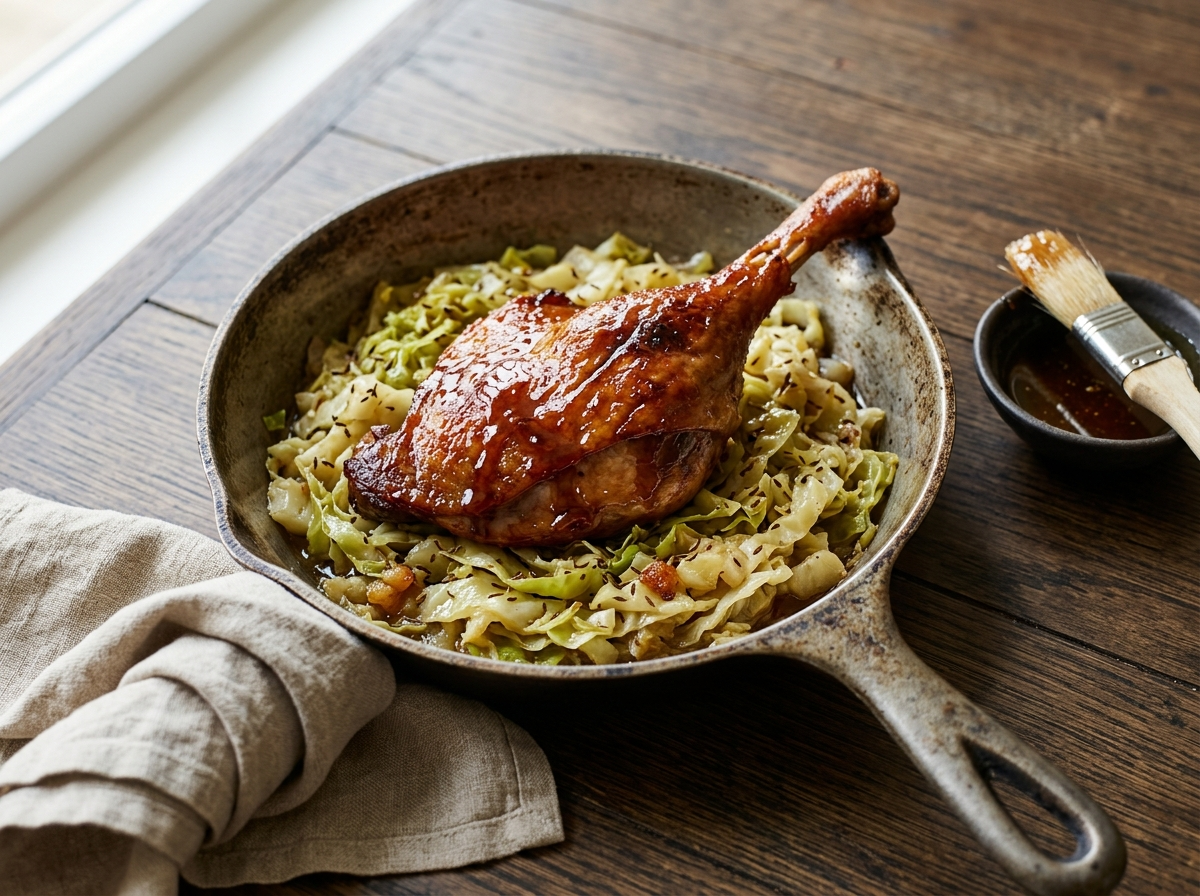
Duck legs are more forgiving than duck breast. They have enough fat and connective tissue to stay moist through a long braise or a two-stage roast, and they reward patience with meat that falls from the bone.
This dish builds flavor in two steps. First, the legs are seared hard to render the fat and get the skin started, using the same skin-down technique that makes five spice duck breast so reliably crisp. Then they finish in the oven low and slow before a final glaze under heat to set that honey lacquer.
The cabbage braises directly in the duck fat and a splash of apple cider vinegar. It goes in sharp and fibrous and comes out soft, slightly sweet, and just acidic enough to cut through the rich meat.
This is a weekend cook – not complicated, but not rushed. Plan about 1 hour 45 minutes start to finish.
Why You’ll Love This Recipe
- Skin crisps to a deep amber lacquer without deep frying
- Braised cabbage doubles as a built-in side dish
- Duck legs stay moist through long oven time
- One skillet handles both the duck and the cabbage
Ingredient Notes
- Duck legs: Bone-in, skin-on duck legs work best here. Trim any large overhanging fat flaps before searing so they don’t pool and steam the skin.
- Honey: A mild, runny honey like clover or acacia glazes evenly. Buckwheat honey adds a slightly bitter edge that works well with the duck fat richness.
- Soy sauce: Use regular soy sauce, not low sodium, for a glaze that browns properly. Tamari works as a gluten-free swap.
- Green cabbage: Half a medium head, sliced into rough strips. Savoy cabbage softens faster and has a more delicate flavor if you prefer a lighter braise.
- Apple cider vinegar: This provides the acidity that keeps the braised cabbage from tasting flat. White wine vinegar is a direct substitute.
- Garlic: Four cloves go into the cabbage braise. Slice them rather than mincing so they melt into the dish without burning.
- Dijon mustard: A small amount in the glaze adds sharpness and helps the honey stick to the skin. Whole-grain mustard is a fine substitute.
- Chicken stock: Used to deglaze and braise the cabbage. Duck stock deepens the flavor if you have it, but good chicken stock does the job.
Honey Glazed Duck Leg with Braised Cabbage
Ingredients
Method
- Pat the duck legs completely dry with paper towels. Score the skin in a 1 cm crosshatch pattern, cutting through the fat but not into the meat.
- Season the legs on both sides with salt, pepper, and garlic powder. Let them sit at room temperature for 15 minutes while you prep the cabbage.
- Place the duck legs skin-side down in a cold, dry oven-safe skillet. Set the heat to medium-low and cook for 18 to 22 minutes, pouring off rendered fat into a heatproof bowl every 5 minutes, until the skin is deep golden and releases cleanly from the pan.
- Flip the legs and sear the flesh side for 3 minutes. Transfer the legs to a plate. Reserve 2 tablespoons of the rendered duck fat in the skillet and set the rest aside.
- Heat the oven to 160 C / 320 F.
- With the skillet still over medium heat, add the sliced onion to the 2 tablespoons of reserved duck fat. Cook for 5 minutes, stirring occasionally, until softened and translucent.
- Add the sliced garlic and caraway seeds and cook for 1 minute until fragrant. Add the cabbage strips and toss to coat in the fat.
- Pour in the apple cider vinegar and chicken stock. Season with salt and pepper. Stir to combine, scraping up any browned bits from the pan bottom.
- Nestle the seared duck legs skin-side up on top of the cabbage, making sure the skin sits above the liquid and is not submerged.
- Transfer the skillet uncovered to the oven. Braise at 160 C / 320 F for 50 minutes until the duck legs register 72 C / 162 F internally and the cabbage is fully wilted.
- While the duck braises, whisk together the honey, soy sauce, Dijon mustard, apple cider vinegar, and grated garlic in a small bowl until smooth.
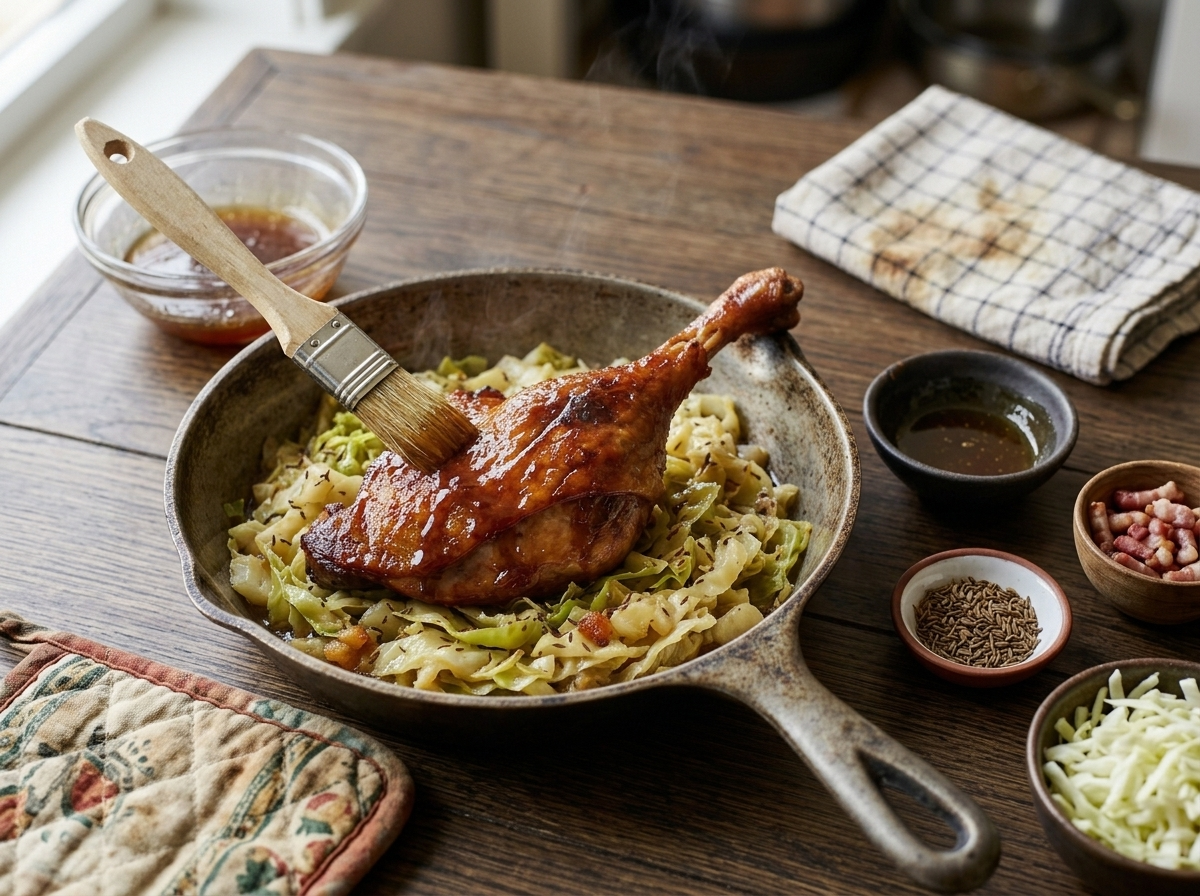
- Increase the oven temperature to 220 C / 430 F. Brush the duck skin with half the glaze using a pastry brush. Return to the oven for 6 minutes.
- Brush with the remaining glaze and roast for a further 5 to 7 minutes until the skin is lacquered, deep amber, and crisp. Watch closely as the honey can burn quickly at this temperature.
- Check the internal temperature - it should read 75 C / 165 F at the thickest point away from the bone. Remove from the oven.
- Transfer the duck legs to a wire rack and rest for 5 minutes before serving.
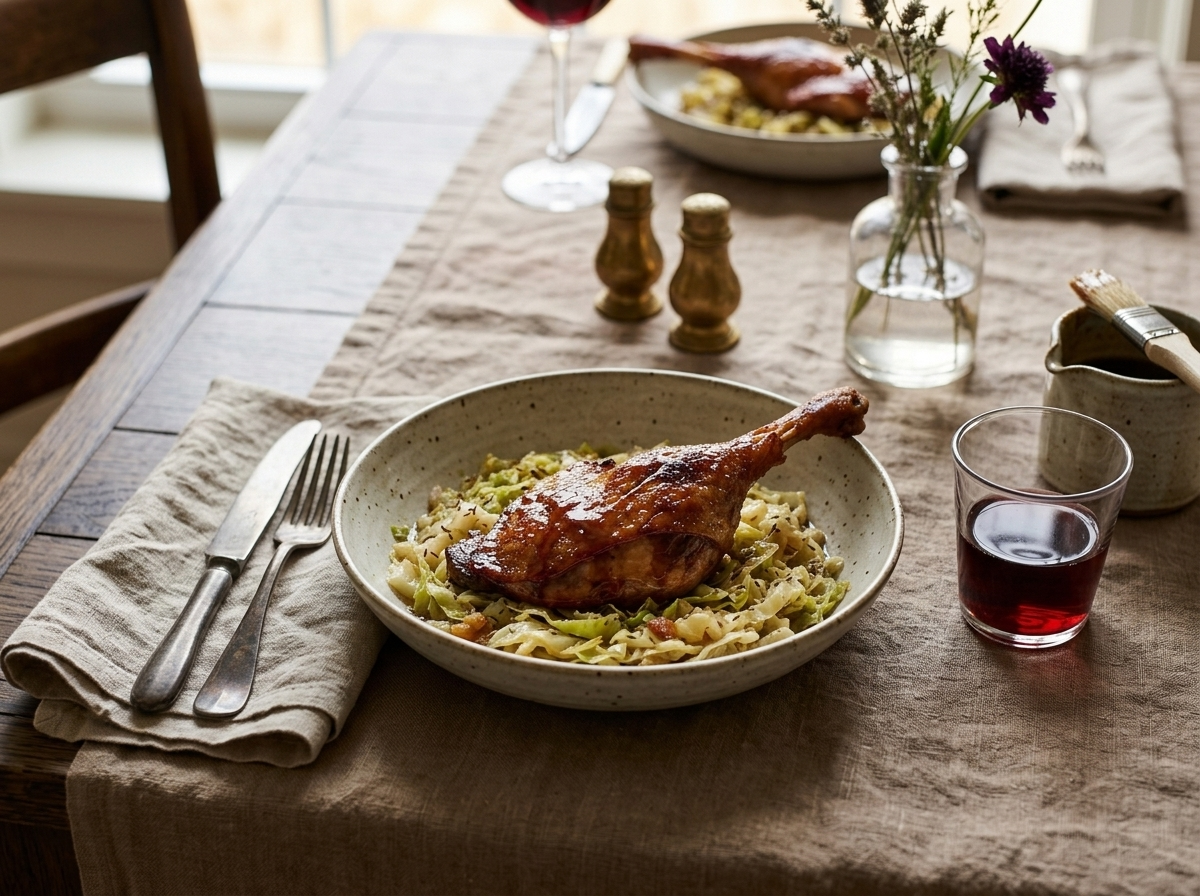
- Spoon the braised cabbage into shallow bowls or onto plates. Place a glazed duck leg on top of each portion. Spoon any remaining pan juices from the skillet over the cabbage.
Notes
Tips for Success
- Score the duck skin in a crosshatch pattern before searing to help the fat render evenly and completely.
- Start the duck legs skin-side down in a cold skillet, then bring the heat up slowly to draw out maximum fat.
- Apply the honey glaze in two thin coats with 5 minutes between each to build depth without burning.
- Braise the cabbage in the same skillet after the duck, scraping up any fond for extra flavor — the same fond-building approach used in beer braised bratwurst with onions.
- Rest the glazed duck legs on a wire rack for 5 minutes before serving so the glaze firms up and stays on the skin.
Variations
- Swap honey for pomegranate molasses and add star anise to the cabbage for a Middle Eastern slant.
- Use red cabbage instead of green and add caraway seeds for a German-style braised base.
- Add sliced apples and a splash of brandy to the cabbage braise for a classic French pairing with duck.
Storage and Reheating
Store leftover duck legs and cabbage separately in airtight containers in the fridge for up to 3 days. The cabbage actually improves overnight as it continues to absorb the cooking liquid.
To reheat the duck, place skin-side up on a wire rack set over a baking sheet at 180 C / 355 F for 12 to 15 minutes. This re-crisps the skin far better than a microwave. Reheat the cabbage in a small pan over low heat with a tablespoon of water or stock.
Duck legs freeze well after the roasting stage but before glazing. Wrap tightly and freeze for up to 2 months. Thaw overnight in the fridge, then glaze and finish in the oven.
Serving Suggestions
Serve the braised cabbage as the base on each plate with the duck leg rested on top. Spoon any pan juices over the meat just before bringing to the table.
A few roasted new potatoes or crushed butter potatoes on the side round the plate into a full meal. The starch soaks up the braising liquid nicely. A simple green salad with a sharp vinaigrette balances the fat on the plate without competing with the main.
For a drink pairing, a Pinot Noir from Burgundy or Oregon sits well alongside the honey and savory glaze. If you prefer something lighter, a dry hard cider mirrors the apple cider vinegar in the cabbage.
FAQ
Why is the skin on my honey glazed duck leg not crispy?
The most common reason is too much moisture in the pan during the initial roast. Make sure the duck starts skin-side down in a dry skillet and that any excess rendered fat is spooned off before glazing. Applying the glaze too early also steams the skin instead of lacquering it.
Can I use duck breast instead of duck legs for this braised cabbage recipe?
Duck breast can work but it needs a much shorter cook time – around 6 to 8 minutes in the oven after searing. The braised cabbage timing stays the same, but slice the breast and fan it over the cabbage rather than resting the whole piece on top.
Can I braise the duck legs and cabbage a day ahead for a dinner party?
You can braise the duck legs all the way through the slow oven stage a day in advance and refrigerate them uncovered so the skin dries out further. The cabbage also reheats well. On the day, just glaze and blast the duck legs in a 220 C / 430 F oven for 10 minutes to re-crisp and set the glaze.
Is this honey glazed duck leg recipe gluten-free?
The recipe as written contains soy sauce, which typically includes wheat. Swap it for tamari or a certified gluten-free soy sauce and the dish becomes gluten-free. Check your chicken stock label as well since some contain gluten.
What goes well with honey glazed duck other than braised cabbage?
Creamy polenta, celery root puree, or roasted beets all pair well with the honey and soy glaze, much like the caramelized finish on maple bourbon glazed pork belly. The key is a side that can absorb the rich duck fat without adding more fat of its own.
How do I know when the duck leg is fully cooked?
The internal temperature should reach 75 C / 165 F at the thickest part of the thigh, away from the bone. A visual cue is that the meat has pulled back from the knuckle bone by about 1 cm and the juices run clear when pierced.
About The Author

John
John Watson is the passionate food enthusiast behind MePlusFood.com. With a deep love for exploring culinary delights, he shares honest restaurant reviews, mouthwatering recipes, and culinary adventures. Join John on his flavorful journey to savor the world one bite at a time.