Slow-Roasted Pork Cheeks in Cider: Fork-Tender Braise
Jump to Recipe
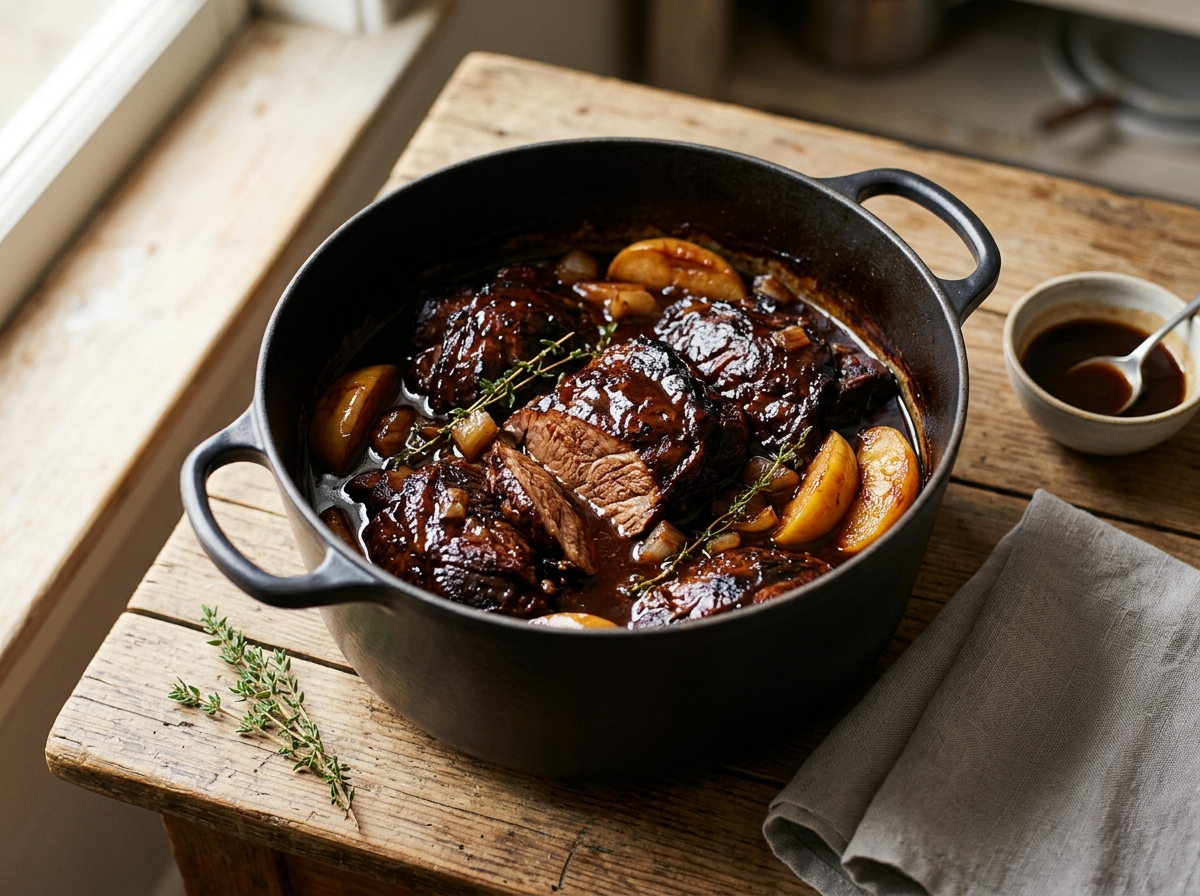
Slow roasted pork cheeks in cider means braising trimmed pork cheeks, covered, in dry cider, stock and apple wedges at 150 C / 300 F for about 3 hours, until the meat turns fork-tender and pulls apart with a spoon.
Pork cheeks are a hardworking, collagen-rich cut that stays chewy at high heat but turns silky once you give it time. The apples soften into the sauce and the cider reduces into something sharper and less sweet than you’d expect from the smell alone.
I sear the cheeks hard before they go into the pot. Skip that step and the finished sauce tastes flat, missing the fond that builds most of the flavor.
This is a weekend braise, not a weeknight one. Most of the three hours is hands-off oven time, so you can prep a side while it cooks.
Why You’ll Love This Recipe
- Turns a tough cut into fork-tender meat
- Mostly hands-off oven time, about 3 hours
- Cider and apples build a sauce with real depth
- Tastes better the next day, great for meal prep
Ingredient Notes
- Pork cheeks: Ask your butcher for cheeks trimmed of most silverskin. Pork shoulder works as a substitute but needs less liquid and a shorter braise.
- Dry cider: Use a dry, still or lightly sparkling hard cider, not a sweet dessert cider. For a non-alcoholic version, swap in apple juice plus a tablespoon of cider vinegar.
- Apples: Braeburn or Granny Smith hold their shape through a long braise better than softer varieties like Gala.
- Stock: Chicken or pork stock both work. Use low-sodium stock so you control the seasoning at the end.
- Thyme and bay leaves: Fresh thyme sprigs give a cleaner flavor than dried, but 1 teaspoon dried thyme works in a pinch.
- Apple cider vinegar: Added at the end, it sharpens the reduced sauce so it doesn’t taste flat or overly sweet.
Slow-Roasted Pork Cheeks in Cider: Fork-Tender Braise
Ingredients
Method
- Heat the oven to 150 C / 300 F.
- Pat pork cheeks fully dry, season with salt and pepper, and dust lightly with flour if using.
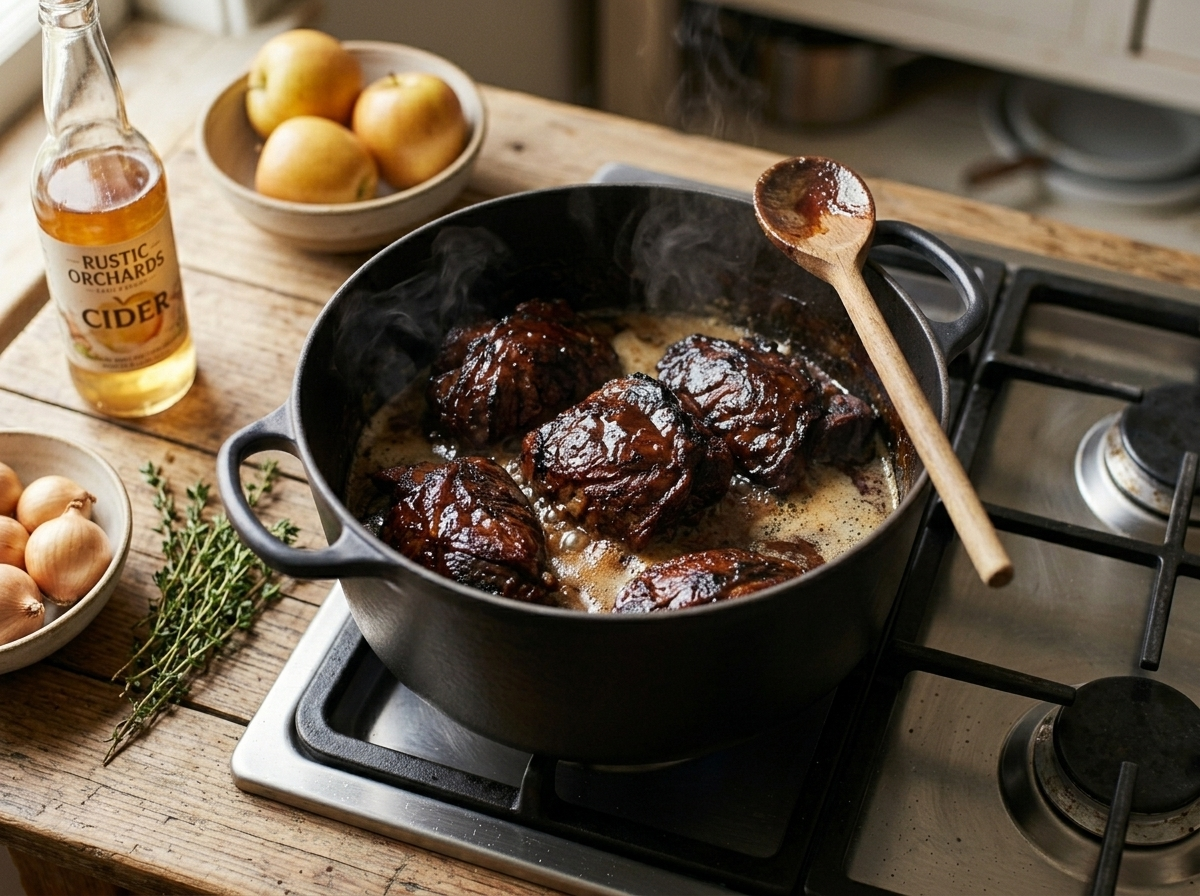
- Heat olive oil and butter in a Dutch oven over medium-high heat. Sear cheeks in batches of 3 to 4, 2 to 3 minutes per side, until deep golden brown. Set aside.
- Add onions, carrots, and celery to the same pot. Cook 5 to 6 minutes, stirring occasionally, until softened and browned at the edges.
- Add garlic and cook 1 minute until fragrant.
- Pour in the cider, scraping up any browned bits from the bottom. Bring to a simmer and let bubble for 2 minutes.
- Return pork cheeks to the pot. Add stock, apple wedges, bay leaves, and thyme. Liquid should come about two-thirds up the sides of the cheeks.
- Cover the pot and transfer to the oven. Braise for 3 hours (180 minutes), until the pork cheeks are fork-tender and shred easily, internal temp about 195 F / 90 C.
- Remove cheeks and apple wedges with a slotted spoon, cover with foil, and rest while you finish the sauce.
- Strain the braising liquid into a saucepan, discarding the bay leaves and thyme stems. Skim off any fat sitting on top.
- Simmer the liquid over medium heat for 8 to 10 minutes, until reduced by half and glossy enough to coat the back of a spoon.
- Stir in the vinegar and season to taste. Return the cheeks to the sauce, warm through for 2 minutes, and garnish with parsley before serving.
Notes
- Trim excess sinew from pork cheeks before searing for even texture.
- Sear in batches so the pot stays hot enough to brown, not steam.
- Braise liquid should reach two-thirds up the cheeks, not fully submerge them.
- Reduce the strained sauce until it coats the back of a spoon.
Tips for Success
- Trim silverskin from each pork cheek before searing so the meat doesn’t turn chewy in spots.
- Pat the cheeks fully dry before they hit the pan, or they’ll steam instead of browning.
- Sear in batches of three or four so the pot stays hot enough to caramelize, not stew.
- Check the braise at 2.5 hours since oven temps vary, and look for meat that shreds under light fork pressure.
- Skim visible fat off the sauce before reducing it, or the finished glaze turns greasy instead of glossy.
Variations
- Swap dry cider for a mix of apple juice and dry white wine if you want a milder, less funky sauce.
- Add 8 to 10 pearl onions and chopped bacon lardons for a French-style pork cheek bourguignon twist.
- Stir in a spoonful of Dijon mustard and a splash of cream at the end for a richer, tangy sauce.
Storage and Reheating
Pork cheeks in cider keep well in the fridge for up to 4 days in an airtight container, sauce and all. The flavor improves overnight as the cider and apples settle into the meat.
Reheat gently on the stovetop over low heat, covered, for 8 to 10 minutes, or in a 160 C / 320 F oven for about 15 minutes until warmed through. Add a splash of stock if the sauce thickened too much in the fridge.
Freeze the cheeks in their sauce for up to 3 months. Thaw overnight in the fridge before reheating, since freezing the whole braise together keeps the meat from drying out.
Serving Suggestions
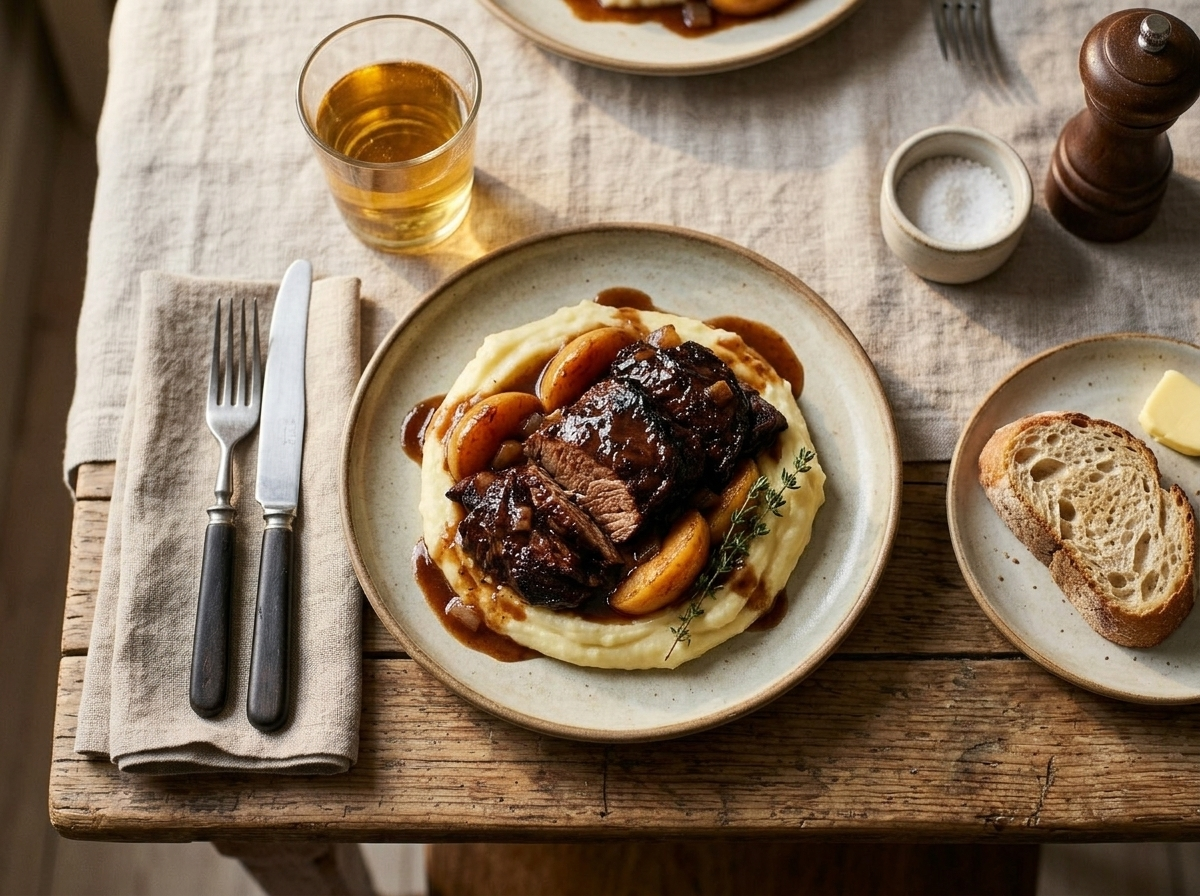
Serve pork cheeks in cider over mashed potatoes or buttered egg noodles so nothing of the sauce goes to waste. Soft polenta works too if you want something lighter underneath.
A pile of sauteed greens, like kale or Savoy cabbage with a little butter, cuts through the richness. A simple green salad with a sharp vinaigrette does the same job with less effort.
Pour the same dry cider you cooked with, or a glass of Beaujolais, alongside it. Crusty bread for mopping up the sauce is not optional.
FAQ
Why are my pork cheeks still tough after 3 hours in the oven?
They likely need more time or your oven runs cool. Pork cheeks are done when they shred easily under fork pressure, around 195 F / 90 C internal, so check every 20 minutes past the 3-hour mark and keep the lid on tight so the braise doesn’t dry out.
Can I use pork shoulder instead of pork cheeks for this braise?
Yes, pork shoulder works, though the texture is slightly less silky than cheeks. Cut it into 2-inch chunks, sear the same way, and check for tenderness starting around 2 hours since shoulder cooks a bit faster than cheeks.
Can I make slow roasted pork cheeks in cider a day ahead?
Yes, and it actually tastes better the next day. Braise the cheeks, cool everything in the pot, then refrigerate and reheat gently on the stovetop with a splash of stock before serving so the sauce loosens back up.
What kind of cider should I use for braising pork cheeks?
Use a dry, still or lightly sparkling hard cider, not a sweet or dessert-style one. A sweeter cider makes the finished sauce taste syrupy instead of balanced once it reduces down over the 3-hour braise.
What goes well with pork cheeks braised in cider?
Mashed potatoes or buttered egg noodles work well since they soak up the reduced sauce. Add sauteed greens or a sharp green salad on the side, and pour the same dry cider you cooked with alongside the plate.
Is this pork cheeks in cider recipe gluten-free?
It can be, if you skip the optional flour dusting on the cheeks before searing. Everything else, the cider, stock, apples, and aromatics, is naturally gluten-free, so just check your stock label to be sure.
More from the kitchen
About The Author

John
John Watson is the passionate food enthusiast behind MePlusFood.com. With a deep love for exploring culinary delights, he shares honest restaurant reviews, mouthwatering recipes, and culinary adventures. Join John on his flavorful journey to savor the world one bite at a time.