Slow-Braised Beef Ragu with Creamy Parmesan Polenta
Jump to Recipe
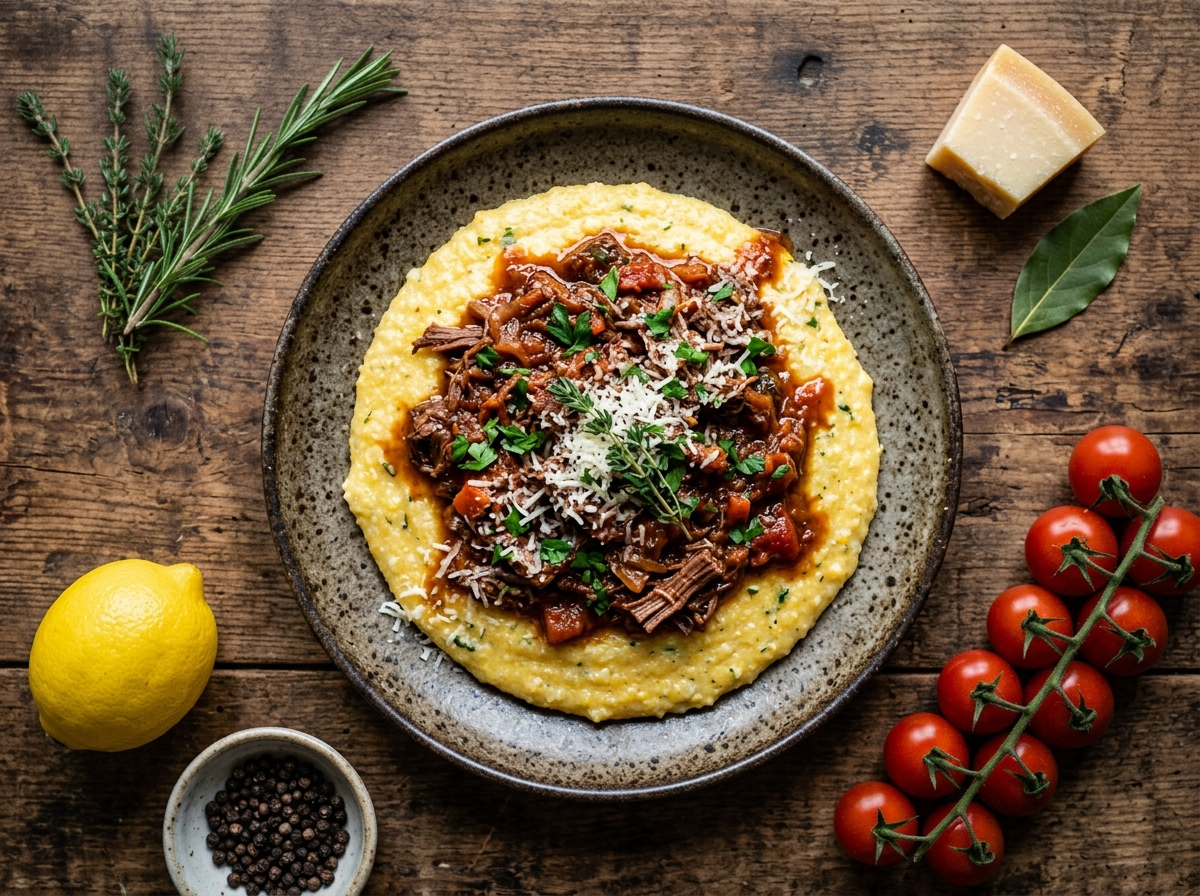
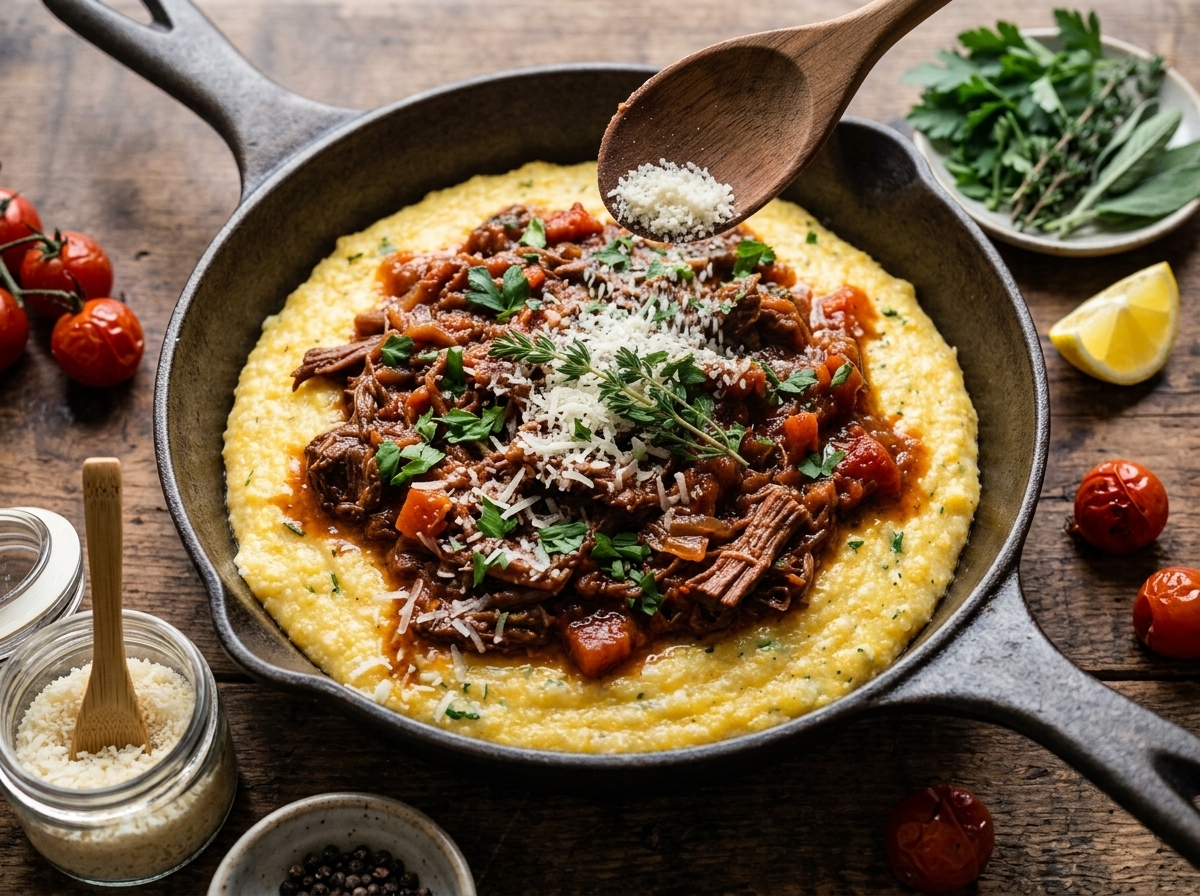
Braised beef ragu with creamy polenta is a slow-cooked beef chuck sauce, simmered in red wine and tomatoes until it falls apart, then served over soft, buttery polenta instead of pasta.
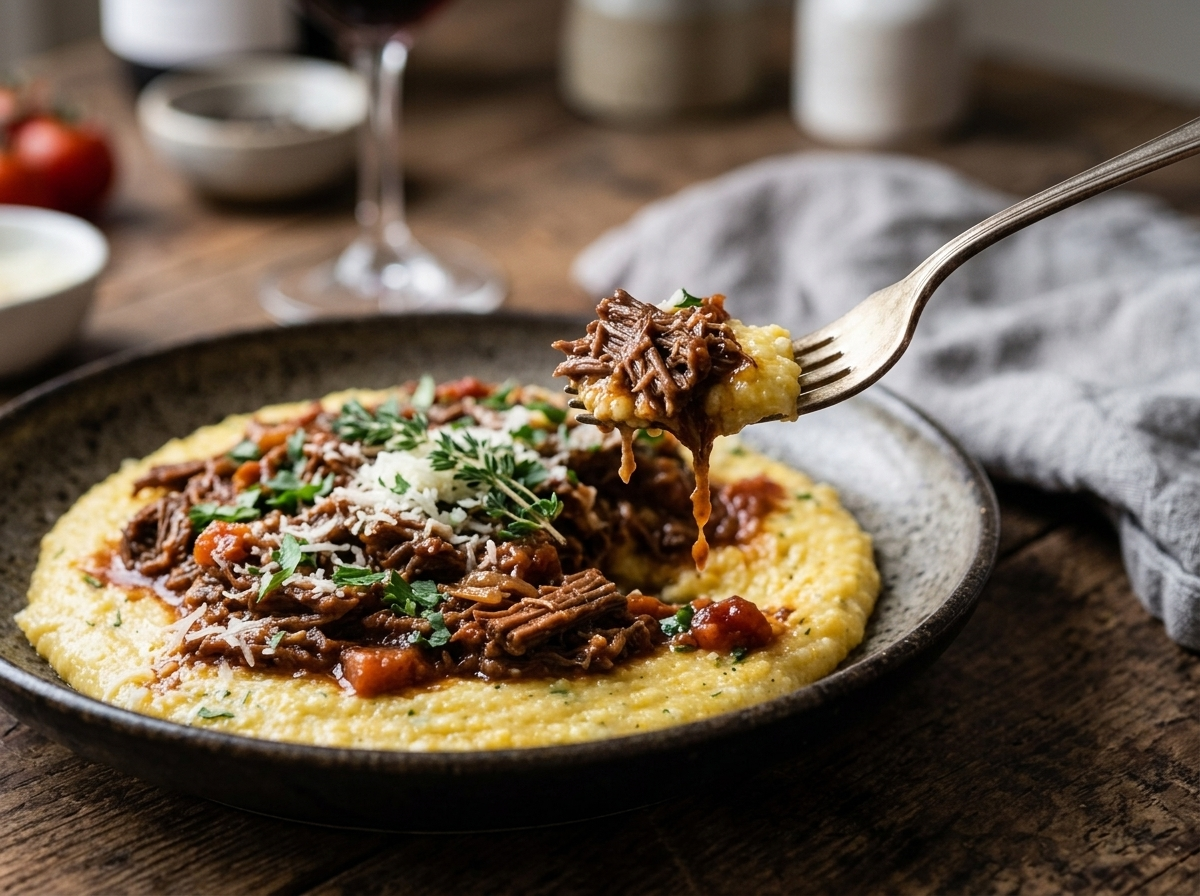
The beef braises for about 2.5 to 3 hours until it’s fork-tender and shreds easily with two forks. That long cook time turns tough chuck into something silky, much like a slow cooked beef cheek bourguignon, and the sauce reduces down thick enough to coat the polenta without pooling underneath.
I make this on a Sunday when I want the oven doing the work while I do something else. Most of the time is hands-off simmering, and the polenta only needs your attention in the last 25 minutes.
One thing that trips people up: if you rush the braise, the meat stays chewy instead of falling apart. Give it the full time and check with two forks before pulling it out of the oven.
Why You’ll Love This Recipe
- Beef chuck braises into fork-tender shreds with zero babysitting
- One Dutch oven handles searing, simmering, and braising
- Creamy parmesan polenta swaps in easily for pasta or rice
- Ragu freezes well for meal prep dinners during the week
Ingredient Notes
- Beef chuck roast: Chuck has enough fat and connective tissue to break down into shreds after a long braise. Boneless short rib works as a richer substitute.
- Dry red wine: A Chianti or Cabernet works well since it can hold up to the braise. Skip alcohol by using extra beef stock plus a splash of balsamic vinegar instead.
- Crushed tomatoes: San Marzano style tomatoes give a sweeter, less acidic base. Whole peeled tomatoes crushed by hand also work fine.
- Parmesan rind: An optional rind simmered in the sauce adds savory depth and melts away as it braises. Skip it if you don’t have one on hand.
- Coarse polenta cornmeal: Coarse or medium grind gives the creamiest texture with a bit of bite. Instant polenta works too, just cut the cook time to about 5 minutes.
Slow-Braised Beef Ragu with Creamy Parmesan Polenta
Ingredients
Notes
- Sear beef in batches so the pot isn't crowded and beef actually browns
- Check beef with two forks at 2.5 hours before extending braise time
- Instant-read thermometer should read about 200°F / 93°C when beef is ready to shred
- Stir polenta often near the end to prevent scorching on the pot bottom
- Skim excess fat off the sauce surface before shredding the beef back in
Tips for Success
- Pat the beef chunks dry before searing, the same technique used in a slow roasted pork shoulder ragu, so they brown instead of steaming in the pot.
- Deglaze with wine right after the tomato paste darkens to catch the fond stuck to the bottom.
- Whisk the polenta constantly for the first 5 minutes to keep lumps from forming.
- Let the beef rest 10 minutes in the sauce before shredding so it pulls apart cleanly.
- Thin leftover polenta with a splash of milk when reheating, since it firms up hard as it cools.
Variations
- Swap red wine for extra beef stock and a splash of balsamic vinegar if cooking alcohol free.
- Stir in sauteed mushrooms during the last 30 minutes of braising for extra earthy depth.
- Use instant polenta and cut the polenta cook time down to about 5 minutes for a faster plate.
Storage and Reheating
Store the ragu in an airtight container in the fridge for up to 4 days. It actually tastes better on day two once the flavors settle.
Freeze the ragu alone for up to 3 months in a freezer-safe container, leaving the polenta out since it turns grainy and doesn’t thaw well. Thaw overnight in the fridge before reheating.
Reheat the ragu on the stovetop over low heat with a splash of stock to loosen it back up. Make a fresh batch of polenta or reheat leftover polenta gently with extra milk, whisking until smooth again.
Serving Suggestions
Spoon the polenta into shallow bowls first, then ladle the ragu over the top so it pools into the polenta at the edges. Finish with grated parmesan and chopped parsley.
A salad of bitter greens like arugula or radicchio with a lemon vinaigrette balances the richness. Crusty bread on the side is good for scraping the bowl clean.
Leftover ragu works well spooned over pappardelle instead of polenta, or piled onto a baked potato for a quick second meal.
FAQ
Why is my beef ragu still tough after braising?
Your beef probably needs more time in the oven. Chuck is full of connective tissue that only breaks down around 200°F / 93°C internal, which usually takes the full 2.5 to 3 hours at 325°F / 163°C. Check it with two forks, and if it resists shredding, cover and give it another 20 to 30 minutes.
Can I use short ribs instead of beef chuck for this ragu?
Yes, boneless short ribs work well and turn out even richer, similar to the deeply spiced beef short rib pho, because of the higher fat content. Trim any large fat caps before searing so the sauce doesn’t turn greasy, and expect roughly the same 2.5 to 3 hour braise time. Bone-in short ribs work too, just pull the bones out before shredding.
Can I make the beef ragu ahead and reheat it with the polenta later?
Yes, the ragu actually tastes better made a day ahead since the flavors settle overnight in the fridge. Store it separately from the polenta, which doesn’t hold up as well and turns thick and glue-like once cold. Reheat the ragu on the stovetop and make a fresh batch of polenta right before serving.
What goes well with braised beef ragu and polenta besides bread?
A simple salad of bitter greens like arugula or radicchio with a lemon vinaigrette cuts through the richness nicely. Roasted broccolini or sauteed Swiss chard also work as a green side. Pour the same dry red wine you braised with, since it echoes the sauce instead of competing with it.
Is this beef ragu with polenta gluten free?
Yes, this recipe is naturally gluten free since the sauce is built from beef, tomatoes, wine, and stock with no flour, and polenta is just ground corn. Double check your beef stock and wine labels, since some brands add gluten-based fillers or process on shared lines. Everything else in the ingredient list is naturally gluten free.
What’s the difference between this beef ragu and a classic Bolognese?
The biggest difference is the cut and texture, this ragu braises whole chunks of beef chuck until they shred, while Bolognese starts with ground beef simmered into a finer, sauce-like texture. This braised version also leans on red wine and a longer oven time, giving it a deeper, more concentrated flavor than a quicker stovetop Bolognese.
If you enjoyed this, try
About The Author

John
John Watson is the passionate food enthusiast behind MePlusFood.com. With a deep love for exploring culinary delights, he shares honest restaurant reviews, mouthwatering recipes, and culinary adventures. Join John on his flavorful journey to savor the world one bite at a time.