Slow-Braised Thai Beef Massaman with Roasted Peanuts
Jump to Recipe
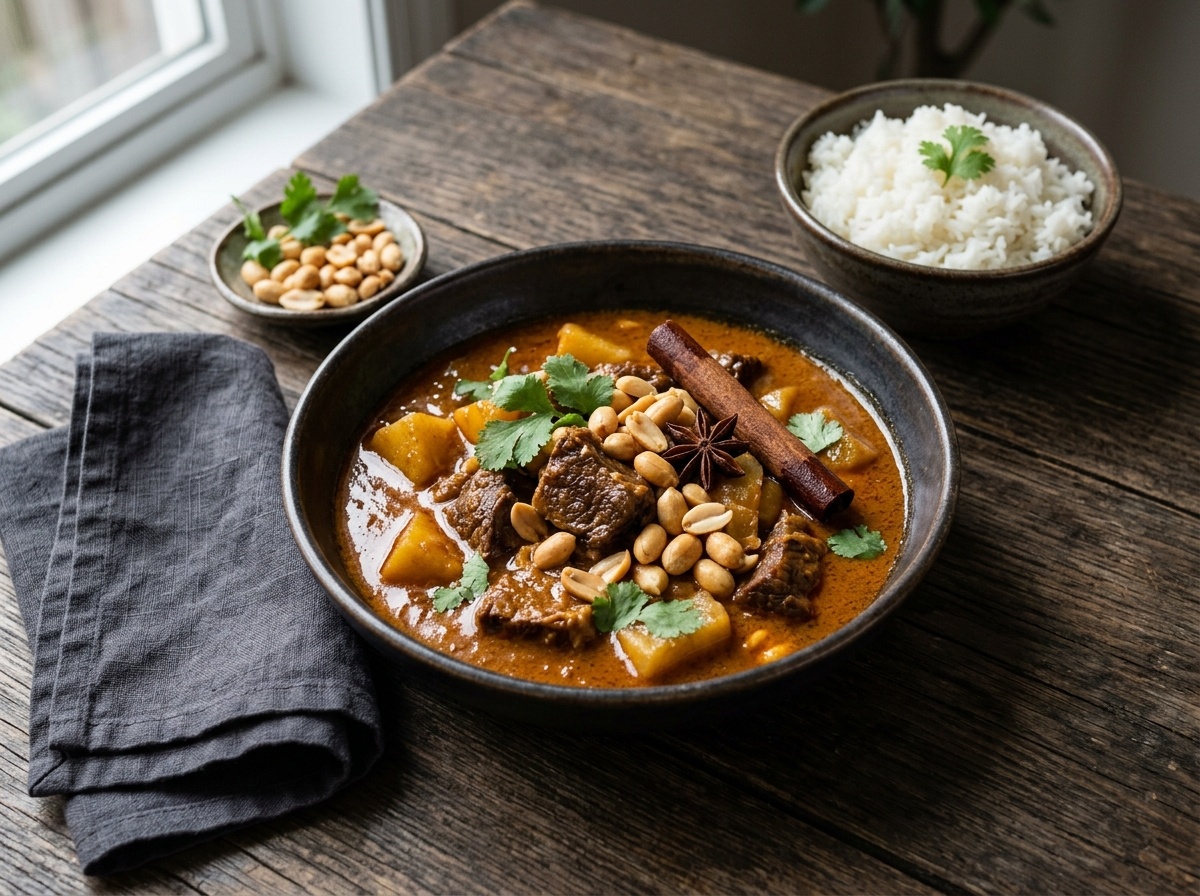
Beef massaman with roasted peanuts is a Thai curry that trades heat for depth, built on cinnamon, cardamom, and tamarind instead of chile. The beef braises low and slow in coconut milk until it shreds with a spoon, and a scatter of roasted peanuts at the end adds the crunch the sauce needs.
This version leans on chuck roast, cut into large chunks so it holds up through a long simmer. I fry the Thai curry paste in thick coconut cream first, which is the step that actually builds flavor instead of just thinning it into the pot.
Potatoes go in during the last 20 to 25 minutes so they turn creamy without falling apart. Tamarind and palm sugar balance the fish sauce, and the peanuts go on right before the bowl hits the table so they stay crisp.
One thing I’ve learned testing this: if you dump all the coconut milk in at once and skip frying the paste, the curry tastes flat no matter how long it simmers.
Why You’ll Love This Recipe
- Beef turns fork-tender after one long, mostly hands-off simmer
- Warm spices like cinnamon and cardamom with zero added chile heat
- Roasted peanuts add crunch against the soft braised potatoes
- One pot start to finish, easy to make a day ahead
Ingredient Notes
- Beef chuck: Chuck has enough connective tissue to break down into tender shreds over a long simmer. Brisket or short rib works too, though short rib will need trimming.
- Massaman curry paste: I use Mae Ploy for this. Store-bought pastes vary a lot in salt, so hold back on fish sauce until you taste the finished curry.
- Coconut cream: The thick cream fried with the paste is what builds depth. If you only have coconut milk, skim the thick layer off the top of a chilled can.
- Tamarind paste: Adds the sour backbone this curry needs. Lime juice stirred in at the end is a reasonable substitute if you can’t find tamarind.
- Palm sugar: Grated palm sugar melts into the sauce and rounds out the sourness. Light brown sugar works as a swap, just start with less.
- Roasted peanuts: Use roasted, unsalted peanuts and chop them roughly so they keep some bite. Skip these entirely for a nut-free version if needed.
Slow-Braised Thai Beef Massaman with Roasted Peanuts
Ingredients
Method
- Pat beef chuck chunks dry and season lightly with salt.
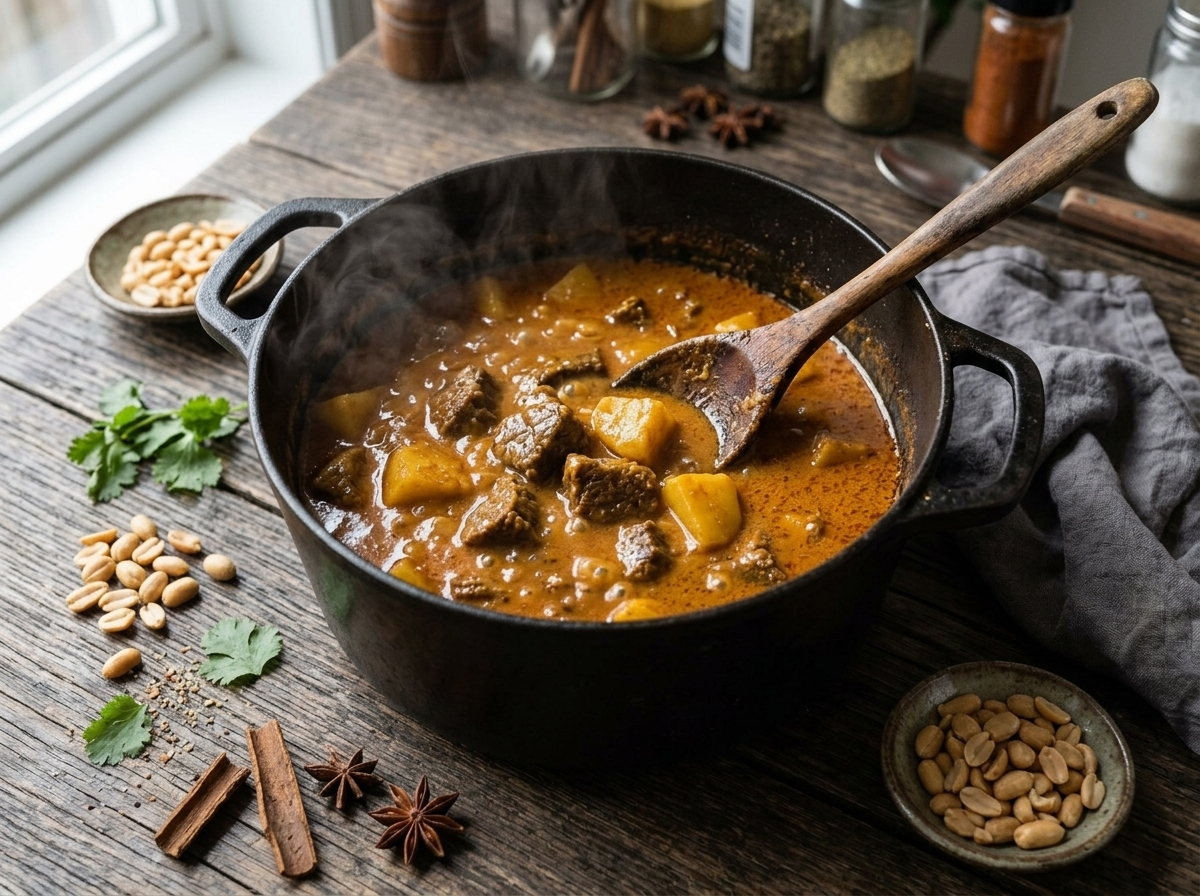
- Heat oil in a Dutch oven over high heat and sear beef in batches, 3 to 4 minutes per side, until deeply browned. Set aside.
- Reduce heat to medium, add coconut cream to the same pot, and fry massaman curry paste for 3 to 4 minutes until fragrant and the oil separates.
- Return beef to the pot along with cinnamon stick, star anise, cardamom pods, and bay leaves.
- Pour in coconut milk and water, stir to combine, and bring to a gentle simmer.
- Cover partially and simmer on low for 90 minutes, stirring occasionally, until beef is fork-tender and pulls apart easily.
- Add potatoes and onion wedges, then simmer uncovered for 20 to 25 minutes more until potatoes are tender when pierced with a knife.
- Stir in tamarind paste, palm sugar, and fish sauce, then taste and adjust the balance of sweet, salty, and sour.
- Scatter roasted peanuts over the curry just before serving so they stay crunchy.
Notes
- Sear beef in batches, crowding the pot steams the meat instead of browning it.
- Fry the curry paste until the oil visibly separates, this is where the flavor builds.
- Add potatoes only in the last 20-25 minutes so they don't turn to mush.
- Add roasted peanuts right before serving, not during the simmer, to keep the crunch.
Tips for Success
- Sear the beef in two or three batches so it browns instead of steams in its own juices.
- Fry the curry paste in coconut cream for 3 to 4 minutes until the oil separates and it smells toasted.
- Cut potatoes into 4 cm chunks and add them only in the last 20 to 25 minutes so they don’t turn mushy.
- Toast raw peanuts in a dry skillet for 4 to 5 minutes over medium heat if yours aren’t pre-roasted.
- Taste and adjust tamarind, palm sugar, and fish sauce at the end, since the balance shifts as the curry reduces.
Variations
- Swap beef chuck for lamb shoulder for a gamier, richer version of the same slow braise.
- Use bone-in chicken thighs and cut the simmer to 35 minutes for a quicker weeknight massaman.
- Stir in roasted sweet potato instead of white potato for extra sweetness against the tamarind.
Storage and Reheating
Beef massaman keeps well in an airtight container in the fridge for up to 4 days. The flavor actually improves by day two once the spices settle into the sauce.
Reheat gently in a saucepan over low heat, adding a splash of water or coconut milk if the sauce has thickened too much. Stir occasionally so the potatoes don’t break apart.
Freeze the curry without the peanuts for up to 3 months in a freezer-safe container. Thaw overnight in the fridge, reheat on the stove, and scatter fresh roasted peanuts on top only after reheating.
Serving Suggestions
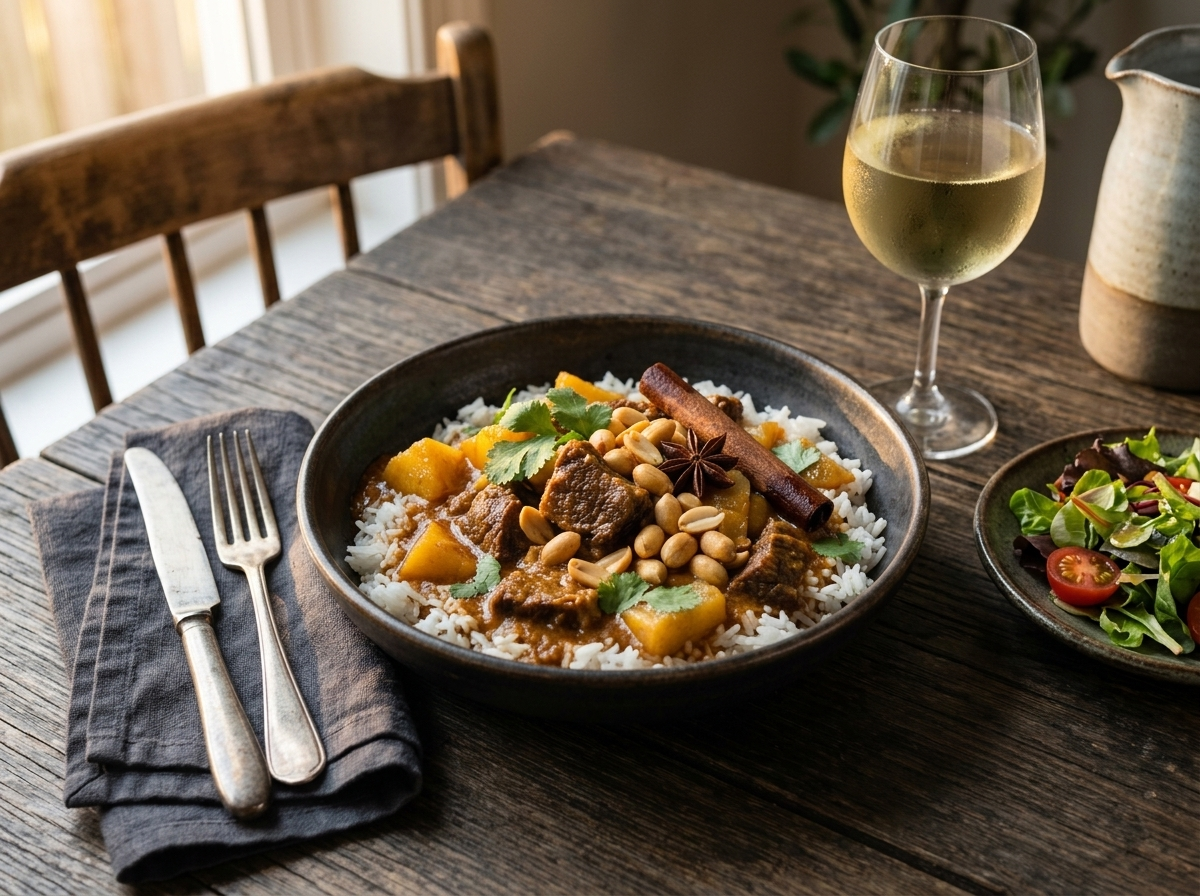
Jasmine rice is the obvious partner here, since it soaks up the coconut sauce without fighting the spices. A side of roti or flatbread also works if you want something to tear and dip.
A sharp cucumber relish or a pile of pickled shallots cuts through the richness. Lime wedges on the side let everyone adjust the sourness to taste.
For a full spread, add a simple green papaya or cabbage slaw with a squeeze of lime. It keeps the meal from feeling heavy despite the coconut milk.
FAQ
Why is my beef massaman curry watery instead of thick?
It usually means the lid stayed on too tight during the simmer, trapping steam instead of letting the sauce reduce. Simmer uncovered or partially covered for the last 20 to 25 minutes with the potatoes in, stirring occasionally, and the sauce will thicken as the starch from the potatoes releases.
Can I use chicken instead of beef in massaman curry?
Yes, bone-in chicken thighs work well and cut the cooking time down a lot. Simmer the chicken for about 35 minutes instead of the 90 minutes beef chuck needs, then add potatoes for the last 20 minutes as usual.
How long does beef massaman curry keep in the fridge?
It keeps for up to 4 days in an airtight container in the fridge. The curry tastes even better on day two once the cinnamon and cardamom have had more time to settle into the sauce.
What goes well with beef massaman besides rice?
Roti or another flatbread is a good stand-in for scooping up the sauce. A cucumber relish or pickled shallots on the side cuts through the coconut richness and keeps the plate from feeling one-note.
Is beef massaman curry gluten free?
It generally is, since the base of coconut milk, tamarind, and fish sauce contains no wheat. Check the label on your curry paste and fish sauce, though, since some brands add wheat-based thickeners or soy sauce.
What’s the difference between massaman curry and red or green Thai curry?
Massaman leans on warm, sweet spices like cinnamon, cardamom, and star anise instead of the fresh chile and lemongrass base of red or green curry. It’s also milder and slightly sweet-sour from tamarind and palm sugar, closer to a spiced braise than a hot curry.
Related recipes
About The Author

John
John Watson is the passionate food enthusiast behind MePlusFood.com. With a deep love for exploring culinary delights, he shares honest restaurant reviews, mouthwatering recipes, and culinary adventures. Join John on his flavorful journey to savor the world one bite at a time.