Crispy-Skinned Pan-Seared Duck Breast with Fig Glaze
Jump to Recipe
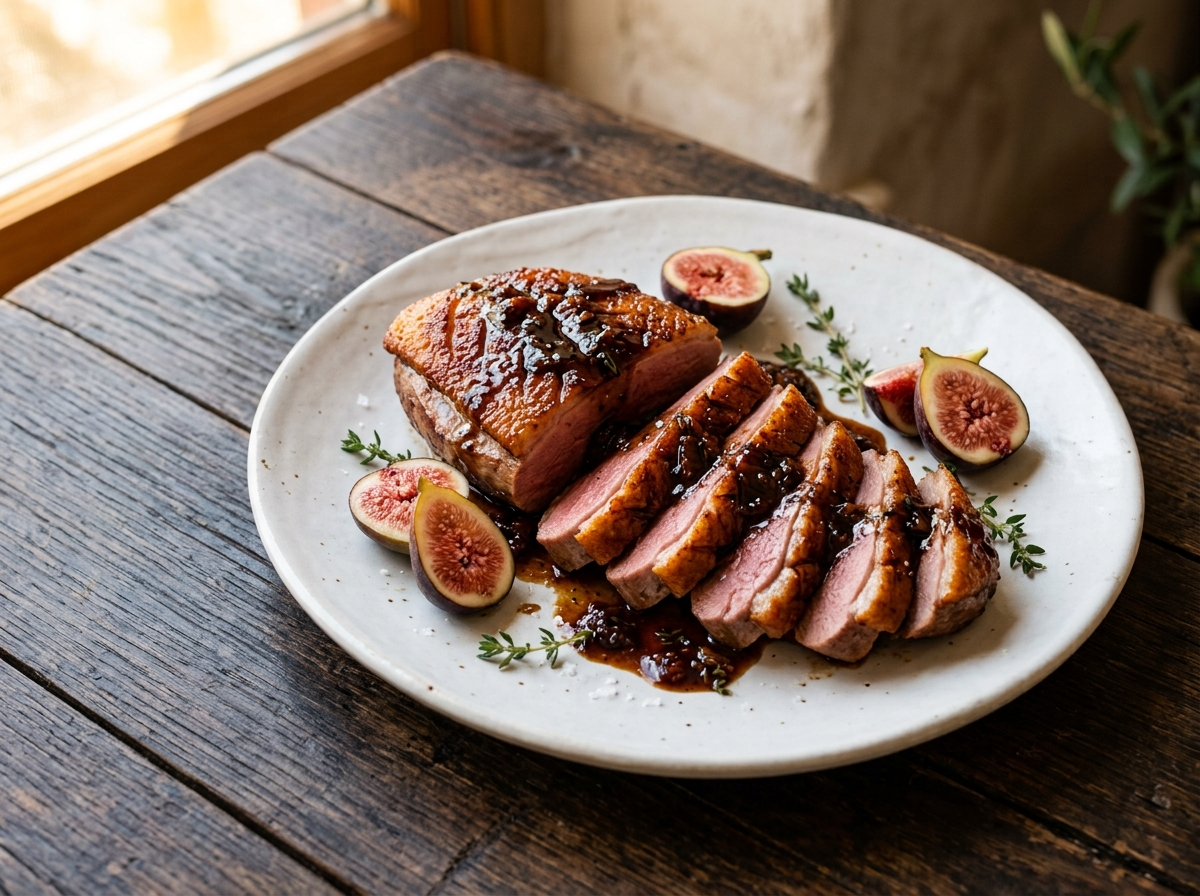
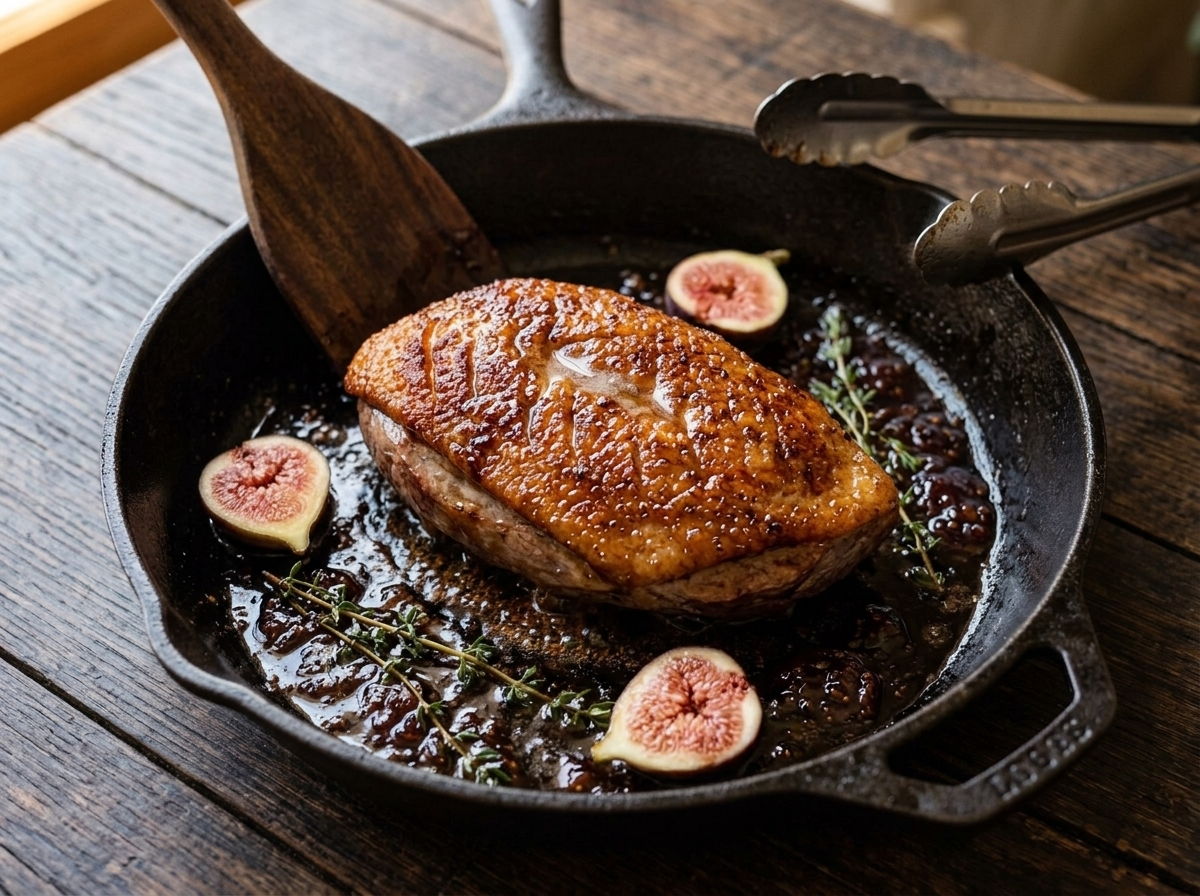
Pan seared duck breast with fig glaze gets its crisp skin from a cold-pan start and its glaze from the rendered duck fat itself, so you get two payoffs from one skillet. The duck cooks skin-side down for 7 to 8 minutes until the fat cap turns deep golden, then finishes in a few minutes on the flesh side for a warm pink, medium-rare center.
I score the fat in a tight crosshatch before it ever touches the pan. Skip this step and the skin stays chewy instead of crackling, because the fat underneath never fully renders out.
The glaze comes together in the same skillet while the duck rests, the same pan-sauce approach used for pan seared venison with blackberry jus. Fresh figs break down with balsamic vinegar, honey, and a splash of chicken stock into a glossy sauce that clings to each sliced piece.
This is a 30-something minute dinner that plates like something off a bistro menu. Two duck breasts cost less than a steak dinner and look more impressive on the table.
Why You’ll Love This Recipe
- Crackling crisp skin from a simple cold-pan sear
- Rendered duck fat becomes the base for the glaze
- Ready in about 35 minutes start to finish
- Fresh figs need no peeling or special prep
Ingredient Notes
- Duck breast: Look for skin-on Pekin or Moulard duck breast, about 170 to 200 g each. Pat it fully dry before scoring so the skin renders instead of steaming.
- Fresh figs: Black Mission or Brown Turkey figs work well here. Swap dried figs, soaked in warm water for 15 minutes, if fresh ones aren’t in season.
- Balsamic vinegar: Use a decent quality balsamic, not the thin supermarket kind, so it has enough acidity to cut through the duck fat.
- Honey: Balances the sharpness of the vinegar. Maple syrup works as a substitute and gives a slightly earthier note.
- Chicken stock: Thins the glaze to a sauce consistency. Use low-sodium so you can control the final seasoning.
- Fresh thyme: Adds an herbal edge that plays well against the fig’s sweetness. Rosemary is a fine swap.
- Shallot: Builds a savory base under the glaze. Substitute 2 tbsp minced yellow onion if needed.
Crispy-Skinned Pan-Seared Duck Breast with Fig Glaze
Ingredients
Method
- Pat duck breasts dry with paper towels, then score the fat cap in a tight crosshatch, cutting only through the fat and not into the meat.
- Season both sides with 1 tsp kosher salt and 1/2 tsp black pepper and let sit at room temperature for 10 minutes.
- Place duck skin-side down in a cold, dry skillet over medium heat and let the fat render slowly for 7 to 8 minutes, until the skin is deep golden and most of the fat has melted out.
- Pour off all but 1 tbsp of the rendered fat (save the rest for roasting potatoes), then flip the duck and sear the flesh side for 3 to 4 minutes for a warm pink, medium-rare center.
- Pull the duck when an instant-read thermometer reads 135 F / 57 C, transfer to a plate, and tent loosely with foil to rest for 5 minutes.
- In the same skillet, add the minced shallot to the leftover fat and cook over medium heat for 1 minute, until softened and fragrant.
- Add the quartered figs, balsamic vinegar, honey, chicken stock, and thyme sprigs, and simmer for 5 to 6 minutes, stirring occasionally, until the figs soften and the glaze coats the back of a spoon.
- Remove the thyme sprigs, stir in the butter, and season with a pinch of salt to taste.
- Slice the rested duck breast on a slight diagonal into 1/2-inch pieces.
- Fan the slices on plates, spoon the warm fig glaze over the top, and serve right away.
Notes
- Score fat cap without cutting into the meat to render evenly.
- Start duck in a cold pan for shatter-crisp skin.
- Pull duck at 135 F / 57 C for a warm pink center.
- Rest duck 5 minutes before slicing to keep juices in.
- Use the same skillet for the glaze to capture browned bits.
Tips for Success
- Score the fat cap in a tight diamond pattern without cutting into the meat, so it renders evenly, the same scoring method that gives crispy pork belly with apple slaw its crackling skin.
- Start the duck skin-side down in a cold, dry skillet so the fat melts slowly instead of scorching.
- Pour off excess rendered fat halfway through searing and save it for roasting potatoes later.
- Pull the duck at 135 F / 57 C for a warm pink center, then rest it for 5 minutes.
- Deglaze the same skillet you seared the duck in so the glaze picks up all the browned bits.
Variations
- Swap figs for halved fresh plums or apricots when figs are out of season for a similar sweet-tart glaze.
- Add a splash of port or brandy to the glaze for a deeper, boozy note that pairs well with duck fat.
- Finish the glaze with a pinch of chili flakes if you want heat to balance the fig’s sweetness.
Storage and Reheating
Store leftover duck breast and fig glaze in separate airtight containers in the fridge for up to 3 days. Keeping them apart stops the glaze from making the skin soggy.
Reheat sliced duck gently in a skillet over medium-low heat for 2 to 3 minutes per side, just to warm it through, since duck breast dries out fast on a second pass. Warm the glaze separately in a small saucepan or the microwave and spoon it on right before serving.
Freezing isn’t ideal here. The fig glaze separates and the crisp skin turns rubbery once thawed, so I’d only freeze the cooked duck without glaze, wrapped tightly, for up to 1 month.
Serving Suggestions
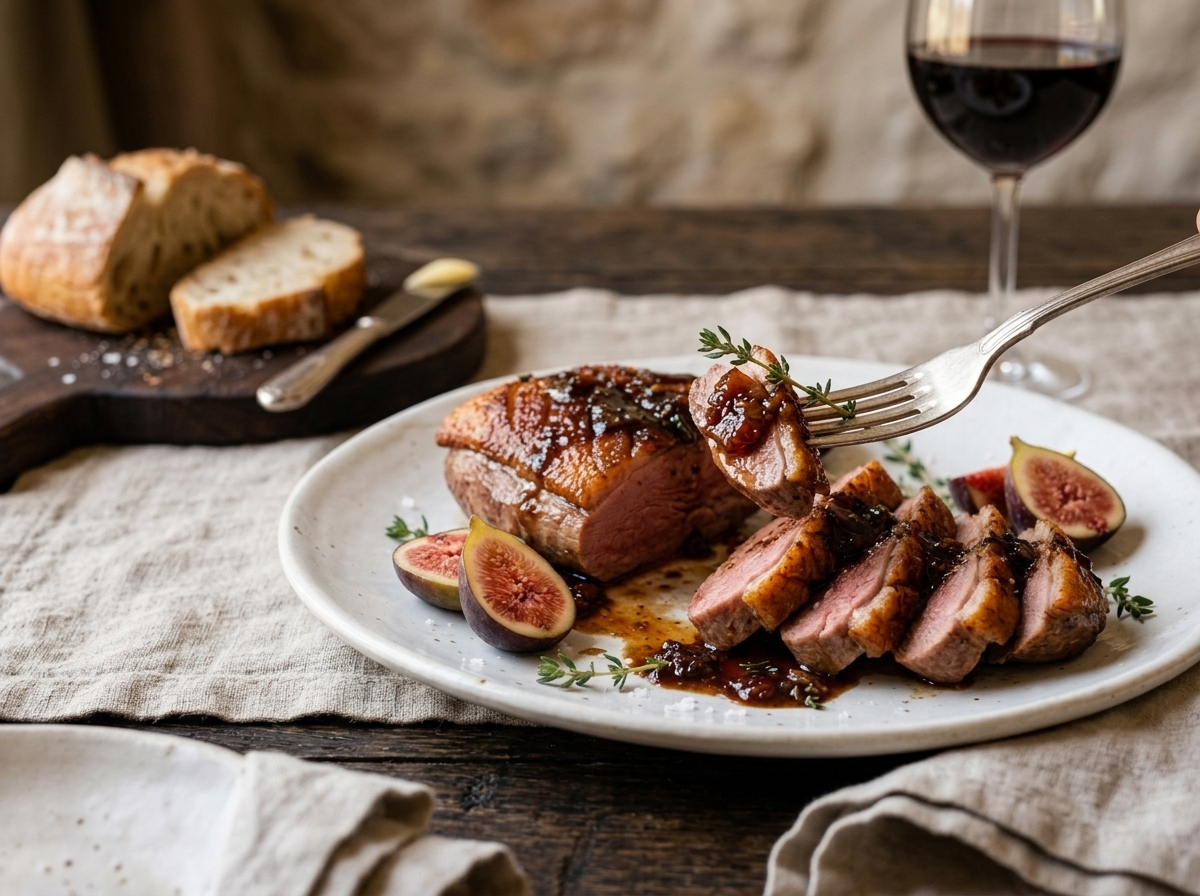
Pan seared duck breast with fig glaze pairs well with something starchy that can soak up the sauce, like creamy polenta, mashed potatoes, or a simple wild rice pilaf.
For a green side, roasted asparagus, sauteed spinach, or a sharp arugula salad with shaved parmesan cuts through the richness of the duck fat, much like the braised cabbage served alongside honey glazed duck leg.
A glass of Pinot Noir or a dry rosé stands up to the sweetness of the glaze without overwhelming it.
FAQ
Why is my pan seared duck breast not getting crispy skin?
Crispy skin usually fails when the pan starts too hot or the skin is wet. Pat the duck breast completely dry, score the fat in a crosshatch, and start it in a cold, dry skillet over medium heat so the fat renders slowly instead of seizing up. Skipping the cold start is the most common reason the skin turns chewy instead of crackling.
Can I use dried figs instead of fresh figs for the glaze?
Yes, dried figs work if you soak them in warm water for 15 minutes first to soften them before adding to the glaze. Fresh figs break down faster and give a jammier texture, so simmer dried figs a few extra minutes to reach the same glossy consistency. Either way, the balsamic and honey balance the sweetness.
Can I make the fig glaze ahead of time?
You can make the fig glaze up to 4 days ahead and store it in an airtight container in the fridge. Reheat it gently in a small saucepan over low heat, adding a splash of stock if it’s thickened too much, then spoon it over the duck right before serving.
What goes well with pan seared duck breast and fig glaze?
Creamy polenta, mashed potatoes, or a wild rice pilaf all work well because they soak up the fig glaze. Add a green side like sauteed spinach or roasted asparagus to cut through the richness of the duck fat, and pour a glass of Pinot Noir or dry rosé alongside it.
Is pan seared duck breast with fig glaze gluten free?
Yes, this dish is naturally gluten free as long as you use a gluten-free chicken stock, since duck, figs, balsamic vinegar, and honey don’t contain gluten. Always check the stock label if you’re cooking for someone with celiac disease, since some brands add gluten-based thickeners.
How do I know when the duck breast is done searing?
Pull the duck breast when an instant-read thermometer reads 135 F / 57 C in the thickest part, which gives a warm pink, medium-rare center once it rests. The skin should be deep golden and most of the fat rendered out before you flip it. Resting for 5 minutes lets the juices settle.
Loved this? Try these next
About The Author

John
John Watson is the passionate food enthusiast behind MePlusFood.com. With a deep love for exploring culinary delights, he shares honest restaurant reviews, mouthwatering recipes, and culinary adventures. Join John on his flavorful journey to savor the world one bite at a time.