Korean Braised Beef Galbijjim (Short Rib Stew)
Jump to Recipe
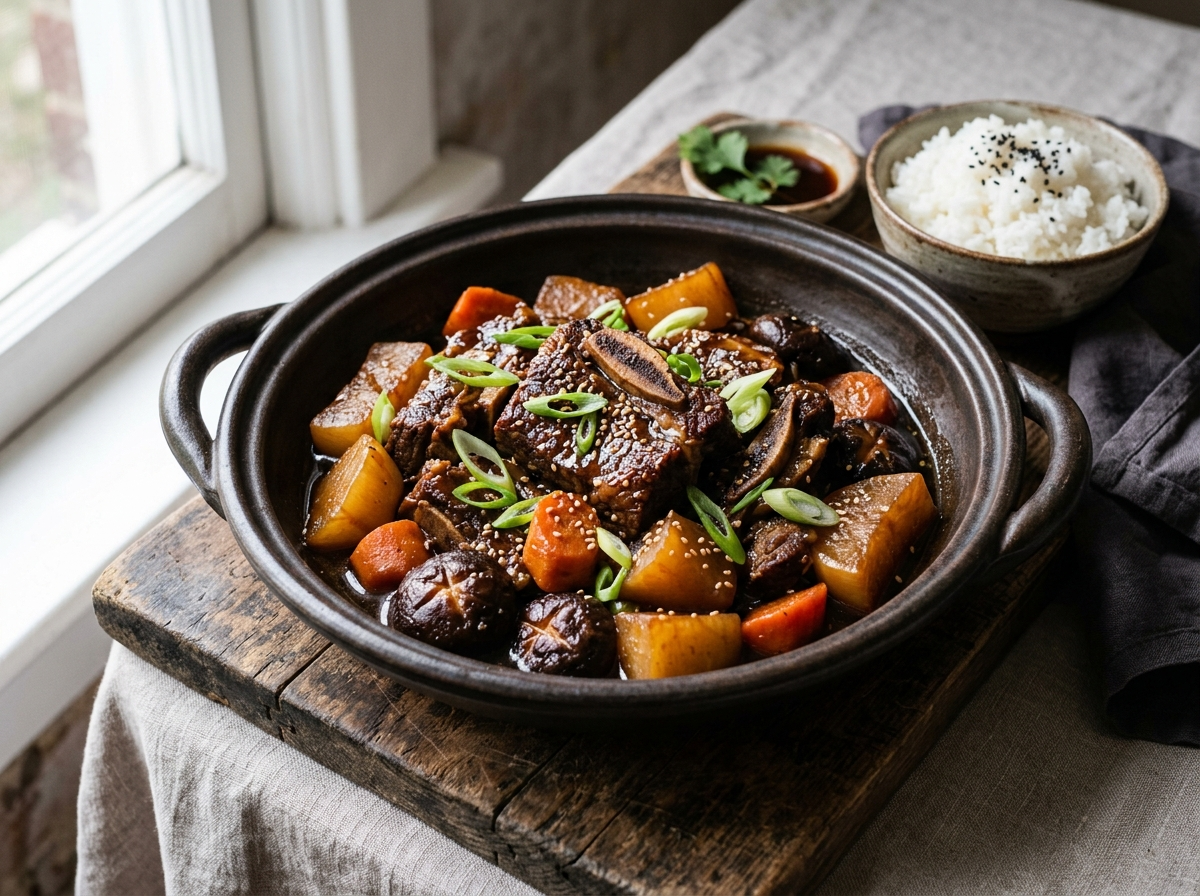
Galbijjim is a Korean braised short rib dish that shows up at holidays, family gatherings, and any dinner where you want to put something serious on the table. The ribs are bone-in, cut flanken-style or English-cut, and they braise low and slow in a sauce built from soy, Asian pear, garlic, ginger, and a spoonful of gochujang.
What makes it different from other braised beef is the pear, and if you want to explore how pear adds balance in other recipes, the pear and walnut bites use it in a completely different direction. It tenderizes the meat naturally and adds a subtle sweetness that balances the soy without making the sauce taste sugary. Daikon and carrots go in halfway through, soaking up that same braising liquid.
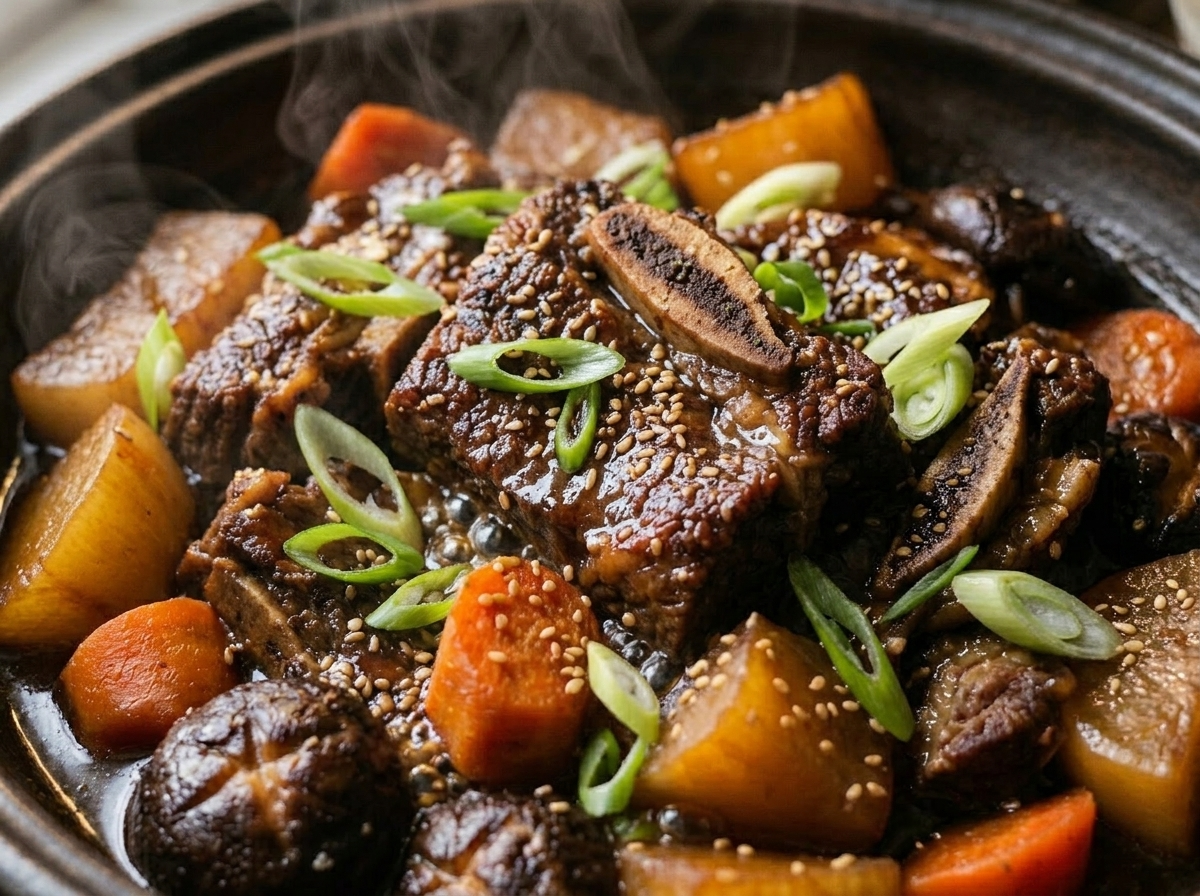
This is a weekend recipe. It takes around two and a half hours start to finish, most of which is hands-off. The payoff is short ribs so tender they pull apart with chopsticks, surrounded by soft, savory vegetables and a sauce that coats everything like a glaze.
I make this for Chuseok, but honestly it’s worth making any time you can get good short ribs from a Korean grocery.
Why You’ll Love This Recipe
- Ribs become fork-tender in a single pot
- Pear-soy sauce is rich, savory, and naturally sweet
- Daikon and carrots cook right in the same braise
- Leftovers taste even better the next day
Ingredient Notes
- Beef short ribs (galbi): Look for 2-inch English-cut or flanken-cut short ribs at a Korean or Asian grocery. Ask the butcher to cut them if needed. Boneless short ribs work but the sauce won’t be as rich since you lose the collagen from the bone.
- Asian pear: Half a grated Asian pear goes into the marinade as a natural meat tenderizer. If you can’t find one, a ripe Bosc pear or half a kiwi works in a pinch.
- Gochujang: Adds a low, earthy heat and depth to the braise. Start with one tablespoon if you’re heat-sensitive. You can leave it out entirely for a more traditional mild version.
- Soy sauce: Use a regular Korean or Japanese soy sauce, not low-sodium or tamari here. The salt level matters for balance. If you only have low-sodium, you may need to reduce the sugar slightly.
- Daikon radish: Cut into large chunks so they hold their shape after 30-40 minutes in the braise. They absorb the braising liquid beautifully. Turnip is a reasonable substitute.
- Sesame oil: Stirred in at the end, off the heat. Adding it too early drives off the aroma. A few drops of toasted sesame oil go a long way.
Korean Braised Beef Galbijjim (Short Rib Stew)
Ingredients
Method
- Place the short ribs in a large bowl, cover with cold water, and soak for 30 minutes. Drain and rinse under cold running water.
- Bring 2 liters of water to a rolling boil in a large Dutch oven. Add the drained ribs and blanch for 5 minutes. Skim off any foam that rises.
- Drain the ribs in a colander and rinse each piece under cold water. Pat dry with paper towels and set aside. Wipe out the Dutch oven.
- In a medium bowl, whisk together the soy sauce, grated Asian pear, minced garlic, grated ginger, gochujang, brown sugar, mirin, and black pepper until combined.
- Pour in the beef broth and stir once to mix. Taste the sauce. It should be savory, lightly sweet, and have a gentle heat.
- Return the blanched ribs to the Dutch oven in a single layer as much as possible. Pour the braising sauce over the top.
- Bring to a boil over medium-high heat, then reduce to low. Cover and braise for 1 hour, turning the ribs once halfway through.
- After 1 hour, add the daikon, carrots, rehydrated shiitake mushrooms, and chestnuts if using. Stir gently to coat with the sauce.
- Cover again and continue braising on low heat for 30 minutes, until the daikon is tender when pierced with a chopstick and the ribs pull easily from the bone.
- Remove the lid and increase heat to medium. Cook uncovered for 10-15 minutes, stirring occasionally, until the sauce reduces to a thick, glossy glaze that coats the ribs.
- Turn off the heat. Drizzle the sesame oil over the top and stir gently once to incorporate.
- Rest the pot off the heat for 10 minutes before serving. Garnish with sliced spring onions, sesame seeds, and pine nuts.
Notes
Tips for Success
- Soak the short ribs in cold water for 30 minutes to draw out blood before blanching.
- Blanch ribs in boiling water for 5 minutes and rinse clean before braising to remove impurities.
- Grate the Asian pear directly into the marinade for maximum tenderizing enzyme contact with the meat.
- Add daikon and carrots halfway through braising, not at the start, or they’ll turn mushy.
- Uncover the pot for the last 15 minutes to reduce the braising liquid into a thick, glossy sauce.
Variations
- Spicy galbijjim: double the gochujang and add 1 tsp gochugaru for a deeper red, spicier braise.
- Slow cooker version: braise on low for 7-8 hours after blanching and marinating the ribs overnight.
- Mushroom add-in: tuck dried shiitake mushrooms into the braise with the daikon for extra umami depth.
Storage and Reheating
Store cooled galbijjim in an airtight container in the fridge for up to 4 days. The sauce will gel overnight as the collagen sets, which is normal.
To reheat, add a splash of water or beef broth to the pot and warm gently over medium-low heat, covered, for about 10 minutes until heated through. Stir occasionally to prevent scorching.
Galbijjim freezes well for up to 2 months. Portion into freezer bags with the sauce, freeze flat, and thaw overnight in the fridge before reheating.
Serving Suggestions
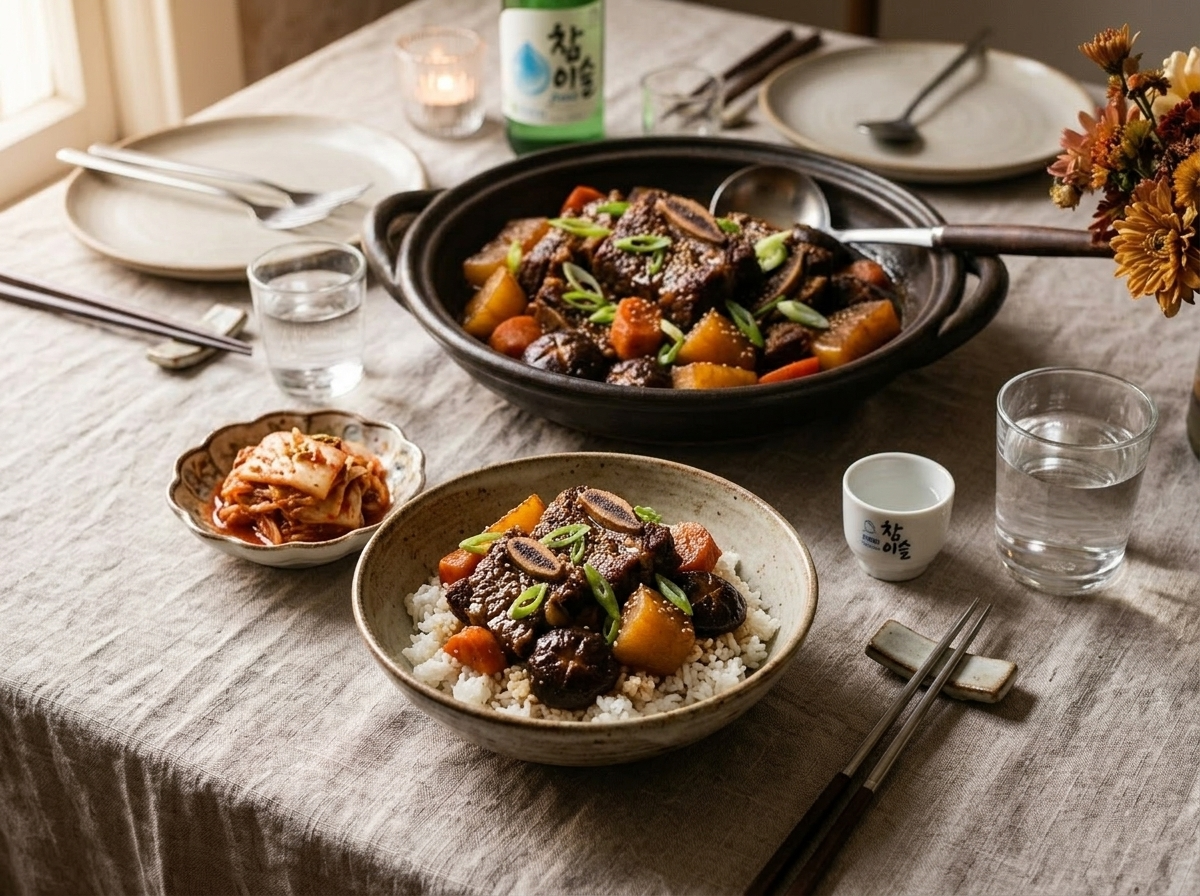
Serve galbijjim over a bowl of short-grain white rice so the sauce soaks into every bite. A few steamed ribs and vegetables over rice with a drizzle of the braising liquid is the classic way.
Pair it with banchan like kimchi, spinach namul, or pickled radish, or a miso carrot noodle salad with sesame ginger, to cut through the richness of the beef. A cold glass of soju or barley tea works well alongside.
For a more substantial spread, add a simple doenjang jjigae or miyeok-guk on the side. The contrast between the rich braise and a light, clean soup rounds out the meal.
FAQ
Why is my galbijjim sauce too thin and not glossy?
The sauce needs to reduce uncovered at the end of braising. Remove the lid for the last 15 minutes and raise the heat slightly to concentrate it. If it’s still too thin, simmer an extra 10 minutes until it coats a spoon.
Can I use boneless short ribs instead of bone-in for galbijjim?
You can, but the sauce will be noticeably less rich. Bone-in ribs release collagen that naturally thickens the braising liquid. If using boneless, reduce the total liquid by about a quarter cup to compensate.
Can I marinate the short ribs overnight for galbijjim?
Yes, and I’d recommend it for the best depth of flavor. Marinate the blanched, cooled ribs in the soy-pear sauce for up to 12 hours in the fridge. Don’t go much longer or the pear enzymes start to break down the texture too aggressively.
What goes well with Korean braised short ribs besides white rice?
Galbijjim pairs well with kimchi, kongnamul (soybean sprout side dish), and a clear soup like miyeok-guk. A cold radish water kimchi (kkakdugi) is a particularly good contrast to the richness of the ribs.
Is galbijjim gluten-free?
Not as written, because soy sauce contains wheat. To make it gluten-free, swap regular soy sauce for tamari or a certified gluten-free soy sauce. Check your gochujang label too, as some brands contain wheat flour.
What is the difference between galbijjim and galbi tang?
Galbijjim is a braised dish with a thick, glossy sauce and very little liquid left at the end. Galbi tang is a clear, lightly seasoned short rib soup with a lot of broth. Both use the same cut of beef but the cooking style and end result are quite different.
About The Author

John
John Watson is the passionate food enthusiast behind MePlusFood.com. With a deep love for exploring culinary delights, he shares honest restaurant reviews, mouthwatering recipes, and culinary adventures. Join John on his flavorful journey to savor the world one bite at a time.